About This Route
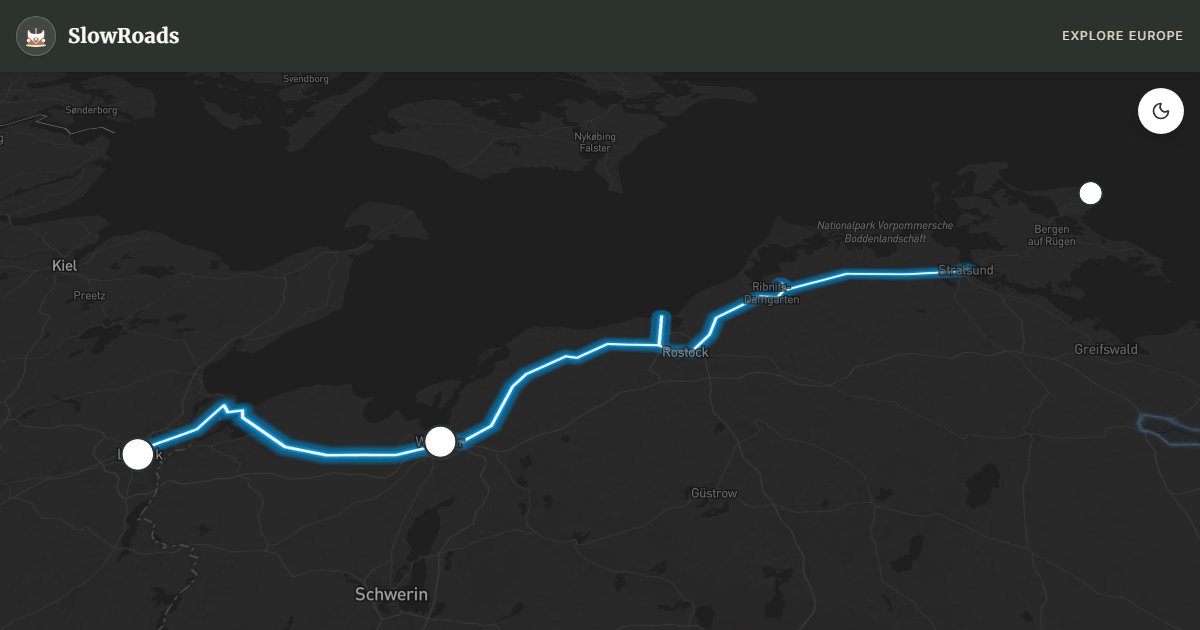
Cruise Germany’s Baltic Coast from UNESCO Lübeck via Wismar and Rostock to Stralsund and Rügen’s chalk cliffs — about 211 km of flat Hanseatic driving for classic and low-power campervans. Brick harbours, beach resorts, and sea breezes replace alpine climbs; the challenge is summer parking and booking Stellplätze early in July–August. No national vignette; watch Umweltzonen if you dip into city centres. June and September balance swimming weather with thinner crowds. Pair with Usedom for an eastern beach finale, and keep overnight stays on designated campgrounds or Wohnmobil areas — wild beach camping is not allowed.
Detailed Route Guide
The Baltic Coast Route is the great flat escape of German road travel — a 211-kilometre arc from Lübeck eastward along the shores of the Baltic Sea to Stralsund and the gateway to the island of Rügen. In a country of mountain passes and forest climbs, this route offers something completely different: the endless horizon of an inland sea, white sandy beaches, red-brick Gothic architecture, and the remnants of the Hanseatic League — the medieval trading empire that once dominated northern European commerce.
Lübeck is the route's crown jewel. This UNESCO World Heritage city was the founding capital of the Hanseatic League and the most important trading port in northern Europe from the 13th to 15th centuries. The Holstentor — a twin-towered medieval gate now slightly tilted due to subsidence — is one of the most recognisable buildings in Germany. Behind it stretches an old town of extraordinary completeness: seven church steeples piercing the skyline, the Marienkirche (where the Dance of Death fresco is located and the largest brick church in Germany), the historic salt warehouses, and Thomas Mann's family home, now a museum. Marzipan from Niederegger — a Lübeck speciality since 1806 — should be purchased here, ideally consumed with a coffee before departing.
Wismar, the second significant Hanseatic port on the route, rivals Lübeck in the scale of its historic core. Swedish-controlled from 1648 to 1803 (over 150 years), the city retains a faintly Scandinavian character in its wide market square and waterfront. The ruins of St. Georgen church — bombed in WWII and deliberately left unrestored as a memorial — form a stark, powerful backdrop to the otherwise cheerful harbour. The harbour area has become a UNESCO World Heritage Site shared with Stralsund.
Beyond Wismar, the route follows the coast through Rostock (the largest city on the Baltic coast, with a youthful university energy and the beach suburb of Warnemünde) to the Fischland-Darß-Zingst peninsula. This narrow sandspit — only a few hundred metres wide in places — is one of Germany's most beautiful natural areas: ancient beech forests meeting white sand dunes and open Baltic in an atmosphere of extraordinary peaceful wildness. The area is protected as a biosphere reserve; driving into the Darß requires a permit, but walking or cycling is easy.
Stralsund, the route's eastern terminus, mirrors Wismar in its Hanseatic scale and is joined to the island of Rügen by a bridge. Rügen itself — Germany's largest island — offers the spectacular chalk cliffs of the Königsstuhl (the white cliff face that Caspar David Friedrich made famous in his painting), the elegant resort architecture of Binz and Sellin from the Imperial era, and endless sandy beaches that are cooler than the Mediterranean but equally inviting in summer.
For van drivers, this is as close to effortless as German road travel gets. The coast road is entirely flat, fuel consumption is minimal, and parking — outside of the major beach resorts in August — is generally straightforward. Campgrounds along the Baltic are excellent, many directly on the beach. The late evening light on the Baltic in summer is particularly beautiful; the sun sets late this far north, and the sea colours are unlike anything inland Germany can offer.
For classic and low-power campervans this is effortless coastal cruising: top gear, cool engines, and village speed limits that naturally slow the day. The constraints are summer parking at Warnemünde and Binz, and booking Wohnmobil-Stellplätze or beach campgrounds ahead for July–August. Wild camping on dunes and beaches is not allowed. If your older diesel needs an Umweltplakette, check zone maps before dipping into Rostock or Lübeck centres. Pair the route with Usedom for an eastern Kaiserbad finale when you want still flatter B111 driving and Belle Époque pier towns.
Frequently Asked Questions
Points of Interest
Holstentor Lübeck
Monument
Chalk Cliffs of Rügen
Nature
Wismar Market Square
Town
Route Highlights
Route Information
Navigation
* Supported by HERE Technologies, headquartered in Amsterdam, Europe. Precise routing through all waypoints.
* Waze only navigates to the starting point. Use Google Maps for the full scenic route.
Offline GPS Navigation
Download the GPX route file to navigate offline using your favorite GPS device or app (Garmin, TomTom, OsmAnd, Gaia GPS).
Ask Copilot (AI Travel Guide)
Hello! I am your SlowRoads Copilot. I know the Baltic Coast Route intimately. Ask me about scenic viewpoints, local history, hidden culinary gems, or the best camper spots along the way!