About This Route
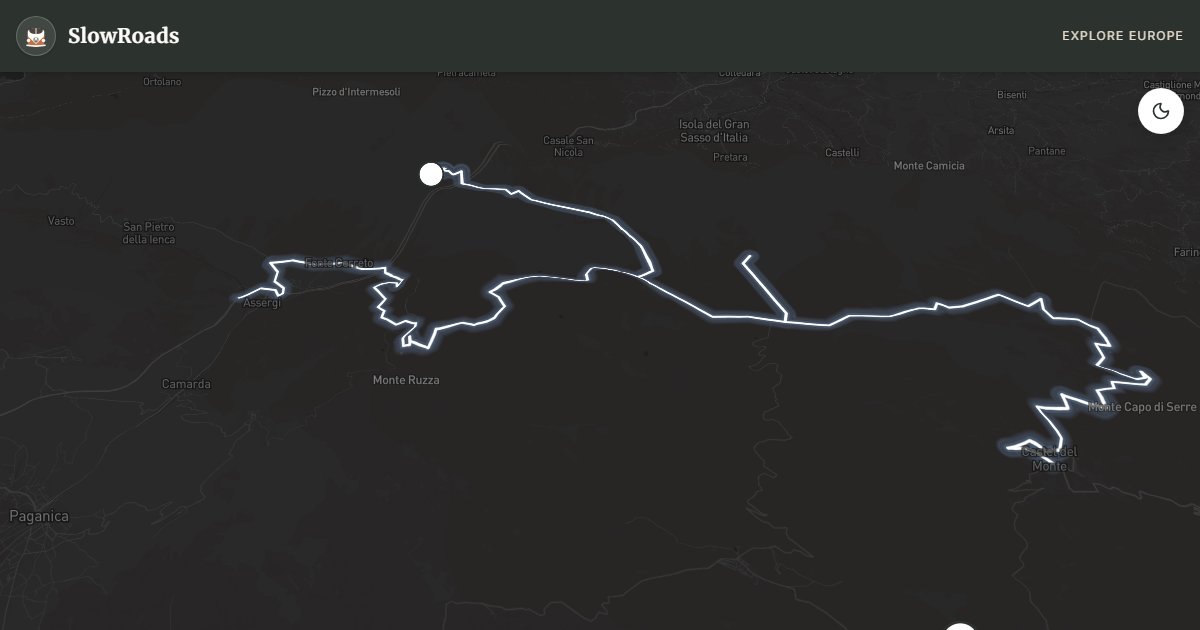
Climb Gran Sasso's 'Little Tibet' plateau from Assergi toward Castel del Monte — Corno Grande views, the historic observatory, and a Rocca Calascio detour above Abruzzo grasslands. Sustained high-altitude grades demand cooling discipline for classic and low-power campervans; fill fuel in the valley and check snow status before committing. Overnight in valley towns, not on the exposed plateau where weather turns fast. Late June–September is the realistic window; shoulder months can still close after late snow on this high Abruzzo drive.
Detailed Route Guide
Campo Imperatore is one of the most unexpected landscapes in Italy. At an altitude of 1,400 to 2,100 metres in the heart of the Gran Sasso e Monti della Laga National Park, the plateau stretches for roughly 30 kilometres — a vast, open, treeless highland that could belong to the steppes of Central Asia rather than an hour's drive from Rome. The name "Little Tibet" is not an exaggeration: the same quality of light, the same sense of space in every direction, and the same herds of cattle and horses grazing on grasslands that seem to have no edges. The nearby Corno Grande, at 2,912 metres, is the highest peak of the Apennines; the Calderone ice bodies below the summit are the last perennial ice remnants in the Apennines (no longer a true flowing glacier).
The route from Assergi — a village near the entrance of the Gran Sasso road tunnel — up to the plateau is the main drive. A cable car (funivia) also serves the plateau from the valley, but driving is far more rewarding. The Gran Sasso d'Italia ski resort dormitories and the historic Campo Imperatore Observatory (1934) mark the high point of the drive. The observatory, still active, was where Mussolini was famously held under arrest in 1943 before his dramatic rescue by German gliders — a history that adds a strange political drama to the austere mountain setting. Beyond the observatory, the plateau road continues east towards Castel del Monte, and a short but rewarding detour leads to Rocca Calascio, a 10th-century fortress perched on a rocky spur at 1,460 metres — one of the most photogenic castles in Italy, used as a filming location for the 1985 film Ladyhawke.
For a classic or low-power campervan, the road to Campo Imperatore begins with a long, sustained climb from the valley. The gradient is significant but not extreme, and the road is well-maintained throughout. The plateau section itself is completely flat. The main concern at this altitude is the cold: even in summer, temperatures on the plateau can drop below 10°C at night, and afternoon thunderstorms are common. Carry warm clothing and be prepared for rapid weather changes. In winter and early spring, the plateau is accessible from Assergi via the autostrada tunnel and the ski resort road, but the plateau road itself may be snowbound. The area is almost entirely free of tourists — this is one of the great undiscovered drives of central Italy, and the solitude is genuine.
The best time to visit is June to September, when the plateau wildflowers (orchids, gentians, and mountain poppies) are in bloom and the weather is settled. August brings Italian city-dwellers to the ski resort facilities for cool-weather relief, but the plateau itself remains uncrowded. Spring is dramatic — the last snows retreating before a surge of green — but road access may be limited until late May. The villages on the eastern descent from the plateau (Castel del Monte, Santo Stefano di Sessanio) are beautifully preserved medieval hill towns that deserve an afternoon each, and the local saffron (Zafferano dell'Aquila) is among the finest in the world.
Frequently Asked Questions
Points of Interest
Campo Imperatore Observatory
Monument
High-altitude astronomical observatory with stunning views of the Corno Grande peak.
Rocca Calascio
Castle
One of the highest and most photogenic fortresses in Italy, located just off the plateau.
Route Highlights
Route Information
Navigation
* Supported by HERE Technologies, headquartered in Amsterdam, Europe. Precise routing through all waypoints.
* Waze only navigates to the starting point. Use Google Maps for the full scenic route.
Offline GPS Navigation
Download the GPX route file to navigate offline using your favorite GPS device or app (Garmin, TomTom, OsmAnd, Gaia GPS).
Ask Copilot (AI Travel Guide)
Hello! I am your SlowRoads Copilot. I know the Campo Imperatore (Little Tibet) intimately. Ask me about scenic viewpoints, local history, hidden culinary gems, or the best camper spots along the way!