About This Route
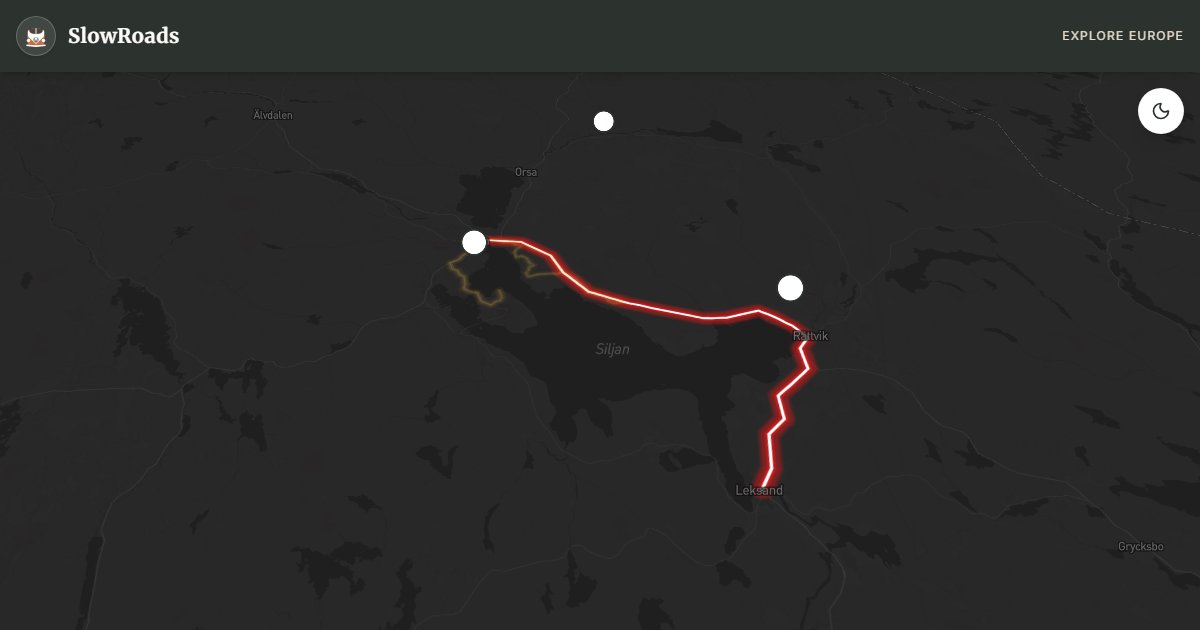
Dalarna folklore loop around Lake Siljan: red Falu cottages, Dala horses in Nusnäs, Zorn Museum in Mora, Dalhalla quarry stage, and Fryksås views. Gently hilly — ideal slow travel for classic and low-power campervans seeking Sweden's cultural heartland. Midsummer poles and craft workshops peak in summer; shoulder seasons feel quieter. Park at village edges and walk timber streets. A painted-red inland classic — lakes, folklore, and short forest hops without alpine grades. Allow extra time for photo pullouts, fuel stops, and cooling breaks in older vans.
Detailed Route Guide
Dalarna is Sweden's most mythologised province — the place that Swedes themselves think of when they imagine the essence of their country. The 57-kilometre loop around Lake Siljan does not showcase dramatic mountains or wild coastlines, but something more quietly profound: a landscape of deep forests, still water, and centuries-old village churches where the midsummer traditions have survived with astonishing continuity. This is the birthplace of the Dala horse (Dalahäst), the hand-carved and painted wooden horse that has become Sweden's unofficial national symbol, and the region where the Vasaloppet ski race begins each winter — 90 kilometres of cross-country skiing in an event that has been run every March since 1922.
Lake Siljan itself was formed by a meteorite impact around 377 million years ago, making it one of the oldest impact craters in the world that is still clearly visible. The lake is large — about 290 square kilometres — and the road around it passes through a sequence of distinct villages, each with its own character. Rättvik, on the east shore, has a particularly beautiful medieval church that stands on a long wooden pier stretching into the lake, served by traditional church boats (kyrkbåtar) that were once used to row parishioners across the water for Sunday services. In Mora at the north end, the Zorn Museum celebrates Anders Zorn, one of Sweden's greatest painters, whose portraits, landscapes, and etchings are displayed in his original studio and home — one of the finest small art museums in Scandinavia.
For van travellers, the Dalarna loop is a very easy drive: the roads are smooth, the gradients are gentle, and the distances between stops are short. The terrain is forested and hilly, but the lake circuit stays relatively low and avoids any challenging climbs. The most rewarding detour is the road up to Fryksås, a small village on a plateau above the lake with a famous viewpoint and the best panorama of Lake Siljan. The road up is narrow and has some steeper sections, but it is manageable and entirely worth the effort. Red Falun paint (Falurött) on wooden buildings is everywhere — the distinctive dark red colour, extracted from copper mines in Falun, has been used on Swedish farmhouses since the 17th century and gives Dalarna its most characteristic visual signature.
The best time to visit is midsummer (late June) when the lakes are warm and the traditional celebrations around the maypole are at their most vivid, or in autumn when the birch and aspen turn the forest to gold and copper. August offers warm weather and the long light of a Swedish summer evening, when the lake reflects the sky in extraordinary colours. Winter brings the Vasaloppet preparations and exceptional cross-country skiing, though most routes are snow-covered. Camping around the lake is excellent, with well-equipped sites at Leksand and Rättvik. The region has good local food traditions: look for smoked fish, lingonberry dishes, and the traditional korv med bröd (sausage in flatbread) at the many kiosks around the lake.
Frequently Asked Questions
Points of Interest
Zorn Museum (Mora)
Monument
Dalhalla (Open Air Stage)
Monument
Fryksås Viewpoint
Nature
Route Highlights
Nearby Scenic Drives
Route Information
Navigation
* Supported by HERE Technologies, headquartered in Amsterdam, Europe. Precise routing through all waypoints.
* Waze only navigates to the starting point. Use Google Maps for the full scenic route.
Offline GPS Navigation
Download the GPX route file to navigate offline using your favorite GPS device or app (Garmin, TomTom, OsmAnd, Gaia GPS).
Ask Copilot (AI Travel Guide)
Hello! I am your SlowRoads Copilot. I know the Dalarna Folklore Route (Siljan) intimately. Ask me about scenic viewpoints, local history, hidden culinary gems, or the best camper spots along the way!