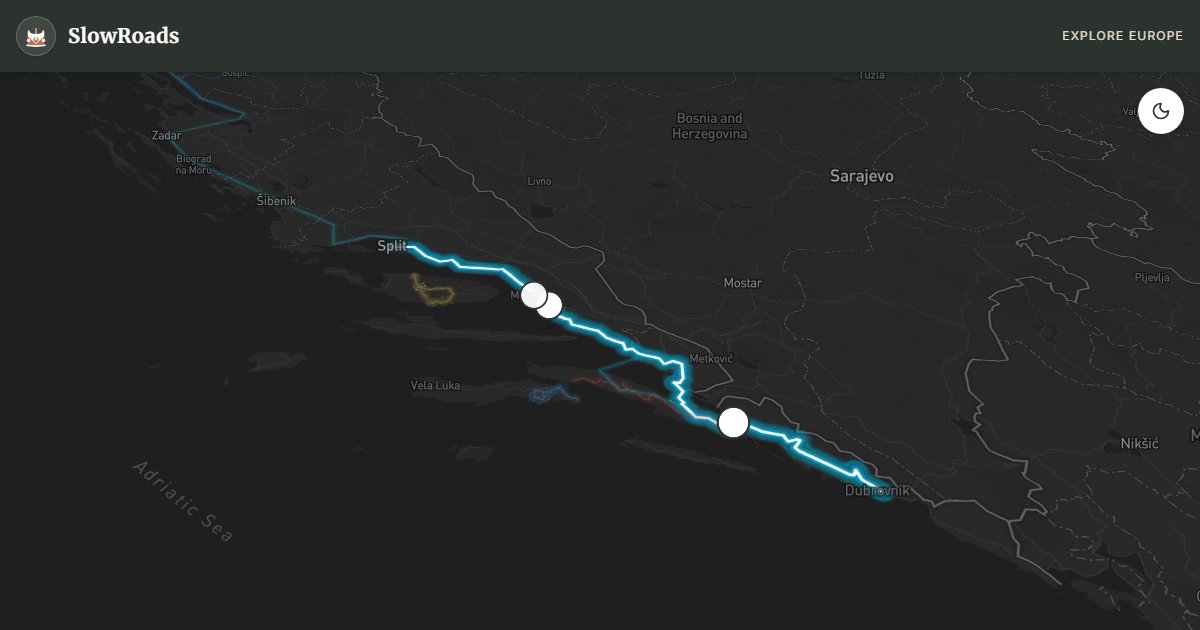
About This Route
Split to Dubrovnik on the southern D8: Makarska Riviera under Biokovo, Omiš, Ston walls and oysters, then Pelješac Bridge toward Dubrovnik's famous walls. Short coastal climbs suit classic and low-power campervans that drive early before heat and coaches thicken the road. Detour the Pelješac wine spine; never skip Ston's medieval walls and salt pans. Autokamp only — wild camping banned nationwide. Shoulder seasons beat August gridlock into Dubrovnik. Fill fuel before long cliff sections and book campsites ahead in July–August.
Detailed Route Guide
The 198 kilometres from Split to Dubrovnik is widely regarded as the most beautiful coastal stretch in Europe, and it is difficult to argue otherwise. The Dalmatian south coast condenses everything that makes Croatia exceptional: Roman and medieval history in the towns, jaw-dropping mountain scenery inland, translucent sea in a dozen shades of blue, and a food culture that turns simple ingredients — olive oil, capers, lamb, Plavac Mali wine — into something worth travelling for. Driving it in a classic van at your own pace is the definitive Croatian experience.
Split is an extraordinary starting point. Diocletian built his retirement palace here in 305 AD, and the medieval city grew inside its walls so organically that the line between Roman ruin and living neighbourhood disappeared entirely. The Peristyle (the emperor's outdoor dining room), the Cathedral of Saint Domnius (built inside Diocletian's mausoleum), and the network of subterranean cellars form one of the most extraordinary archaeological sites in the world that you can walk through, eat lunch in, and sleep beside. Leaving Split southward, the road immediately enters Dalmatian drama: the Omiš canyon, where the Cetina River breaks through a wall of limestone to meet the sea, is one of the most striking geological features on the coast. The Makarska Riviera unfolds over the next 60 kilometres — a succession of pebble beaches and coastal villages presided over by the 1,700-metre limestone wall of Biokovo. The Biokovo Skywalk, a glass-bottomed platform cantilevered over the cliff at 1,228 metres, reveals the full scale of the sea below.
Beyond Makarska the road passes through Brela and Baška Voda before reaching Ploče, the gateway to the Neretva River delta — a surprising wetland of reeds and citrus groves that feels entirely out of place on this rugged coast. The Pelješac Peninsula juts west: its long spine of mountains shelters a microclimate ideal for Plavac Mali, Croatia's greatest red wine, grown on steep terraced vineyards that no tractor can reach. At the base of the peninsula, Ston has the longest medieval walls in Europe after Nanjing — a 5.5-kilometre system of battlements that once protected the lucrative salt pans. Ston oysters, farmed in Mali Ston Bay since Roman times, are a compulsory stop.
For a classic or low-power campervan the route is entirely manageable. The D8 through Dalmatia has no serious climbs, petrol stations are plentiful, and ferry services connect to the islands of Brač, Hvar, and Korčula if you want to add an island dimension. Dubrovnik is the one logistical challenge: the city's fame means summer traffic and parking are genuinely difficult. The solution is to park at the Lapad campsite or the Ivanica rest area north of the old town and take the bus or walk the city walls at dawn before the cruise ship crowds arrive.
Ston's walls and oyster bars deserve a half-day stop before or after the Pelješac Bridge — do not treat them as a blur from the D8. Classic and low-power campervans should clear Dubrovnik approaches before late morning in summer; overnight well outside the walls in Autokamp. Bura can close exposed coastal sections with little warning — obey signs.
Frequently Asked Questions
Points of Interest
Biokovo Skywalk (Nearby)
Nature
Makarska Old Town
Town
Stone Walls of Ston
Monument
Route Highlights
Route Information
Navigation
* Supported by HERE Technologies, headquartered in Amsterdam, Europe. Precise routing through all waypoints.
* Waze only navigates to the starting point. Use Google Maps for the full scenic route.
Offline GPS Navigation
Download the GPX route file to navigate offline using your favorite GPS device or app (Garmin, TomTom, OsmAnd, Gaia GPS).
Ask Copilot (AI Travel Guide)
Hello! I am your SlowRoads Copilot. I know the Dalmatian South Coast intimately. Ask me about scenic viewpoints, local history, hidden culinary gems, or the best camper spots along the way!