About This Route
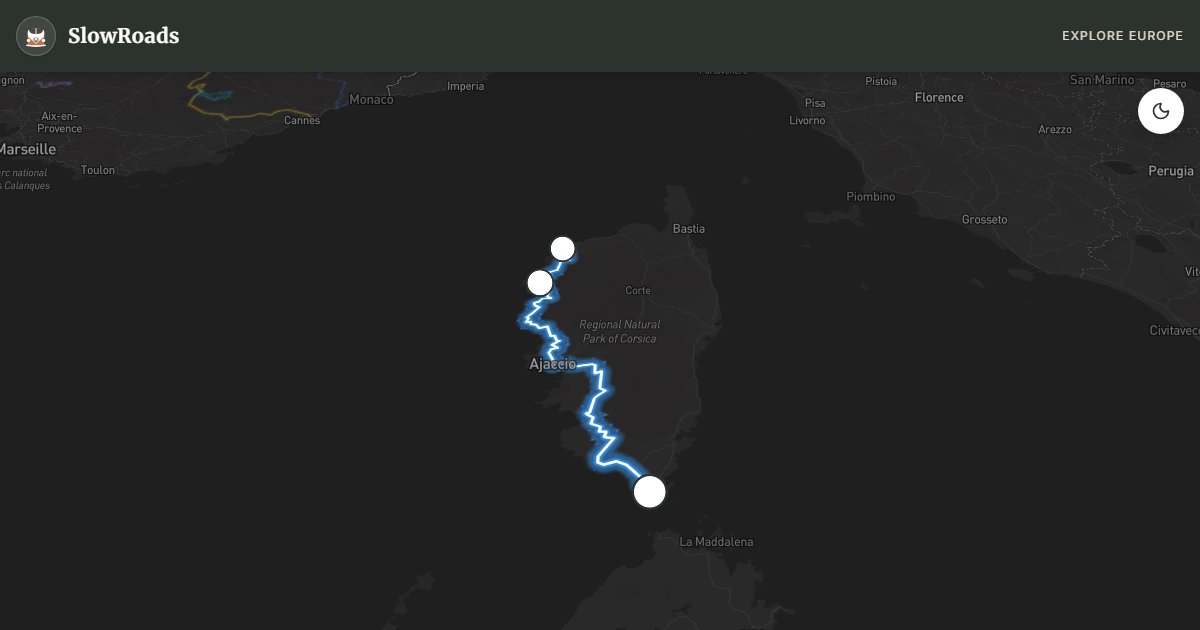
Calvi to Bonifacio on Corsica's wild west coast: granite cliffs, maquis, Genoese towers and the UNESCO Scandola reserve via the exposed D81. Hairpins above Porto and the Calanche de Piana need second gear and engine braking in a classic low-power campervan. Allow 3–4 days; fill up before remote stretches; overnight on aires and campgrounds, not cliff lay-bys. Ferry bookings from Nice, Toulon or Marseille fill early in July–August — check height and length limits. Late May–June bring flowering maquis; September warmer seas and quieter sites.
Detailed Route Guide
The Corsica west coast drive from Calvi to Bonifacio covers a hundred and eighty kilometres of granite cliffs, maquis scrub, and Genoese watchtowers — France's most dramatic island road and the motorised counterpart to the GR20 hiking trail that runs parallel along the spine of mountains inland. This is steep, exposed country: the D81 between Porto and Piana is famous for hairpin bends carved into cliff faces above the UNESCO-listed Scandola Nature Reserve, where the sea has turned red porphyry into arches and caves accessible only by boat. Allow three or four days; rushing this coastline in a low-power camper is both unsafe and wasteful of scenery that reveals itself only when you stop.
Calvi opens the route with a Genoese citadel above a yacht harbour where Christopher Columbus's Corsican connections are debated in every guidebook — the fortress walls offer sunset views across the Balagne olive groves. The northern D81 threads through maquis scented with immortelle and myrtle, dropping to Porto where boat trips depart for Scandola's volcanic rock formations and Girolata's inaccessible cove. The Calanche de Piana — granite needles and organ-pipe formations above the Gulf of Porto — demands second gear and engine braking on the descent; monitor coolant on hot summer climbs when the maquis radiates heat back at the road.
Bonifacio at the southern end sits on white limestone cliffs above a natural harbour that has sheltered sailors since Phoenician times: the citadel's narrow streets drop to a marina where Sardinia is visible on clear days. Between Calvi and Bonifacio, detours inland cross chestnut forests and villages like Sartène where Corsican identity feels least diluted by tourism. Genoese towers punctuate headlands every few kilometres — built in the sixteenth century against Ottoman raids, they now serve as landmarks for photographers and swimmers.
A classic low-power campervan needs healthy brakes and cooling for this route: climb in second gear, descend with engine braking, and never attempt the highest exposed sections in Mistral winds, ice, or thick fog. Fill up in Calvi, Ajaccio, or Propriano before remote stretches around Porto and Scandola. Overnight at aires in Calvi and Bonifacio, campgrounds at Porto for Scandola boat departures, and avoid narrow D81 lay-bys on cliff edges. Ferry bookings from the mainland (Nice, Toulon, Marseille) fill early in July–August — check vehicle height and length limits before you reserve. Late May and June bring flowering maquis and manageable traffic; September offers warm seas and quieter campgrounds. July and August pack the D81 with coaches — arrive early or book campsites ahead. With patience, this coastline becomes one of the Mediterranean’s great slow drives rather than a dash between ferry terminals.
Food and water planning matters as much as gears: village shops may close for long midday breaks, and cliff belvederes rarely have shade for a parked van. Carry extra drinking water on hot days, and treat every descent as a brake-temperature problem — stop to let discs cool if you smell fade. If vertigo is an issue, consider skipping the tightest Calanche hairpins by using signed inland alternatives between Porto and Ajaccio, then rejoining the coast toward Bonifacio.
Frequently Asked Questions
Points of Interest
Calvi Citadel
Castle
Genoese fortress citadel
Porto Scandola
Nature
UNESCO nature reserve
Bonifacio Cliffs
Nature
Limestone cliffs and citadel
Route Highlights
Route Information
Navigation
* Supported by HERE Technologies, headquartered in Amsterdam, Europe. Precise routing through all waypoints.
* Waze only navigates to the starting point. Use Google Maps for the full scenic route.
Offline GPS Navigation
Download the GPX route file to navigate offline using your favorite GPS device or app (Garmin, TomTom, OsmAnd, Gaia GPS).
Ask Copilot (AI Travel Guide)
Hello! I am your SlowRoads Copilot. I know the Corsica West Coast intimately. Ask me about scenic viewpoints, local history, hidden culinary gems, or the best camper spots along the way!