About This Route
Eastern Latvia's Land of Blue Lakes — Aglona Basilica pilgrimage, Rāzna National Park, traditional Latgalian pottery villages, and quiet forest roads linking hundreds of glacial lakes near the Belarus border. Flat to gently rolling touring ideal for classic and low-power campervans seeking silence after Riga. Carry cash for rural cafés; fuel stops are spaced. Summer evenings bring lake mist and empty camps. A contemplative Baltic east that rewards slow loops rather than point-to-point rushing — pottery kilns, basilica bells, and pine-reflected water.
Detailed Route Guide
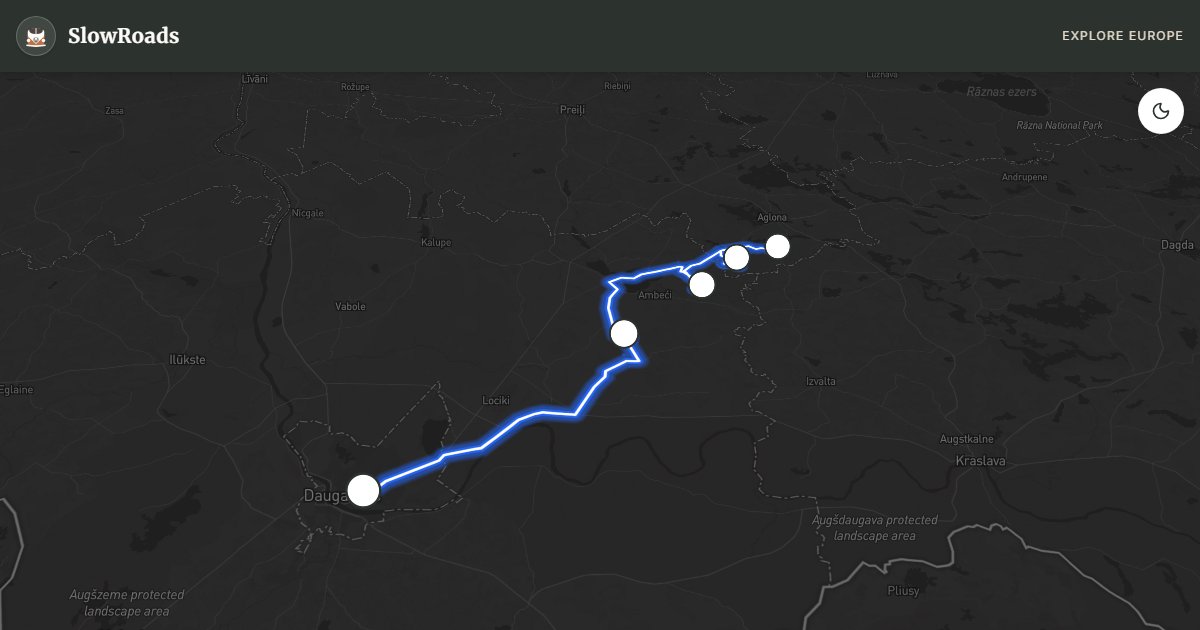
Latgale — Latvia's easternmost region — is the Land of Blue Lakes: a glacial landscape of over nine hundred lakes scattered across forest and farmland, where Catholic Latgalian culture preserves traditions distinct from the Lutheran west, and where the Belarus border adds a frontier atmosphere rarely felt elsewhere in the Baltic states. This roughly 66-kilometre route from Daugavpils north through the lake district to Aglona Basilica combines fortress history, craft villages, and contemplative lake driving on flat, quiet roads ideal for slow van travel.
Daugavpils anchors the southern end — Latvia's second city and the largest fortress in the Baltic states: a nineteenth-century star fort designed by the same engineers who built Verdun, now housing the Mark Rothko Art Centre (Rothko was born here) within its brick ramparts. Van parking works on the fortress periphery; the city offers fuel, supplies, and repair services before entering the quieter lake country. From Daugavpils, regional roads north wind through pine forest punctuated by lake glimpses — Ežezers, Rāzna, and dozens of smaller bodies of water visible from roadside pullouts.
Rāzna National Park protects Latvia's second-largest lake with sandy beaches, designated camping, and hiking trails through mixed forest. Latgalian pottery heritage is strong here — Rainis Museum Jasmuiža near Aizkalne preserves the reconstructed workshop of master ceramicist Andrejs Paulāns and a large collection of Latgalian ceramics. Demonstrations and kiln openings are offered seasonally.
Aglona Basilica at the northern end is Latvia's spiritual centre — a baroque church on the narrow strip of land between Lake Cirišs and Lake Egles, drawing hundreds of thousands of pilgrims annually for the August 15 Assumption festival. The basilica's twin towers dominate the flat landscape; the surrounding lakes offer quiet swimming and forest walks. For classic and low-power campervan travellers, the entire district is mechanically effortless — no significant grades, excellent asphalt on main routes, gravel on lake access roads manageable in dry weather. Allow two to three days; camp at Rāzna or Aglona periphery. May through September; August 15 pilgrimage requires advance booking. Pair with Gauja valley or continue to Estonia's south.
Carry cash and a full tank from Daugavpils — lake-access gravel and village shops thin out quickly. Stay on marked roads near the Belarus border; mobile roaming can switch networks. August 15 at Aglona requires months-ahead booking or a deliberate avoidance of the pilgrimage weekend. Rāzna beaches warm by July; official campsites beat informal lakeside overnighting. Classic campervans find no meaningful grades here — the challenge is remoteness and planning, not horsepower. Pair with Gauja or continue into southern Estonia.
Daugavpils is the last full-service stop before the quieter lake loops — fuel, cash, and groceries matter because village shops keep short hours. Orthodox wooden churches and Latgale farmsteads reward slow secondary roads; keep speeds down for cyclists and farm traffic. Lake campsites and rural guesthouses are the legal overnight options; national-park and reserve rules restrict informal parking. For classic and low-power campervans this is gentle, remote driving — the challenge is logistics and distance from Riga, not gradients.
Frequently Asked Questions
Points of Interest
Aglona Basilica
Monument
Latvia's most important Catholic shrine — baroque basilica on the narrow strip between Lakes Cirišs and Egles, pilgrimage destination since 1700.
Rāzna Lake
Nature
Latvia's second-largest lake in Rāzna National Park — sandy beaches and quiet camping.
Jasmuiža Latgalian Ceramics
Town
Rainis Museum Jasmuiža near Aizkalne — reconstructed workshop of master potter Andrejs Paulāns and a large Latgalian ceramics collection.
Daugavpils Fortress
Castle
A massive nineteenth-century star fortress — Mark Rothko Art Centre inside the ramparts.
Ežezers Lake Viewpoint
Nature
One of Latgale's deepest lakes — forest pullout with swimming access and mushroom foraging trails.
Route Highlights
Route Information
Navigation
* Supported by HERE Technologies, headquartered in Amsterdam, Europe. Precise routing through all waypoints.
* Waze only navigates to the starting point. Use Google Maps for the full scenic route.
Offline GPS Navigation
Download the GPX route file to navigate offline using your favorite GPS device or app (Garmin, TomTom, OsmAnd, Gaia GPS).
Ask Copilot (AI Travel Guide)
Hello! I am your SlowRoads Copilot. I know the Latgale Lake District intimately. Ask me about scenic viewpoints, local history, hidden culinary gems, or the best camper spots along the way!