About This Route
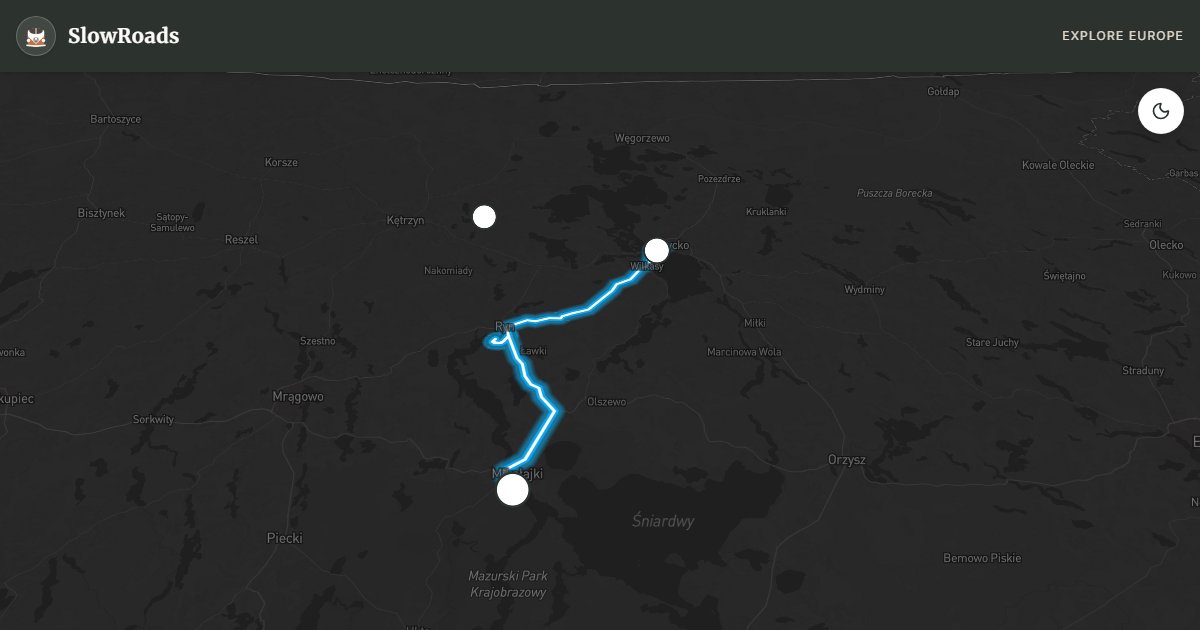
Cruise Masuria’s flat forest roads between Śniardwy and Mamry — about 44 km through Poland’s Land of a Thousand Lakes for classic and low-power campervans. Stork villages, Mikołajki harbour, and Giżycko’s Boyen fortress reward unhurried lakeside days with almost no climbs. Headlights on day and night; overnight at campsites, camper stops, or agroturystyka — not on forest shores. May–June and September beat July crowds and early-summer mosquitoes near reed beds. Fill fuel in Mikołajki or Giżycko before quieter pine stretches. A patient two-day loop suits older vans better than rushing every pier in one afternoon.
Detailed Route Guide
The Masurian Lake District is one of Europe's great slow-driving landscapes — roughly two thousand glacially formed lakes linked by rivers, canals, and quiet forest roads in northeast Poland. The nickname "Land of a Thousand Lakes" understates the scale. Waters range from forest ponds to inland seas such as Lake Śniardwy (Poland's largest lake at about 114 km²) and Lake Mamry — so wide that windy days raise whitecaps more like a coast than a landlocked basin. The last Scandinavian ice sheet left moraines, eskers, and outwash plains clothed in mixed forest. This 44-kilometre route from Mikołajki to Giżycko threads the heart of that mostly flat country on some of the most relaxed asphalt in Poland.
Mikołajki is Masuria's sailing capital: a compact town on the narrows between lakes, its wooden jetties crowded with boats in summer. Bakeries, fish restaurants, and a waterfront promenade make an easy morning start. North through forest and smaller lakes you reach Ryn, where a red-brick Teutonic castle rises above Lake Ryńskie — once a komturship seat, now a hotel with towers visible from the road. Giżycko, the largest Masurian town, straddles the Łuczański Canal and is famous for Boyen Fortress, a nineteenth-century Prussian star fort whose grassy bastions are a peaceful walk. Stork nests on village chimneys are a summer signature; pull over carefully on wide verges rather than blocking single-track lanes.
For older and low-power campervans this is among the easiest Polish routes. Glacial outwash between the lakes barely registers a gradient; moraine rises rarely hold more than about 3–4% for long. Roads are generally sound, wide enough for comfortable passing, and quiet outside July–August weekends when Warsaw and Tricity sailors arrive. Wild camping is generally prohibited — use campsites, camper stops, or legal parking. The state forestry programme Zanocuj w lesie allows tent or hammock overnighting only in marked forest zones; leave the vehicle at legal parking and do not drive forest tracks to the shore. Carry insect mesh for June–early July mosquitoes near reedy bays.
July and August bring the warmest weather and lake temperatures around 22–24°C, plus peak traffic. May–June and September are quieter, with fresh green or autumn colour and emptier jetties. Winter freezes the lakes — skating is traditional on Śniardwy — but most tourist services close. A sobering half-day detour is the Wolf's Lair (Wilczy Szaniec) near Kętrzyn: Hitler's wartime headquarters, now a museum among demolished concrete bunkers reclaimed by forest. Rent a small boat in Mikołajki if you want the landscape from the water; no sailing licence is required in Poland for boats under 7.5 m.
Practical tip: Sunday afternoons in July can clog the Mikołajki waterfront — arrive midweek or early morning for easier van parking. Keep headlights on as required nationwide, even in bright lake glare. If you tow or run a heavily loaded classic camper, the flat profile still helps, but allow extra space on single-track village lanes where stork nests and farm traffic share the verge. Pair the loop with a quiet night at a campsite between Ryn and Giżycko so you are not hunting for legal parking after dark.
Frequently Asked Questions
Points of Interest
Mikołajki Harbor
Town
The beating heart of Masuria. A lively harbor filled with wooden piers and seafood restaurants.
Boyen Fortress
Monument
A massive Prussian fortress shaped like a star, built to protect the narrow crossing between lakes.
Wolf's Lair (Nearby)
Monument
The ruins of Hitler's massive concrete bunker system, now reclaimed by the deep forest.
Route Highlights
Route Information
Navigation
* Supported by HERE Technologies, headquartered in Amsterdam, Europe. Precise routing through all waypoints.
* Waze only navigates to the starting point. Use Google Maps for the full scenic route.
Offline GPS Navigation
Download the GPX route file to navigate offline using your favorite GPS device or app (Garmin, TomTom, OsmAnd, Gaia GPS).
Ask Copilot (AI Travel Guide)
Hello! I am your SlowRoads Copilot. I know the Masurian Great Lakes Route intimately. Ask me about scenic viewpoints, local history, hidden culinary gems, or the best camper spots along the way!