About This Route
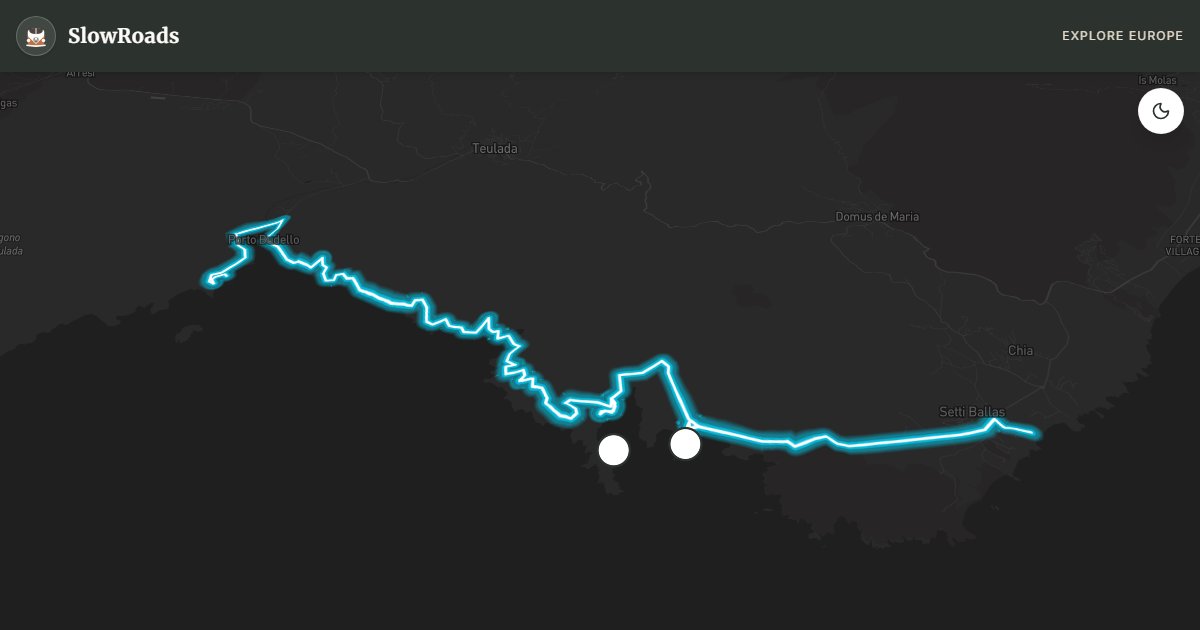
Follow the SP71 Strada Panoramica Costa del Sud from Chia toward Teulada — Tuerredda's turquoise bay, Capo Malfatano tower, and wild maquis above empty coves. Short, mostly gentle coastal kilometres reward slow travel in classic campervans; summer heat and scarce shade matter more than gradients. Prefer official campsites near Chia; beach overnighting is restricted and often fined. Fill water before remote stretches and start early for parking at Tuerredda. May–June or September for clear water without peak-season parking wars on the pull-offs.
Detailed Route Guide
Sardinia's south coast contains some of the most extraordinary beach scenery in the entire Mediterranean — water that cycles from turquoise to emerald to deep sapphire depending on the depth, white sand beaches framed by wild maquis scrubland, and a coastline so undeveloped that you can drive for kilometres without seeing a single hotel. The 26-kilometre Strada Panoramica della Costa del Sud (SP71) between Chia and Porto di Teulada hugs this coast on a narrow road that climbs and descends over rocky headlands, revealing a new bay at almost every bend. This is the authentic southern Sardinia that exists behind the tourist brochure images of the Costa Smeralda in the north.
The standout stop on the route is Tuerredda, consistently rated among Italy's top ten beaches. A half-hour walk from the road (or a longer drive on a rough track) leads to a bay of extraordinary beauty: fine white sand, Caribbean-blue water clear to 5 metres depth, and a small island just offshore that you can wade to at low tide. In the height of summer the beach draws crowds, but in May or September it is possible to be entirely alone. The Torre di Capo Malfatano, a 16th-century Spanish watchtower on the headland above Tuerredda, is one of dozens of such towers built by the Spanish crown to warn coastal communities of Saracen and Barbary pirate raids. From the tower platform, the coastline unfolds in both directions in a panorama that takes in at least four distinct bays.
For a van traveller, the Costa del Sud route has one significant practical consideration: the SP71 is a narrow, winding road that can be difficult to pass on when two vehicles meet, and in high summer the bay access tracks are sometimes blocked by queuing cars. The route works best in May, June, September, or October when traffic is light and the water is still warm enough to swim in (the Sardinian sea reaches 24–26°C in September). The road itself is paved throughout and presents no mechanical challenges — gradients are moderate and distances are short. Wild camping on Sardinia requires care: many of the most beautiful spots near beaches are technically protected within the Parco Naturale Regionale Sulcis, and camping is prohibited. Official campsites near Chia and Porto di Teulada are well-equipped and in beautiful positions.
Sardinia has a distinct food culture that bears strong traces of its long centuries of Spanish and Aragonese rule. Look for malloreddus (small ridged pasta with saffron and sausage), porceddu (whole suckling pig roasted over myrtle branches), seadas (fried pastry filled with fresh cheese and drizzled with honey), and Cannonau wine, a robust red made from Grenache grapes that is unique to the island and associated with the extraordinary longevity of Sardinian shepherds — the island has one of the world's highest concentrations of centenarians.
Keep expectations honest on length: this is a short, intense coastal ribbon, not a week-long traverse. Use it as a highlight day within a wider Sardinia trip, with Chia or Teulada campsites as bases. The SP71’s narrow headlands demand courtesy at pull-outs; do not block bay access tracks in high season. Swim early at Tuerredda, then climb to Capo Malfatano’s Spanish tower for the panorama. Respect the Sulcis regional park camping bans — official sites exist for a reason. May–June and September–October deliver warm water without August’s queues. Classic campervans love the modest gradients; the challenge is patience with oncoming cars, not horsepower.
Frequently Asked Questions
Points of Interest
Tuerredda Beach
Nature
Often cited as one of the most beautiful beaches in Sardinia with Caribbean-like colors.
Torre di Capo Malfatano
Monument
A 16th-century Spanish watchtower offering panoramic views of the rugged coastline.
Route Highlights
Route Information
Navigation
* Supported by HERE Technologies, headquartered in Amsterdam, Europe. Precise routing through all waypoints.
* Waze only navigates to the starting point. Use Google Maps for the full scenic route.
Offline GPS Navigation
Download the GPX route file to navigate offline using your favorite GPS device or app (Garmin, TomTom, OsmAnd, Gaia GPS).
Ask Copilot (AI Travel Guide)
Hello! I am your SlowRoads Copilot. I know the Sardinia - South Coast Panorama (SP71) intimately. Ask me about scenic viewpoints, local history, hidden culinary gems, or the best camper spots along the way!