About This Route
Link southeast Sicily's UNESCO Baroque towns from Syracuse to Ragusa via Noto and Modica — golden limestone façades rebuilt after the 1693 earthquake, cold-process chocolate, and Vendicari nature-reserve beaches. Gentle hills suit classic campervans; the real enemy is brutal inland summer heat that stresses older cooling systems in slow traffic. Park outside historic cores, overnight at campsites or agriturismi, and drive early or late. Spring wildflowers or autumn light beat July–August siesta-hour asphalt between the baroque towns on this slow coastal loop.
Detailed Route Guide
The southeast corner of Sicily contains the most extraordinary concentration of late-Baroque architecture in Europe. After the catastrophic earthquake of 1693 destroyed most of the towns in the Val di Noto, the entire region was rebuilt from scratch in the exuberant Sicilian Baroque style of the early 18th century. The result was a landscape of golden limestone towns whose curved facades, elaborate balconies, and ornate cathedral steps have been compared to stage sets — almost too perfect to be real. In 2002, eight of these towns (including Noto, Modica, and Ragusa) were collectively declared a UNESCO World Heritage Site, one of only a handful of designations in Italy for an entire group of settlements rather than a single monument.
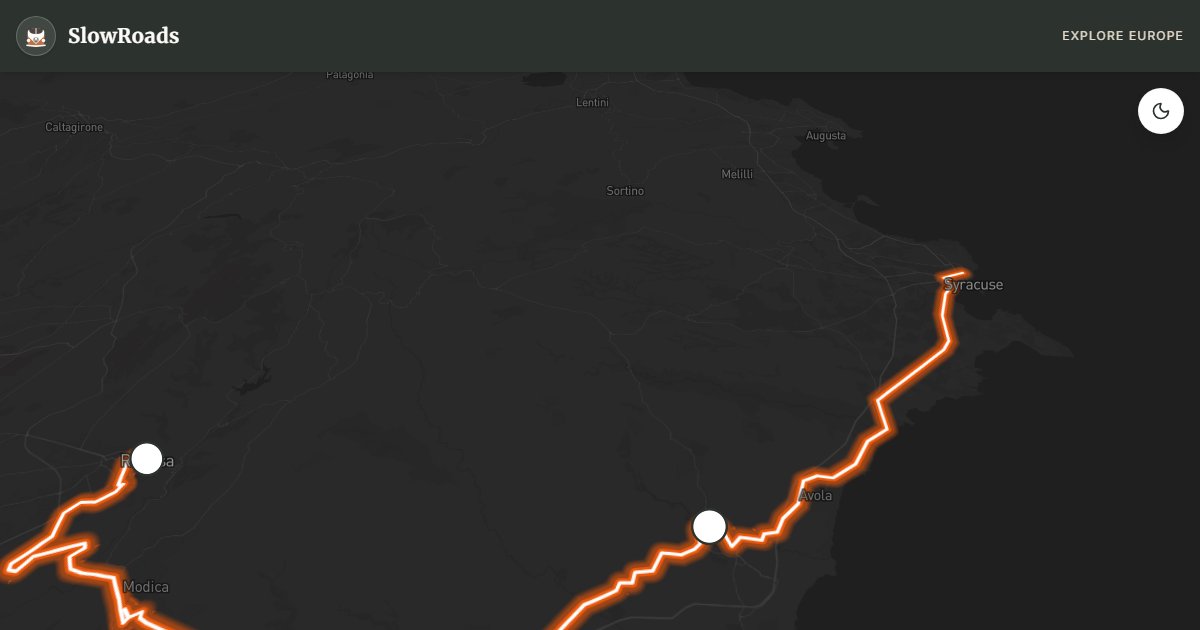
The 91-kilometre route from Syracuse to Ragusa introduces each town in sequence. Syracuse itself, though not part of the Baroque group, is one of the oldest cities in the Western world, founded by Corinthian Greeks in 734 BC. The Greek theatre at the Parco Archeologico is the largest ancient Greek theatre in the world still used for performances. From there, Noto is the most theatrical of the Baroque towns — the cathedral at the top of the main boulevard has the quality of a film backdrop, especially when lit at dusk. Modica, lower in the valley, is famous throughout Italy for its cold-process chocolate, which dates from the Spanish colonial period and uses pre-industrial techniques (no cocoa butter or milk) to produce a dry, crumbly, intensely flavoured bar unlike anything produced elsewhere. Ragusa is divided into two: the modern upper town and Ragusa Ibla, the ancient medieval quarter rebuilt in Baroque splendour, whose narrow, hilly streets warrant several hours of exploration.
For a van traveller, the Baroque southeast is one of the most rewarding parts of Sicily precisely because the roads are gentle and the distances are short. The landscape between the towns is rolling and dry — dry-stone walls, almond orchards, carob trees, and the occasional shepherd with a flock of sheep crossing the road. Vendicari Nature Reserve, a short detour from the main route near Noto, has some of the finest beaches in Sicily and a lagoon system that draws flamingos, herons, and migrating birds. This combination of art, food, and nature makes the route excellent for 2–4 days of slow travel.
The best seasons are spring (March–May, with almond blossom in February and wildflowers through April) and autumn (September–November). Summer in inland Sicily is brutally hot — 35–40°C is common in July and August, which is particularly unkind to air-cooled engines. The baroque towns themselves are largely stone, which absorbs heat mercilessly. If you must travel in summer, drive and walk in the early morning and late evening, and find shade during the midday hours. The towns are all easily accessible by van, with car parks at the edge of each historic centre.
Southeast Sicily is a cultural slow road: short hops, long walks, early mornings. Park at the edge of each Baroque centre and enter on foot — historic cores are steep, camera-watched, and unfriendly to wide vans. Summer inland heat (often 35–40°C) is harsh on older engines; drive at dawn and dusk, rest in shade at midday. Spring almond blossom and autumn light are kinder seasons. Pair Noto with Vendicari’s beaches and bird lagoons for a nature counterpoint to stone facades. Campsites near Noto, Ragusa, and Fontane Bianche (south of Syracuse) keep overnighting legal and simple. Two to four days lets Syracuse’s Greek theatre, Modica’s chocolate, and Ragusa Ibla each breathe.
Frequently Asked Questions
Points of Interest
Noto Cathedral
Monument
Ragusa Ibla (Old Town)
Town
Vendicari Nature Reserve
Nature
Route Highlights
Route Information
Navigation
* Supported by HERE Technologies, headquartered in Amsterdam, Europe. Precise routing through all waypoints.
* Waze only navigates to the starting point. Use Google Maps for the full scenic route.
Offline GPS Navigation
Download the GPX route file to navigate offline using your favorite GPS device or app (Garmin, TomTom, OsmAnd, Gaia GPS).
Ask Copilot (AI Travel Guide)
Hello! I am your SlowRoads Copilot. I know the Sicily Baroque Southeast Coast intimately. Ask me about scenic viewpoints, local history, hidden culinary gems, or the best camper spots along the way!