About This Route
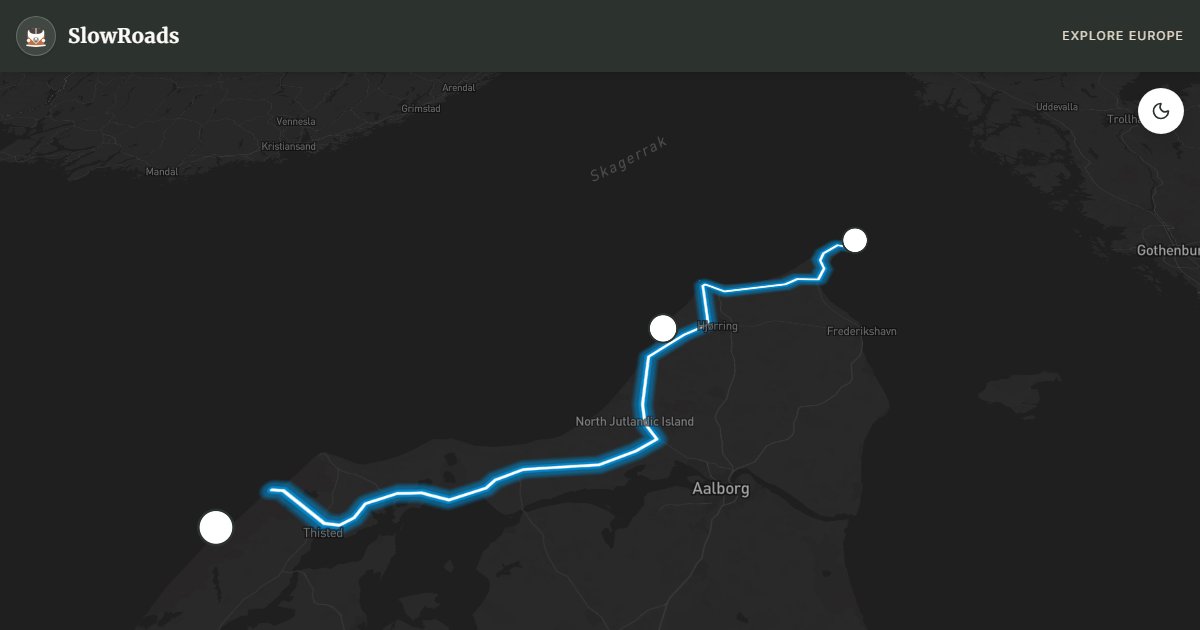
West Jutland's wild North Sea coast: Cold Hawaii surfing at Klitmøller, Thy National Park dunes and Skagen's Grenen tip where two seas meet. Flat but windy for tall classic vans — plan extra fuel and slower averages when crosswinds hit the dikes. WWII bunkers at Hanstholm; no beach or dune overnighting — campsites and QuickStop only. Plan two or more days if continuing to Skagen; wind and harbour stops matter more than distance. Fill whenever pumps appear between sparse coastal towns.
Detailed Route Guide
Denmark's North Sea coast is a landscape on the edge of everything — a raw, primordial stretch of shifting dunes, roaring surf, and vast, slate-grey skies that make the rest of Europe feel tame by comparison. The route begins in Klitmøller, the small fishing village that became globally famous as 'Cold Hawaii' when American surfers discovered that the consistent North Sea swells produce world-class wave conditions. The sight of wetsuited surfers riding clean waves with red-roofed Danish houses behind them is one of the most unexpected and memorable images in Scandinavia. Klitmøller sits within Thy National Park, Denmark's first national park, a protected landscape of dramatic migrating dunes, ancient heather moorland, and coastal lakes that stretches along the coast for 55 kilometres.
Driving north, the road keeps close to the coast through a succession of small fishing towns and summer resort communities — Hanstholm with its massive WWII German bunker complex (one of the largest in Europe), Hirtshals with its aquarium and ferry connections to Norway and Iceland, and Løkken with its famous beach where tractors are still used to launch fishing boats directly from the sand. The great natural spectacle that no visitor should miss is Rubjerg Knude lighthouse, a 23-metre tower surrounded by a migrating sand dune so massive it has completely buried the former lighthouse keeper's buildings and continues to move inland at around 15 metres per year. The lighthouse itself was literally relocated 70 metres in 2019 to save it from falling into the sea. The ultimate destination is Skagen — Denmark's northernmost town and one of the most artistically celebrated places in Scandinavia — where, at the Grenen sandbar, you can stand with one foot in the Skagerrak and one in the Kattegat as the two seas visibly collide.
For classic and low-power campervans, this is arguably the most suitable Danish route of all. The terrain is predominantly flat — these are coastal dunes, not hills — and the road surface quality is excellent throughout. The primary consideration is wind: the North Sea coast can produce sustained strong winds (20-30km/h is normal, with gusts considerably higher) that significantly affect fuel consumption and stability. Plan for lower average speed and more frequent fuel stops than usual. Note that in Skagen, vehicles are not permitted to drive on the beach road to Grenen in the peak summer months — park at the Grenen car park and walk or take the tractor-bus (Sandormen) the last 1km to the tip.
The North Sea coast is a genuinely year-round destination with different appeals in each season. Summer brings warmth, long evening light, and access to beach activities. Autumn produces dramatic Atlantic storm skies ideal for photography. Winter is quiet, raw, and utterly atmospheric — storm-watching from a harbour café with a hot cocoa is pure Danish hygge. Spring sees the migrating birds arrive in vast numbers, making this a paradise for birdwatchers. The famous 'North Sea Trail' cycling path also follows much of this route if the road's appeal is enhanced by a saddle.
North Sea wind raises fuel use and fatigue — shorter stages and earlier stops help older engines and drivers. Overnight exclusively on campsites or QuickStop areas; dunes and beaches are off-limits. In peak summer, park at Grenen and walk or take the Sandormen tractor-bus rather than forcing the van toward the tip.
Frequently Asked Questions
Points of Interest
Grenen (Where seas meet)
Nature
Rubjerg Knude Lighthouse
Nature
Thy National Park
Nature
Route Highlights
Route Information
Navigation
* Supported by HERE Technologies, headquartered in Amsterdam, Europe. Precise routing through all waypoints.
* Waze only navigates to the starting point. Use Google Maps for the full scenic route.
Offline GPS Navigation
Download the GPX route file to navigate offline using your favorite GPS device or app (Garmin, TomTom, OsmAnd, Gaia GPS).
Ask Copilot (AI Travel Guide)
Hello! I am your SlowRoads Copilot. I know the West Coast North Sea Drive intimately. Ask me about scenic viewpoints, local history, hidden culinary gems, or the best camper spots along the way!