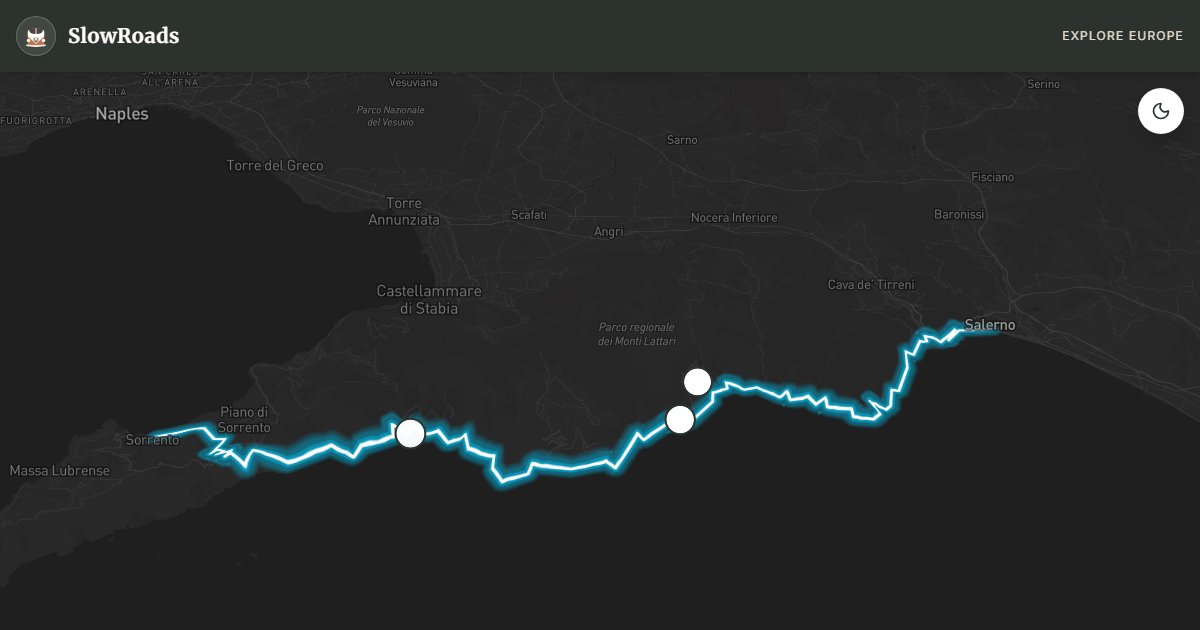
About This Route
Trace the UNESCO SS163 cliff road from Sorrento to Salerno past Positano, Amalfi, and Ravello — lemon terraces over the Tyrrhenian, Arab-Norman cathedral, and Villa Cimbrone's infinity views. Motorhomes and caravans often face daytime bans and length limits on stretches of the SS163: verify the current ANAS ordinance before you go. When legal, prefer dawn starts, anticlockwise Salerno→Sorrento, ferries between villages, and a base at Sorrento or Maiori rather than scarce cliff parking. October–November lemon harvest is the sanest window for classic campervans that refuse a bad fit.
Detailed Route Guide
The Amalfi Coast Drive along the SS163 is one of the most celebrated and most challenging coastal roads in the world. Stretching 49 kilometres from Sorrento to Salerno along the southern face of the Sorrentine Peninsula, the road was literally blasted from sheer limestone cliffs that plunge directly into the Tyrrhenian Sea. Completed in 1853 under the Kingdom of the Two Sicilies, it was considered a feat of impossible engineering at the time. Today it is a UNESCO World Heritage Site, and the combination of physical drama, pastel-coloured fishing villages, lemon terraces, and impossibly blue water makes it one of the most photographed stretches of road anywhere in the world.
The villages along the route each have their own distinct character. Positano is the most glamorous — a cascade of white and pastel houses tumbling down a steep hillside to a small beach, with no flat ground anywhere in the village. The road passes directly through it on two levels, and the views down to the harbour are extraordinary. Amalfi itself, halfway along the route, has an Arab-Norman cathedral that reflects the town's medieval history as one of the four great Italian maritime republics. Above Amalfi, the hillside village of Ravello is accessible by a short but steep detour and offers perhaps the finest views on the entire coast — the terrace of Villa Cimbrone, suspended above the sea, is one of those places that genuinely defies description.
For a classic or low-power campervan or any wide vintage van, the Amalfi Coast is the most technically demanding drive in this guide — and often restricted: motorhomes and caravans face long daytime bans on stretches of the SS163 (commonly 06:30–midnight), with additional odd/even plate rules in peak season. Check the current ANAS ordinance before you go. The road is extraordinarily narrow in places — barely two car widths — and overhangs the sea with no barrier on some sections. Buses and trucks use the road regularly, and passing them requires carefully choreographed manoeuvres at dedicated passing bays. In summer, traffic can reduce the route to walking pace. The best time is very early morning, in the low season, or by ferry between towns. Going anticlockwise (from Salerno to Sorrento) puts you on the inside of the cliff rather than the outside.
The ideal experience of the Amalfi Coast for a van traveller is not to rush it but to find a base — perhaps at the campground in Sorrento or the camperstop at Maiori — and explore specific sections by car and specific sections on foot or by ferry. The ferry between Positano, Amalfi, and Salerno is cheap, fast, and offers views of the road from the sea that completely change your understanding of the engineering achievement. October and November bring the lemon harvest, quieter roads, and warm sea temperatures that remain swimmable. The coast receives enough rain in late autumn to keep it intensely green, and the terraced lemon groves continue to produce their giant fruit long into winter.
Respect the ordinance before you romanticise the postcard. Motorhomes and caravans are frequently banned on stretches of the SS163 during daytime hours (commonly 06:30–midnight), with additional length limits — verify the current ANAS rules for your dates. When travel is legal, go anticlockwise from Salerno toward Sorrento to keep the cliff wall on your right, start before dawn, and use ferries between Positano, Amalfi, and Salerno for the villages themselves. Base the van at Sorrento or Maiori campsites rather than hunting scarce cliff parking. October–November brings lemon harvest, warmer seas, and thinner traffic — the sanest window for classic campervans that refuse to force a bad fit.
Frequently Asked Questions
Points of Interest
Amalfi Cathedral
Monument
Villa Cimbrone (Ravello)
Nature
Positano Viewpoint
Nature
Route Highlights
Nearby Scenic Drives
Route Information
Navigation
* Supported by HERE Technologies, headquartered in Amsterdam, Europe. Precise routing through all waypoints.
* Waze only navigates to the starting point. Use Google Maps for the full scenic route.
Offline GPS Navigation
Download the GPX route file to navigate offline using your favorite GPS device or app (Garmin, TomTom, OsmAnd, Gaia GPS).
Ask Copilot (AI Travel Guide)
Hello! I am your SlowRoads Copilot. I know the Amalfi Coast Drive intimately. Ask me about scenic viewpoints, local history, hidden culinary gems, or the best camper spots along the way!