About This Route
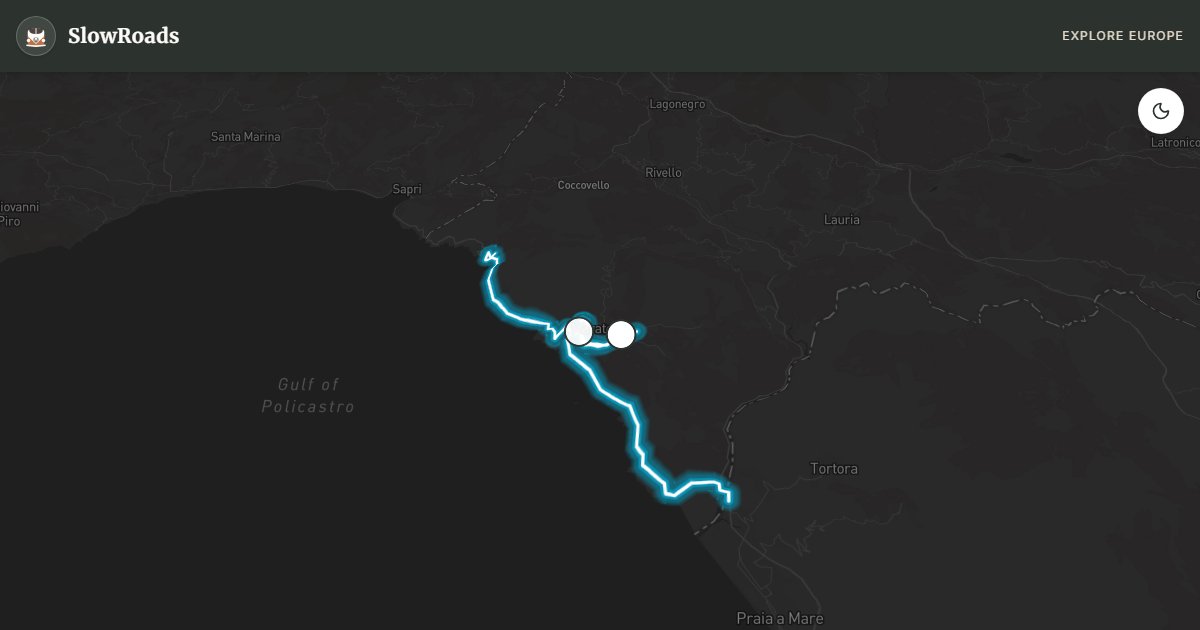
Trace Basilicata's quieter cliff SS18 from Acquafredda to Castrocucco — Porto di Maratea, Christ the Redeemer on Monte San Biagio, and Tyrrhenian coves without Amalfi's coach density. Narrow and sometimes steep: classic campervans need patience, folded mirrors, and early starts; large motorhomes may find sections tight. Prefer campsites near Maratea over cliff pull-offs, and check local height or length notices before committing to the corniche. May–June or September–October for swimming weather without peak Ferragosto traffic on this southern Amalfi alternative.
Detailed Route Guide
Maratea is one of Italy's best-kept secrets — a small coastal town in the Basilicata region that possesses a coastline of vertiginous limestone cliffs, crystal-clear water, and an extraordinary natural setting without the crowds or prices of the Amalfi Coast, which it is regularly compared to. The 29-kilometre drive along the SS18 between Acquafredda and Castrocucco is the road that defines this coast: an engineering achievement cut into sheer rock faces that drop directly to the Tyrrhenian Sea, with views that open and close like theatrical curtains at every bend. Above the main town of Maratea, on a peak at 634 metres, stands the white marble Christ the Redeemer statue — about 21 metres tall — among Europe's tallest Christ statues, often compared with Rio's — arms outstretched over the Tyrrhenian Sea in a setting of almost surreal drama.
The coast at Maratea is less famous than the Amalfi Coast but arguably more beautiful in its natural state. The water has the same quality of blue — deep, transparent, intensely coloured — but the cliffs are wilder and less developed, and the coves accessible from the road are known primarily to locals and the steadily growing community of Italian coastal tourists who have discovered that Basilicata offers far better value than Campania. The town of Maratea itself is divided into several parts: the upper historic centro (accessible on foot via steep lanes), the Porto di Maratea with its elegant harbour and seafood restaurants, and the beach area at Fiumicello. The harbour restaurants serve some of the finest fish in southern Italy, with a very direct relationship between the morning's catch and the afternoon's menu.
For a classic or low-power campervan, the SS18 presents similar challenges to the Amalfi Coast but on a slightly more manageable scale. The road is narrow and the cliffs are real, but traffic volumes are dramatically lower than on the SS163. In the shoulder seasons, you can drive the route almost without encountering other vehicles. The steepest section is the approach road to the Christ statue from the town — this is a separate, very narrow road with a gradient that requires low gearing, and larger campervans may find it difficult. The statue itself is visible from almost everywhere on the coast, and many visitors prefer to admire it from viewpoints on the main road rather than attempting the ascent. Fuel stops in Scalea to the south or Lagonegro to the east before setting out.
The best time to visit Maratea is May to June and September to October. July and August bring the annual influx of Italian holidaymakers, which fills the few hotels and raises restaurant prices, but even then Maratea never reaches the saturation levels of the Amalfi towns. The beaches accessible from the SS18 are genuine hidden gems — rocky coves with no facilities and extraordinarily clear water. The coast around Maratea is also one of the rare stretches of the Italian Mediterranean where loggerhead sea turtles (Caretta caretta) nest, and between June and August, local environmental groups run guided walks to observe the nesting process.
Frequently Asked Questions
Points of Interest
Statue of Christ the Redeemer
Monument
A roughly 21-metre Christ statue atop Monte San Biagio — among Europe's tallest Christ statues (often compared with Rio's).
Porto di Maratea
Town
A charming, elegant marina tucked into the rocky coastline.
Route Highlights
Nearby Scenic Drives
Route Information
Navigation
* Supported by HERE Technologies, headquartered in Amsterdam, Europe. Precise routing through all waypoints.
* Waze only navigates to the starting point. Use Google Maps for the full scenic route.
Offline GPS Navigation
Download the GPX route file to navigate offline using your favorite GPS device or app (Garmin, TomTom, OsmAnd, Gaia GPS).
Ask Copilot (AI Travel Guide)
Hello! I am your SlowRoads Copilot. I know the Maratea - The Basilicata Jewel (SS18) intimately. Ask me about scenic viewpoints, local history, hidden culinary gems, or the best camper spots along the way!