Andalusia - White Villages (Pueblos Blancos)
About This Route
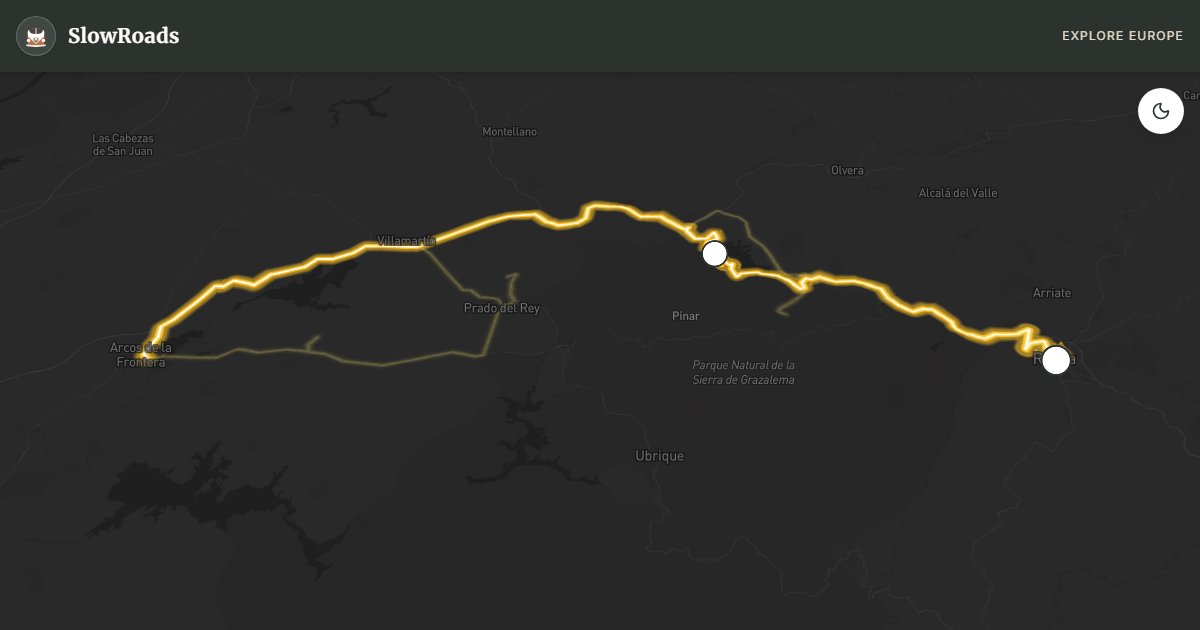
Wind through Sierra de Grazalema's Pueblos Blancos from Arcos de la Frontera to Ronda — cork oaks, Zahara's turquoise reservoir, and the Puente Nuevo over El Tajo. Whitewashed hill towns reward slow travel: park outside the Medina, walk the plazas, then rejoin mountain lanes toward Puerto de las Palomas. Gradients are hilly rather than extreme, so classic and low-power campervans cope if you avoid midday July heat. Spring wildflowers and autumn light beat 40°C summers. Look for áreas de autocaravanas at village edges and book Grazalema campsites ahead in Easter week.
Detailed Route Guide
The Pueblos Blancos route through Andalusia's Sierra de Grazalema is not simply a scenic drive — it is an immersion into one of Europe's oldest and most visually coherent cultural landscapes. The whitewashed villages strung along this mountain route descend from Moorish hill settlements, and the tradition of lime-washing exterior walls — originally a hygienic practice to ward off insects and disease — has persisted for over 500 years, creating a visual unity that is instantly recognisable. The route begins in Arcos de la Frontera, which is arguably the most dramatic of all the white villages: it clings to a narrow sandstone ridge above a reservoir, with its old town streets barely wide enough for a donkey cart and views dropping hundreds of metres to the valley below. From the main plaza, the precipice is so sheer you feel you could lean over and tumble into the water below.
Heading east into the Sierra de Grazalema — a UNESCO Biosphere Reserve — the road climbs through cork oak forests whose stripped bark reveals a vivid red-orange underlayer, and through groves of ancient olive trees that have been harvested for olive oil for thousands of years. The village of Grazalema itself is a jewel: compact, friendly, and surrounded by peaks that catch Atlantic moisture and make this one of the wettest areas in Andalusia. From here, the route descends and climbs again to Zahara de la Sierra, arguably the most photographed pueblo blanco, with its Moorish castle tower standing sentinel above the turquoise Zahara reservoir. The combination of white village, ancient fortification, and glittering water below is the defining image of Andalusian landscape photography. The road between Grazalema and Zahara passes through the Puerto de las Palomas pass, which at around 1,180 metres offers panoramic views across the sierra.
The culmination of the route is Ronda, one of Andalusia's great cities. Ronda sits on a dramatic plateau divided by the El Tajo gorge — a 120-metre vertical chasm carved by the Guadalevín river — and the Puente Nuevo bridge that spans it, completed in 1793 after decades of construction, is one of the most photographed structures in Spain. Beyond its extraordinary setting, Ronda has a rich cultural history: it is closely associated with the development of modern bullfighting on foot (the Real Maestranza bullring dates to 1785), and it inspired Ernest Hemingway and Orson Welles, the latter of whom asked that his ashes be scattered here. Walking the old Arab quarter, the Medina, feels like stepping back centuries — the narrow alleyways, the hammam, and the ancient city walls speak of a civilization that shaped this entire region profoundly.
For classic and low-power campervan drivers, this route is genuinely one of the most enjoyable in Spain. The roads are hilly and winding but not extreme — gradients are manageable, the roads are well-surfaced, and the scenery rewards every slow kilometre. Parking in the village centres is tight (Arcos de la Frontera in particular has extremely narrow old-town streets — park below and walk up), but campervan areas and free overnight spots exist at the edge of most villages. Temperatures in summer can be fierce — inland Andalusia regularly reaches 38–42°C in July and August — so spring (March–May) and autumn (September–October) are far preferable for van travel, especially inside a campervan without air conditioning. The route is at its most beautiful when the wildflowers are blooming in April and the morning light catches the white walls golden at dawn.
Frequently Asked Questions
Points of Interest
Puente Nuevo (Ronda)
Monument
Zahara Reservoir View
Nature
Route Highlights
Nearby Scenic Drives
Route Information
Navigation
* Supported by HERE Technologies, headquartered in Amsterdam, Europe. Precise routing through all waypoints.
* Waze only navigates to the starting point. Use Google Maps for the full scenic route.
Offline GPS Navigation
Download the GPX route file to navigate offline using your favorite GPS device or app (Garmin, TomTom, OsmAnd, Gaia GPS).
Ask Copilot (AI Travel Guide)
Hello! I am your SlowRoads Copilot. I know the Andalusia - White Villages (Pueblos Blancos) intimately. Ask me about scenic viewpoints, local history, hidden culinary gems, or the best camper spots along the way!