Via Chiantigiana (Florence to Siena)
About This Route
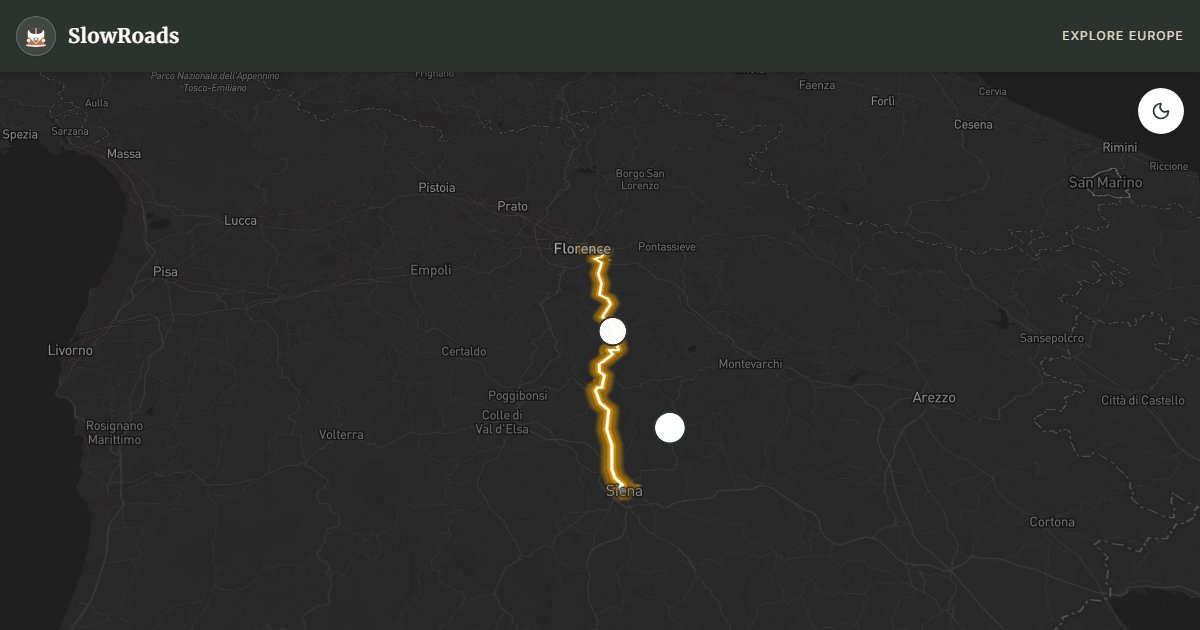
Drive the SS222 Via Chiantigiana from Florence toward Siena through Chianti Classico — Greve, Panzano, Castellina, cypress ridges, and cellar doors for Sangiovese. Rolling hills stay friendly to classic and low-power campervans if you avoid rush-hour Florence exits and park outside village ZTLs. Overnight at agriturismi with pitches; wild camping among working vines is not appropriate. Carry cash for small estates and taste lightly if you are the driver. May–June or September–October harvest light outshine crowded summer weekends on the ridge road.
Detailed Route Guide
The Via Chiantigiana (SS222) is the road that defined an image of Tuscany that the whole world recognises: rolling hills striped with vineyards, dark cypress trees pointing skyward at every bend, hilltop towers visible across misty valleys, and the particular gold-green light of late afternoon that turns the landscape into a living painting. The 62-kilometre route from Florence to Siena through the heart of the Chianti Classico wine region is not a fast road — it was never meant to be. It meanders, climbs, and descends through the landscape with the unhurried pace that the Italians call dolce far niente, and it rewards travellers who stop, look, and taste rather than those who are trying to get anywhere in particular.
The road passes through a series of small towns and villages that are far more authentic than their famously photographed counterparts. Greve in Chianti, the main market town of the region, has a triangular piazza with porticoed buildings that has been the commercial centre of this wine-producing area for centuries. The butcher Falorni has been operating in the same shop since 1806 and its hanging salami are as much a local landmark as the church. Panzano, a village higher in the hills, is home to Dario Cecchini — possibly the most theatrical butcher in Italy, who quotes Dante while he works and hosts legendary Sunday lunches in his garden. Castellina in Chianti, south of Panzano, has a medieval fortified centre with a 15th-century covered walkway (via delle volte) built into the town walls. Just east of the main route, Castello di Brolio is the ancestral home of Baron Ricasoli, who in the 19th century essentially invented the modern recipe for Chianti wine.
For a classic or low-power campervan, the Chiantigiana is close to the ideal Tuscan road. The gradients are never extreme — this is rolling hill country rather than proper mountain terrain — and the road surface is well-maintained throughout. The only caution is that some stretches narrow considerably through the villages, and in summer tourist traffic can make overtaking complicated. The best strategy is to travel without a fixed schedule: follow the brown agriturismo signs to find lunch (most farmhouses serve a fixed lunch menu of extraordinary quality for 15–20 euros), pull over at any roadside wine estate that catches your eye, and let the afternoon extend until the light turns golden. Wild camping in Tuscany is complicated by private land ownership, but agriturismi with camping pitches are plentiful and usually positioned in spectacular settings.
The best season is either late spring (May–June, when the vineyards are vibrant green and the poppies bloom in the field margins) or harvest time (late September–October, when the grapes are picked and the wine estates are in full activity, often offering free tastings). The notorious August heat concentrates tourists and makes the smaller villages crowded and slow. November and December are surprisingly pleasant — the mist fills the valleys in the morning, the landscape becomes melancholy and beautiful, and the olive harvest is underway. The Chianti region produces some of the world's great red wines (Chianti Classico, Chianti Classico Riserva, and the super-Tuscans), and the estates are almost universally welcoming to visitors who arrive without an appointment for a tasting.
Frequently Asked Questions
Points of Interest
Piazza Matteotti (Greve)
Town
Castello di Brolio
Castle
Route Highlights
Route Information
Navigation
* Supported by HERE Technologies, headquartered in Amsterdam, Europe. Precise routing through all waypoints.
* Waze only navigates to the starting point. Use Google Maps for the full scenic route.
Offline GPS Navigation
Download the GPX route file to navigate offline using your favorite GPS device or app (Garmin, TomTom, OsmAnd, Gaia GPS).
Ask Copilot (AI Travel Guide)
Hello! I am your SlowRoads Copilot. I know the Via Chiantigiana (Florence to Siena) intimately. Ask me about scenic viewpoints, local history, hidden culinary gems, or the best camper spots along the way!