About This Route
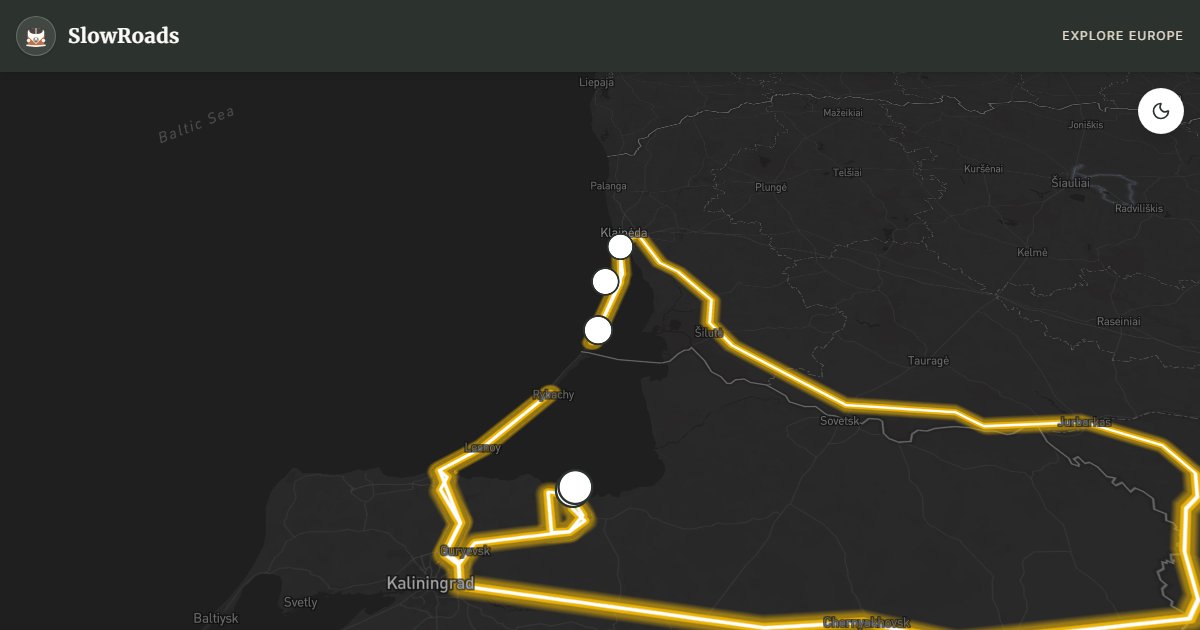
UNESCO sand peninsula between Baltic Sea and Curonian Lagoon — Nida fishing village, Parnidis dune, Dead Dunes, and amber beaches on a single-lane spit road. Access requires the Klaipėda–Smiltynė ferry (keltas.lt); summer queues are real, so book vehicle space early. Flat but narrow: classic and low-power campervans fit if you respect passing places and Neringa entry rules. Wild camping is banned in the national park — use camps. Walk dunes; do not drive soft sand. Lithuania's signature slow coastal day. WARNING: Ferry required; summer queues at Smiltynė.
Detailed Route Guide
The Curonian Spit is one of Europe's most extraordinary slow-road experiences — a 98-kilometre ribbon of forest and sand separating the Baltic Sea from the Curonian Lagoon, shared between Lithuania and Russia's Kaliningrad exclave, and protected as a UNESCO World Heritage landscape where human settlement has fought migrating dunes for centuries. The Lithuanian section runs roughly 619 kilometres from the Smiltynė ferry terminal near Klaipėda south to Nida, a former fishing village that became an artists' colony under Thomas Mann and today anchors the peninsula's cultural identity. For classic and low-power campervan travellers, the spit is mechanically ideal — dead flat, paved throughout, speed limited to protect the fragile dune ecology — but logistically unique because every vehicle must cross the lagoon on a ferry from Klaipėda's New Port.
The ferry crossing at Smiltynė is part of the journey itself. Ferries depart every twenty to thirty minutes in season, carrying cars, cyclists, and foot passengers across a narrow channel in under ten minutes. Summer weekends queue for an hour or more — arrive early or late in the day. Once on the spit, road 167 runs through pine forest with occasional glimpses of lagoon on one side and sea dunes on the other. Juodkrantė offers the Hill of Witches — a shaded forest path lined with carved wooden figures from Lithuanian folklore — and amber workshops where craftsmen polish Baltic amber found on local beaches.
Mid-spit, the Dead Dunes (Mirusiųjų kopos) in Nagliai Nature Reserve reveal what happens when dunes migrate inland — entire pine groves buried, exposed, and buried again, leaving skeletal trunks in a landscape that feels post-apocalyptic. Further south, Nida concentrates the peninsula's attractions: the Parnidis Dune climb (fifteen minutes on foot to the sundial sculpture at the top), the red-and-white lighthouse on Urbas Hill, Thomas Mann's summer house museum, and a waterfront promenade where smoked fish and cold beer reward a day of dune walking. The Baltic beach west of the forest is endless sand with amber fragments after storms.
For slow van travellers, plan two to three days. Camp at Nida autocamp or Smiltynė periphery — wild camping on the spit is prohibited within the national park. Cycling is excellent on the parallel bike path. May through September is the season; winter ferries run but services in Nida reduce. Pair with Klaipėda's old town and the Nemunas Delta to the south for a complete Lithuanian coast week. The spit demands patience at the ferry but rewards with a landscape found nowhere else in Europe.
Neringa municipality charges a vehicle entry fee on the spit — pay at the booth after the ferry and keep the ticket visible. Fuel and larger shops sit in Klaipėda before you board; Nida and Juodkrantė have smaller services that thin out outside summer. Classic and low-power campervans handle the flat 167 road easily, but summer ferry queues and limited campsite pitches are the real constraints — book Nida or Juodkrantė sites ahead in July–August. After storms, walk the Baltic beach for amber fragments; stay on marked dune paths to protect the fragile sand ecology. Pair the spit with Klaipėda’s old town and a Nemunas Delta day for a complete Lithuanian coast week at SlowRoads pace.
Frequently Asked Questions
Points of Interest
Parnidis Dune
Nature
A 52-metre shifting dune with sundial sculpture and panoramic views over Nida and the lagoon.
Dead Dunes (Mirusiųjų kopos)
Nature
Nagliai Nature Reserve grey dunes — skeletal pines buried and exposed by migrating sand, reached via a marked trail from road 167.
Nida Lighthouse
Monument
A red-and-white lighthouse on Urbas Hill — the original 1874 brick tower was destroyed in 1944; today's concrete tower dates from the postwar rebuild.
Juodkrantė Hill of Witches
Monument
A forest trail of carved wooden folk figures from Lithuanian mythology.
Smiltynė Ferry Terminal
Town
The only vehicle access point to the Curonian Spit from Klaipėda — frequent ferries year-round.
Route Highlights
Nearby Scenic Drives
Route Information
Navigation
* Supported by HERE Technologies, headquartered in Amsterdam, Europe. Precise routing through all waypoints.
* Waze only navigates to the starting point. Use Google Maps for the full scenic route.
Offline GPS Navigation
Download the GPX route file to navigate offline using your favorite GPS device or app (Garmin, TomTom, OsmAnd, Gaia GPS).
Ask Copilot (AI Travel Guide)
Hello! I am your SlowRoads Copilot. I know the Curonian Spit Dune Coast intimately. Ask me about scenic viewpoints, local history, hidden culinary gems, or the best camper spots along the way!