About This Route
Lithuania's most powerful pilgrimage site — over 100,000 crosses on a low hill near Šiauliai, plus manor roads and Samogitian plain farmland. Flat, contemplative driving through northern Lithuania's Catholic heartland that suits classic and low-power campervans without mechanical drama. Park in marked lots and walk among the crosses with respect; vendors and coaches peak midday. Pair with a quiet overnight nearby rather than rushing back to Vilnius. A spiritual pause on any Baltic loop — wind in the wires, votive silence, and open sky.
Detailed Route Guide
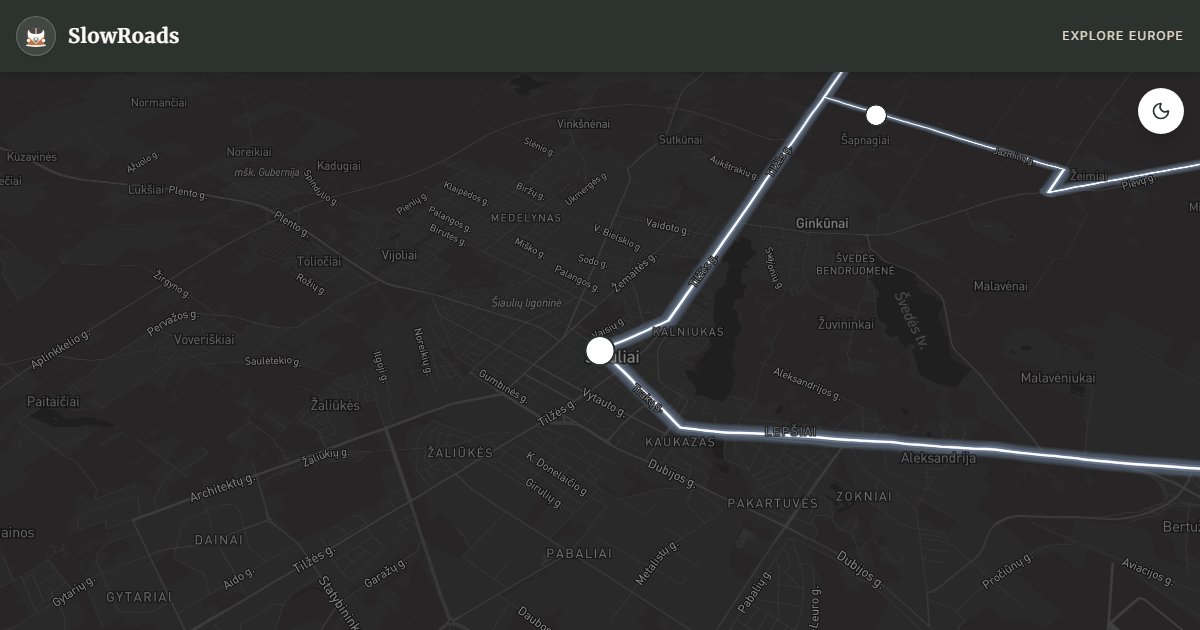
The Hill of Crosses — Kryžių kalnas — is one of the most emotionally charged places in the Baltic states: a low glacial mound near Šiauliai covered with an estimated 100,000 crosses, crucifixes, statues, and rosaries placed by pilgrims since the 1831 uprising against Russian rule, bulldozed repeatedly during Soviet occupation, and reborn each time as an act of quiet resistance. Pope John Paul II celebrated mass here in 1993, cementing its status as Lithuania's spiritual centre. This roughly 83-kilometre day loop from Šiauliai connects the hill with the surrounding plains — flat farmland, manor houses, glacial lakes, and the unhurried rhythm of northern Lithuania's Catholic heartland. For slow van travellers, it is mechanically effortless and emotionally unforgettable.
Šiauliai is the practical base — Lithuania's fourth city with supermarkets, fuel, repair shops, and parking near the cathedral square. From Šiauliai, regional road A12 runs north twelve kilometres to the Hill of Crosses — well signposted, with a large parking area that accommodates vans. Allow two hours minimum at the site: walk the paths between cross clusters, listen to the wind chimes and rustling rosaries, and absorb a landscape where every cross tells a family story. Visitors often bring their own small cross to add — workshops near the entrance sell carved wooden ones for a few euros.
The loop continues east through Radviliškis district manor country — nineteenth-century estate buildings, linden alleys, and the broad agricultural plains that define this region. Rėkyva Lake offers a natural counterpoint with birdwatching platforms and quiet shores. Return via southern Šiauliai periphery roads through residential districts and industrial edges that reveal the city's Soviet and modern layers beyond the pilgrimage site.
For classic and low-power campervan drivers, this route is ideal rest-day driving — no grades, excellent asphalt, and a profound cultural stop that requires no physical exertion. Visit early morning or late afternoon for fewer tour buses at the hill. Combine with the Curonian Spit to the west (three hours) or continue south toward Kaunas and the Nemunas valley. Any season works; the hill is open year-round and striking in snow when crosses emerge from white fields. Respect the sacred nature — no drones without permission, modest dress appreciated.
Practical notes for classic campervans: the A12 approach is dual carriageway for much of the run from Šiauliai, then a short signed spur to the large free car park. There is no mechanical challenge — use this as a rest day between the Curonian Spit and Kaunas. Bring a small wooden cross if you wish to leave one; workshops near the entrance sell them cheaply, and donations at the Franciscan chapel support site upkeep. Avoid flying drones without permission, and dress modestly. Combine with Rėkyva Lake for a quiet swim stop, then overnight on Šiauliai’s periphery before continuing south on A1 or west toward Klaipėda.
Fuel and groceries are easy in Šiauliai before you leave for the hill — there is little retail at the site itself beyond the chapel and small workshops. If you are linking this loop with the Curonian Spit, allow a full half-day for the hill and Rėkyva rather than treating it as a ten-minute photo stop; the emotional weight of the place rewards unhurried walking. Northern Lithuania’s plains are windy in winter and spring — secure awnings and check tyre pressures after cold nights. For classic and low-power campervan crews, this is the gentlest cultural day in the Lithuanian set: flat A-roads, free parking, and a stop that defines the country’s modern history without any mechanical stress.
Frequently Asked Questions
Points of Interest
Hill of Crosses (Kryžių kalnas)
Monument
A sacred mound covered with crosses placed since the nineteenth century — survived Soviet bulldozing and papal visit in 1993.
Šiauliai Cathedral of Saints Peter and Paul
Monument
A Renaissance cathedral on the city's main square — starting point for the northern plains loop.
Radviliškis Manor District
Castle
Nineteenth-century estate buildings and parkland on the eastern loop through agricultural Samogitia.
Rėkyva Lake
Nature
A glacial lake south of Šiauliai with birdwatching platforms and quiet shore paths.
Franciscan Monastery Chapel
Monument
A small chapel near the hill entrance — pilgrims often buy or leave crosses here; donations support the site.
Route Highlights
Route Information
Navigation
* Supported by HERE Technologies, headquartered in Amsterdam, Europe. Precise routing through all waypoints.
* Waze only navigates to the starting point. Use Google Maps for the full scenic route.
Offline GPS Navigation
Download the GPX route file to navigate offline using your favorite GPS device or app (Garmin, TomTom, OsmAnd, Gaia GPS).