About This Route
Flat Danube driving from Passau to Vienna: UNESCO Wachau vineyards, Melk Abbey, Dürnstein, and the Schlögener Schlinge loop. Classic and low-power campervans cruise the B3 at village pace — Heurigen, riverside parking, and optional boat hops Melk–Krems. Apricot blossom in May or harvest gold in September–October; year-round at low elevation. End on Vienna's Ringstrasse after pastoral river days. Wild camping is illegal; use campsites and Stellplätze along the valley and treat Melk Abbey as a half-day stop, not a drive-by.
Detailed Route Guide
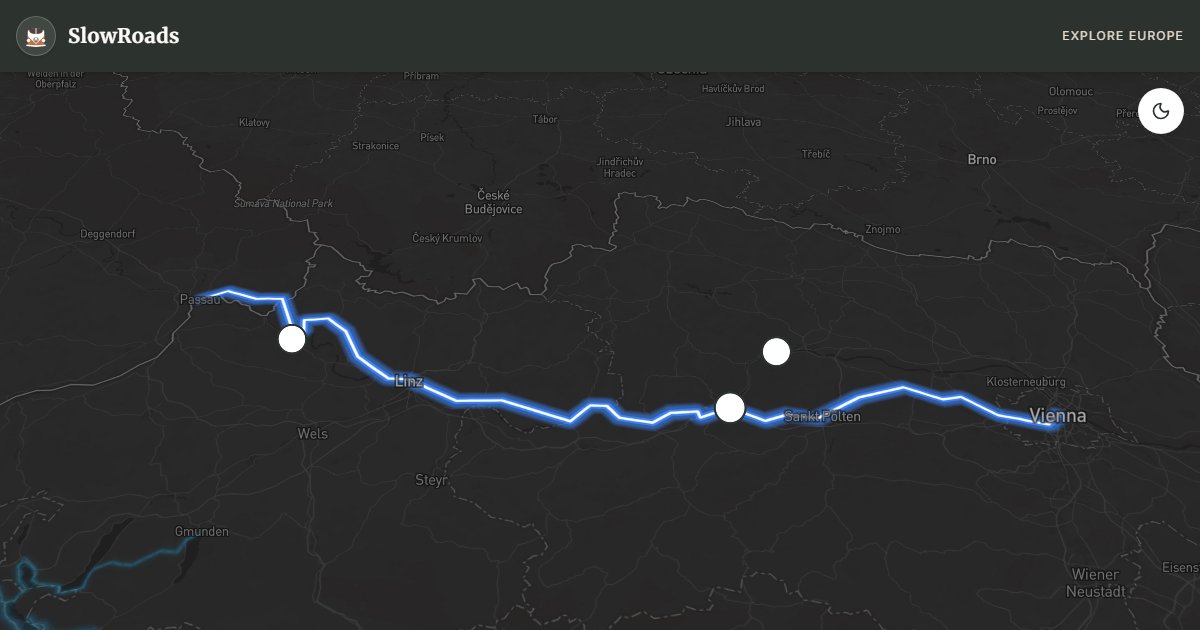
The Danube River Valley route follows Europe's second-longest river from Passau on the German border to Vienna — roughly 259 kilometres of Central European layers: Roman traces, medieval castles, baroque monasteries, and riverside villages that still move at Heurigen pace. For an Austrian drive it is remarkably flat, hugging the bank through vineyards and apricot orchards the region rightly calls one of Europe's finest river valleys. Classic and low-power campervans belong here: no alpine coolant drama, only village speed limits, ferry hops, and the discipline to stop when a Heurigen pine branch hangs over a door.
The UNESCO Wachau — Melk to Krems, about 36 kilometres — is the highlight. Granite and gneiss gorge walls rise into vine terraces; Melk Abbey sits 60 metres above the river with a library of roughly 100,000 volumes under frescoed ceilings. Dürnstein's blue-towered ruin marks where Richard I of England was held in 1193; roadside stands sell Marillenbrand and fresh apricots in season. West of Linz, the Schlögener Schlinge hairpin bend in the river is an often-overlooked viewpoint worth a slow pull-out. Between Passau and the Wachau, the valley widens and narrows, always with the river as your companion and cycle paths reminding you that this corridor was built for more than cars.
Classic and low-power campervans are at home here. The B3 runs through villages at natural slow speed; riverside parking, spring Heurigen, and ferry crossings let you explore both banks without forcing a long van into every medieval lane. Travel at 50 km/h and stop when something catches your eye — a ruin, a ferry slip, a farm stall. Fuel and provisions are easy throughout; only Linz and the Vienna approach demand urban attention. Older air-cooled vans such as a VW T3 cruise happily if you accept that the day is measured in Heurigen glasses, not kilometres covered.
Late April–May (apricot blossom) and September–October (harvest, golden vines, Wachauer Marille) are ideal. Summer is pleasant but busier around Melk and Dürnstein; arrive early for abbey parking. The low elevation stays driveable in winter when passes are closed. Park in Melk, take a DDSG or Brandner boat to Krems, and return by train for a perfect slow day without moving the van. End with a night or two in Vienna — pastoral Wachau to imperial Ringstrasse is one of Europe's great contrasts. Wild camping is illegal; use campsites and Stellplätze along the valley and treat Melk Abbey as a half-day stop, not a drive-by photo.
Pair the drive with at least one Heurigen afternoon and a Melk Abbey visit; the Wachau rewards stopping more than covering kilometres. Classic and low-power campervans belong on the B3 at village pace, with Vienna as a deliberate finale rather than a rush to the Ring. Keep the Autobahn for the final approach if traffic thickens; the scenic map is the riverside B3, the boat hop, and the apricot stall you almost drove past. Allow three to five days if you want Passau, the Schlögener Schlinge, the full Wachau, and Vienna without treating any of them as a checklist tick.
Frequently Asked Questions
Points of Interest
Schlögener Schlinge
Nature
Melk Abbey
Monument
Dürnstein Old Town
Town
Route Highlights
Route Information
Navigation
* Supported by HERE Technologies, headquartered in Amsterdam, Europe. Precise routing through all waypoints.
* Waze only navigates to the starting point. Use Google Maps for the full scenic route.
Offline GPS Navigation
Download the GPX route file to navigate offline using your favorite GPS device or app (Garmin, TomTom, OsmAnd, Gaia GPS).