About This Route
Southern Lithuania's largest forest — pine and birch wilderness around Merkinė, canoe routes on the Merkys and Nemunas, and traditional black pottery villages. Sandy forest roads to Čepkeliai bog need caution after rain for low-clearance classic campervans; stick to firmer lanes when wet. Base in Merkinė or park villages and explore by canoe or boardwalk. Mushroom season in autumn adds foragers to quiet roads. A green counterpoint to the Curonian Spit — shade, rivers, and slow gravel. WARNING: Sandy roads after rain — choose firmer alternatives.
Detailed Route Guide
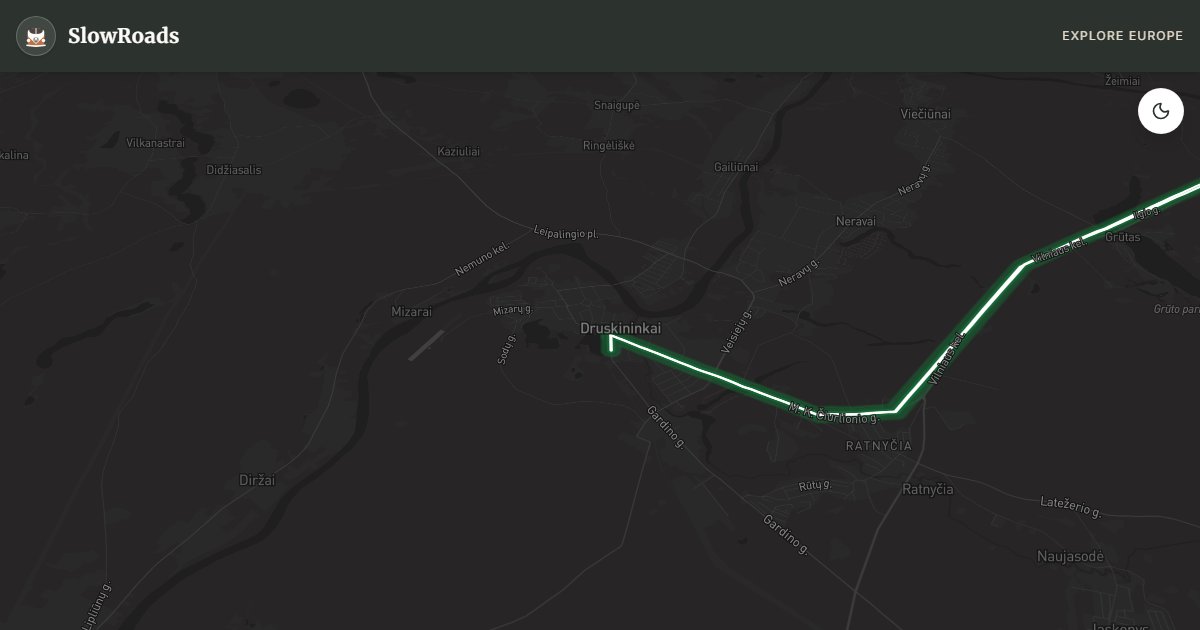
Dzūkija National Park protects the largest forest massif in southern Lithuania — a lowland wilderness of Scots pine, silver birch, and sandy soil where the Merkys River joins the Nemunas in a maze of islands, backwaters, and raised bogs that feel closer to Finland than to the agricultural plains of central Lithuania. The Dzūkai people — Lithuania's southernmost ethnic subgroup — maintained distinct traditions here for centuries: black pottery fired in open pits, mushroom and berry foraging, and log houses with ornate wooden carvings. This roughly 147-kilometre loop from Druskininkai spa town through Merkinė, Čepkeliai bog, and the Nemunas valley combines forest driving with river culture in a region where tourism remains pleasantly uncrowded.
Druskininkai anchors the loop — Lithuania's oldest spa resort on the Nemunas, with sanatoriums, a cable car, and surprisingly good van parking on the town periphery. From Druskininkai, roads climb gently into Dzūkija forest toward Merkinė, a small town at the Merkys-Nemunas confluence with a medieval hillfort offering panoramic views over the river junction. The hillfort climb takes twenty minutes; the reward is understanding the strategic geography that made this frontier zone contested for centuries.
Čepkeliai Marsh is the park's ecological heart — one of Europe's largest raised bogs, accessible only via guided tours and boardwalk sections to protect rare orchids and nesting cranes. Book tours at the visitor centre in Marcinkonys village. Sandy access roads to the bog periphery are passable for vans in dry weather but become soft after rain — check conditions locally. Liškiava Monastery on a Nemunas bend provides Baroque contrast — frescoed church, quiet courtyard, and river views from the terrace.
Zervynos ethnographic village preserves traditional Dzūkija architecture with demonstrations of black pottery — clay fired without glaze in open pits, producing distinctive dark vessels. For classic and low-power campervan travellers, the loop is mechanically gentle — maximum grades around 5% on forest roads, but surface quality varies on sandy sections. Allow two to three days: one for Merkinė and canoe planning, one for Čepkeliai and Liškiava, optional third for Druskininkai spa recovery. May through September is the season; mosquitoes peak in June — bring repellent. Pair with Grodno in Belarus (border nearby) or continue to Vilnius via the Neris valley.
For classic and low-power campervans, treat sandy Čepkeliai access as optional: if rain has softened the tracks, skip the bog periphery and focus on Merkinė hillfort, Liškiava Monastery, and Zervynos village on firmer asphalt. Carry mosquito repellent in June and waterproofs year-round — Dzūkija weather turns quickly. Fuel and larger shops are reliable in Druskininkai; Marcinkonys has limited services. Book Čepkeliai guided tours at Marcinkonys visitor centre rather than attempting restricted core zones alone. Overnight at official sites only — national-park wild camping is restricted. Pair with Trakai or the Vilnius–Kaunas corridor for a southern Lithuania week.
Druskininkai remains the best overnight base — spa-town campsites, fuel, and canoe outfitters for Merkys trips. After rain, treat unsigned sandy tracks toward Čepkeliai as optional: low-clearance classic campervans should stick to paved park approaches and walk boardwalks instead of forcing soft sand. Black pottery villages reward a slow afternoon; ask before photographing private yards. Pair Dzūkija with Trakai or the Vilnius–Kaunas corridor for a southern Lithuania week that balances forest silence with castle and city heritage.
Frequently Asked Questions
Points of Interest
Merkinė Hillfort
Monument
A medieval hillfort overlooking the Merkys-Nemunas confluence — panoramic forest and river views.
Čepkeliai Raised Bog
Nature
One of Lithuania's largest raised bogs — boardwalk trails and strict access zones protecting rare orchids.
Liškiava Monastery
Monument
An eighteenth-century Baroque monastery on a Nemunas bend with frescoed church interior.
Zervynos Ethnographic Village
Town
A preserved Dzūkija village with traditional log houses and black pottery demonstrations.
Merkys River Canoe Launch
Nature
Starting point for multi-day canoe trips through Dzūkija NP on the clear Merkys tributary.
Route Highlights
Route Information
Navigation
* Supported by HERE Technologies, headquartered in Amsterdam, Europe. Precise routing through all waypoints.
* Waze only navigates to the starting point. Use Google Maps for the full scenic route.
Offline GPS Navigation
Download the GPX route file to navigate offline using your favorite GPS device or app (Garmin, TomTom, OsmAnd, Gaia GPS).