About This Route
UNESCO-listed Lake Ohrid from the Byzantine old town to Struga's Black Drin springs and Sveti Naum monastery on the Albanian border. Ancient churches, reed-fringed bays, and Europe's oldest deep lake on paved coastal roads. Ohrid old-town parking is tight for vans — use edge lots and walk. Classic and low-power campervans enjoy gentle lakeside grades if summer eastern-shore traffic is timed early. Two to three days reward frescoes, lake swims, and monastery gardens. WARNING: Tight old-town parking; summer tourist traffic on the eastern shore.
Detailed Route Guide
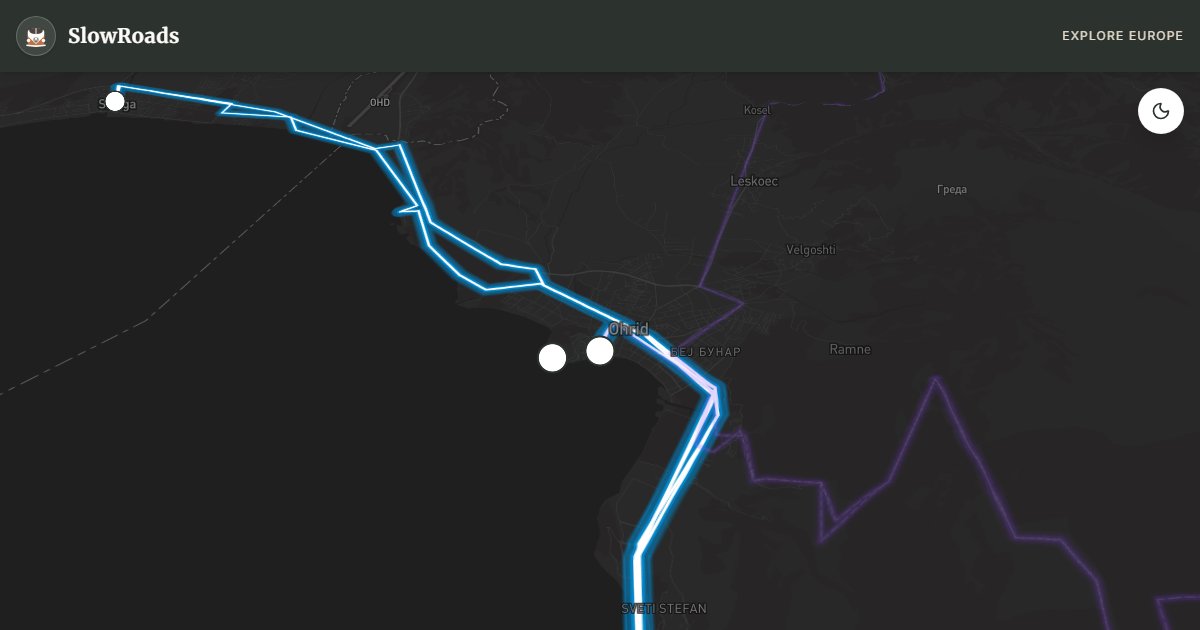
Lake Ohrid is one of Europe's deepest and oldest lakes — a tectonic basin holding roughly three million years of biological continuity, shared between North Macedonia and Albania, and inscribed on the UNESCO World Heritage list for both its natural rarity and its extraordinary concentration of medieval churches and monasteries. This roughly 108-kilometre loop from Ohrid old town around the Macedonian shore to Struga, the eastern fishing villages, and the monastery of Saint Naum at the lake's southern tip is North Macedonia's essential slow-road journey: paved throughout, mechanically gentle, and culturally dense enough to fill three unhurried days in a classic or low-power campervan.
Ohrid anchors the loop. The old town climbs a hillside above the lake in a labyrinth of cobbled lanes where Byzantine churches appear every few hundred metres — St. Sophia with its tenth-century frescoes, St. Clement's medieval university site, and above all the Church of St. John at Kaneo on its cliff promontory, the image that defines Macedonian tourism. Van parking works best at the lower lakefront lots or the Gradiste campsite south of town; the upper old town streets are too narrow for anything larger than a car. Allow a full morning for the old town on foot before driving — the amphitheatre, Samuel's Fortress, and the icon gallery at the Robev family house reward slow exploration.
From Ohrid, the road follows the eastern shore south through villages where the lake turns from town bustle to reed-fringed quiet. Trpejca and Ljubaništa offer swimming coves and lakeside restaurants grilling Ohrid trout — a endemic species found nowhere else on earth. The Bay of Bones museum at Peštani reconstructs a Bronze Age pile-dwelling settlement on stilts, a striking open-air archaeology site that children and adults both love. Continue south to the monastery of Saint Naum, founded in the tenth century on springs that bubble up near the Albanian border. Peacocks wander the courtyard, boatmen offer short trips to the underwater springs, and the border crossing to Pogradec in Albania is minutes away for travellers planning a cross-lake extension.
The return leg runs north along the western shore through Struga, where the Black Drin river erupts from the lake in a rush of clear water beneath willow trees — the town hosts an international poetry festival each August and offers a gentler, less tourist-saturated atmosphere than Ohrid. From Struga, the road rejoins the main lake circuit through Radožda and Kalista villages with cave churches and cliffside frescoes. Gradients stay moderate throughout; the only driving challenge is patience in July and August when Albanian and Macedonian holiday traffic fills the eastern shore road.
For classic and low-power campervan drivers, Lake Ohrid is ideal territory: no grades above 6%, excellent asphalt, fuel and supplies in Ohrid and Struga, and multiple campsites (Gradiste, Ljubaništa, St. Naum area guesthouses). May through October is the season; spring wildflowers cover the Galichica foothills and autumn light turns the water deep sapphire. Pair with the Galichica Park route for mountain views between Ohrid and Lake Prespa, or cross into Albania for the Pogradec wine hills. This is the Balkans at their most serene — ancient faith, endemic trout, and three-million-year-old water beneath your wheels.
Frequently Asked Questions
Points of Interest
Church of St. John at Kaneo
Monument
A thirteenth-century cliffside church — Ohrid's most photographed Byzantine icon above transparent lake water.
Bay of Bones Museum
Monument
A reconstructed Bronze Age pile-dwelling village on stilts over the lake — unique open-air archaeology.
Struga Black Drin Springs
Nature
Crystal springs where the Black Drin river bursts from the lake — poetry festival town and evening promenade.
Monastery of Saint Naum
Monument
A tenth-century lakeside monastery with peacock gardens and boat trips to springs near the Albanian border.
Trpejca Fishing Village
Town
A quiet eastern-shore hamlet with lakeside grills, swimming bays, and van-friendly guesthouse parking.
Ohrid Old Town Amphitheatre
Monument
A Hellenistic theatre overlooking the lake — gateway to the UNESCO old town's cobbled lanes and icon galleries.
Route Highlights
Route Information
Navigation
* Supported by HERE Technologies, headquartered in Amsterdam, Europe. Precise routing through all waypoints.
* Waze only navigates to the starting point. Use Google Maps for the full scenic route.
Offline GPS Navigation
Download the GPX route file to navigate offline using your favorite GPS device or app (Garmin, TomTom, OsmAnd, Gaia GPS).
Ask Copilot (AI Travel Guide)
Hello! I am your SlowRoads Copilot. I know the Lake Ohrid Grand Loop intimately. Ask me about scenic viewpoints, local history, hidden culinary gems, or the best camper spots along the way!