About This Route
Wind UNESCO Langhe hills from Alba to Barolo through Nebbiolo country — La Morra viewpoints, medieval Neive, white-truffle October, and cellar doors for Barolo and Barbaresco. Rolling grades stay short and second-gear friendly for classic low-power campervans; narrow vineyard lanes favour shorter vans over large motorhomes. Designate a sober driver for tastings and overnight at agriturismi or Alba's motorhome area, not among working vines. October gold vines and truffles, or April–May greens, outshine midsummer heat on the hill roads between the villages.
Detailed Route Guide
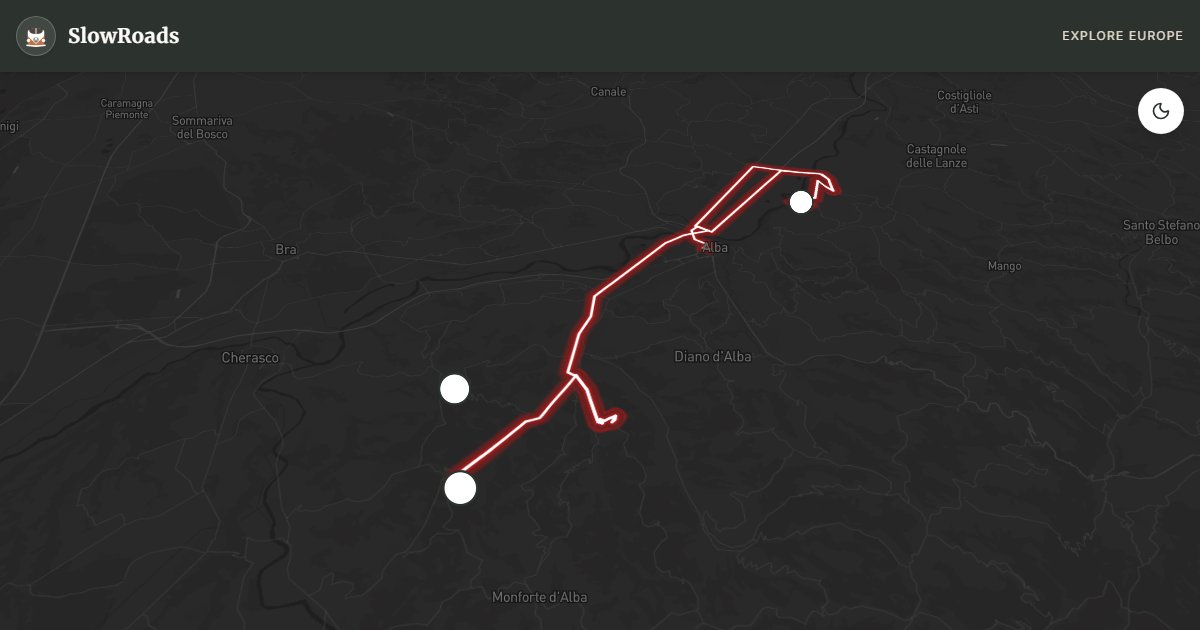
The Langhe wine route winds through the UNESCO-listed hills of southern Piedmont, one of the greatest wine landscapes on earth. This is the heartland of Barolo and Barbaresco — two of Italy's most celebrated red wines, made from the Nebbiolo grape on these very slopes — as well as the home of Italy's finest white truffles and the hazelnut orchards from which Ferrero Rocher and Nutella were born. The 45-kilometre route from Alba to Barolo threads between hilltop medieval villages, castle towers rising from sea-like vineyards, and enoteca after enoteca where you can taste wines that sell in London and New York for many times their cellar-door price.
Alba is the undisputed capital of the Langhe and the place to begin. Its medieval towers and brick lanes are charming, but the real reason to spend time here is the food: in October the world-famous White Truffle Fair fills the streets, and year-round the town's restaurants and delicatessens are stocked with some of the finest ingredients in Italy — Barolo, Barbaresco, Dolcetto, tajarin pasta, bagna cauda, and, above all, fresh white truffles shaved with aristocratic generosity over everything. The village of La Morra, midway along the route, has a terrace viewpoint looking out over the entire Barolo zone — a view of hills, vineyards, and occasional castle towers that makes clear why this landscape was judged worthy of UNESCO inscription. The Giant Bench, a colourful art installation nearby, has become an unexpected landmark. Barolo itself at the end of the route is a small stone village whose name commands reverence across the wine world.
A classic or low-power campervan moves through the Langhe with ease and pleasure. The hills are genuine but roll gently rather than spike abruptly, and nowhere on this route do you need anything beyond second gear on even the steepest inter-village climbs. The roads are narrow and winding but not intimidatingly so, and the traffic is mostly local agricultural vehicles and wine-tourism cars that move at the same unhurried pace as your van. The great pleasure of driving these hills slowly is that you can navigate by instinct and interest — turning off the main route to follow a narrow lane between vines, discovering a remote single-estate cantina where the owner is happy to pour you a glass before dinner.
The ideal seasons for the Langhe route are October — when the autumn light on the golden vine leaves is incomparable and the white truffle season is at its height — and April to May when the landscape is vivid green and the Barolo zone is perfumed with cherry blossom from the orchards. Summer (July-August) is warm and lovely but the vine leaves are still green and the truffle-focused food culture is less prominent. The Langhe is driveable year-round and even in winter the stark, pruned vines against snow-dusted hills have a severe beauty.
Wine-country driving here is about restraint and timing. Designate a non-drinking driver for cellar visits, or taste lightly and buy bottles for later. Narrow lanes between vineyards leave little room for large motorhomes — classic shorter campervans fit the scale better. Overnight at agriturismi with pitches or Alba’s motorhome area rather than among working vines. October’s truffle fair weekends fill Alba; arrive midweek if you can. Spring greens and autumn golds are the photographic seasons; summer is lovely but less distinctive. Keep the van in second gear on the short hill climbs and enjoy the fact that nothing here demands alpine heroics.
Frequently Asked Questions
Points of Interest
Barolo Wine Museum
Monument
Giant Bench (La Morra)
Nature
Medieval Neive
Town
Route Highlights
Nearby Scenic Drives
Route Information
Navigation
* Supported by HERE Technologies, headquartered in Amsterdam, Europe. Precise routing through all waypoints.
* Waze only navigates to the starting point. Use Google Maps for the full scenic route.
Offline GPS Navigation
Download the GPX route file to navigate offline using your favorite GPS device or app (Garmin, TomTom, OsmAnd, Gaia GPS).
Ask Copilot (AI Travel Guide)
Hello! I am your SlowRoads Copilot. I know the Langhe Wine Route intimately. Ask me about scenic viewpoints, local history, hidden culinary gems, or the best camper spots along the way!