About This Route
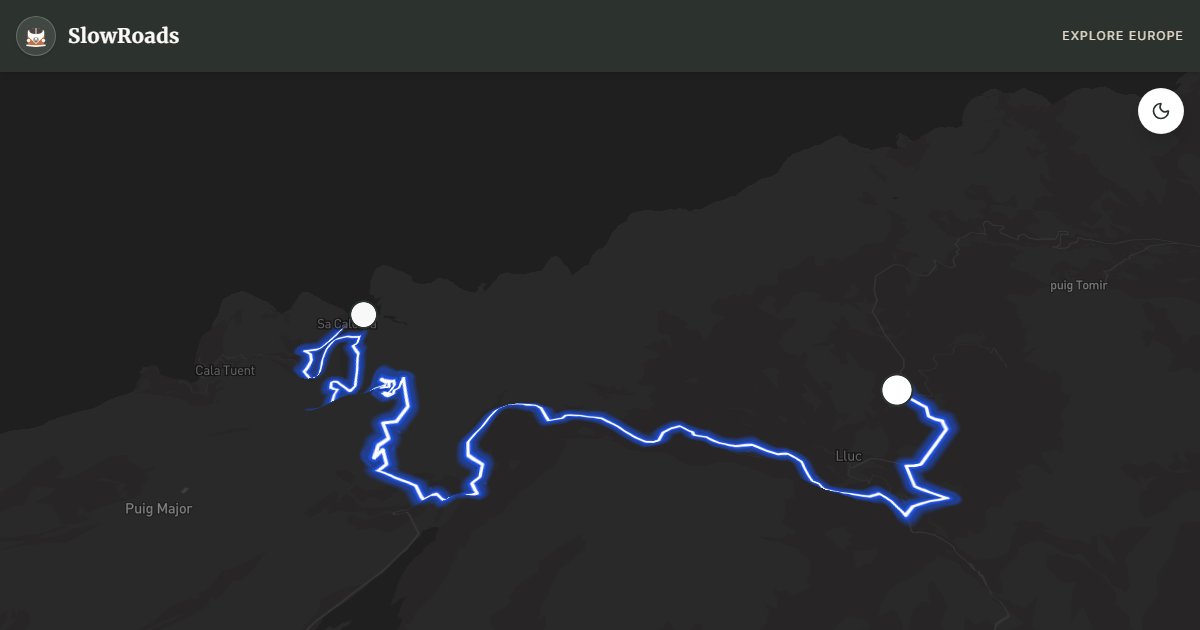
Descend Mallorca's Sa Calobra snake road — about 9.5 km and 680 m of drop past the 270° Nudo de Corbata — to a cliff-hemmed beach and the Torrent de Pareis slot canyon. Designed by Antonio Parietti and opened in 1933, it remains a bucket-list drive inside the UNESCO Serra de Tramuntana. Extremely steep, narrow, and coach-busy at midday: classic and low-power campervans should descend before 9am, verify brakes, and cool carefully on the mandatory return climb. Combine with the Ma-10 via Valldemossa, Deià, and Sóller for a full mountain day. There is no through route — what goes down must climb back up.
Detailed Route Guide
The Sa Calobra road on Mallorca is one of the most extraordinary pieces of road engineering in the Mediterranean — a roughly 9.5-kilometre descent from Coll dels Reis in the Serra de Tramuntana to a secret beach at the foot of cliffs, designed by Italian-Spanish engineer Antonio Parietti and opened in 1933, and still considered one of the most technically audacious roads ever built on a Spanish island. The road drops about 680 metres through a series of tightly stacked hairpin bends, including the famous Nudo de Corbata (Tie Knot) — a 270-degree loop in which the road literally passes under itself, the upper carriageway visible through a tunnel arch from the lower road. The route to Sa Calobra is as much spectacle as drive, and even drivers who make it to the bottom frequently stand and stare at the road they have just descended in disbelief.
The destination at the bottom — Sa Calobra beach and the Torrent de Pareis — is worth the drive in its own right. Sa Calobra is a small shingle and sand beach hemmed in by cliff walls rising hundreds of metres on all sides, accessible only by the road or by boat from Port de Sóller. The real treasure is the Torrent de Pareis, reached by walking a short distance through a canyon slot: a natural gorge where the limestone cliffs press to within a few metres of each other before opening to a pebble beach surrounded by vertical rock faces. The torrent is completely dry in summer but carries a roaring river after winter rains.
For a classic or low-power campervan, Sa Calobra is a serious challenge and one that must be approached with full awareness of the limitations involved. The descending road is extremely steep, the hairpins are tight, and the return ascent — which every driver must make, as there is no through route — is very demanding on the engine cooling system. The road is also subject to coach traffic in the middle of the day: coaches share the road with private vehicles and at the tightest hairpins require multiple-point turns, which can create queues. The wisest strategy for a low-power campervan driver is to descend early in the morning (before 9am) when the coaches have not yet started running and the road is cool. Park at the beach, spend several hours exploring, and ascend in the mid-afternoon when temperatures have peaked but coach frequency has reduced.
Mallorca's Serra de Tramuntana, of which the Sa Calobra road forms part, is a UNESCO World Heritage cultural landscape — a recognition of the centuries of agricultural terracing, stone-walled olive groves, and mountain villages that cover its slopes. The road through the mountains from Palma to Pollença (the Ma-10) is one of the finest mountain drives in the Mediterranean and can be combined with Sa Calobra as a full-day itinerary. The villages of Valldemossa, Deià, and Sóller are all worth stopping in — Deià in particular, perched above the sea with terraced gardens of lemons and olives, was famously home to the poet Robert Graves and retains a bohemian, artistic character.
Frequently Asked Questions
Points of Interest
Nudo de Corbata (270° Curve)
Nature
Torrent de Pareis
Nature
Route Highlights
Route Information
Navigation
* Supported by HERE Technologies, headquartered in Amsterdam, Europe. Precise routing through all waypoints.
* Waze only navigates to the starting point. Use Google Maps for the full scenic route.
Offline GPS Navigation
Download the GPX route file to navigate offline using your favorite GPS device or app (Garmin, TomTom, OsmAnd, Gaia GPS).
Ask Copilot (AI Travel Guide)
Hello! I am your SlowRoads Copilot. I know the Mallorca - Sa Calobra (Snake Road) intimately. Ask me about scenic viewpoints, local history, hidden culinary gems, or the best camper spots along the way!