About This Route
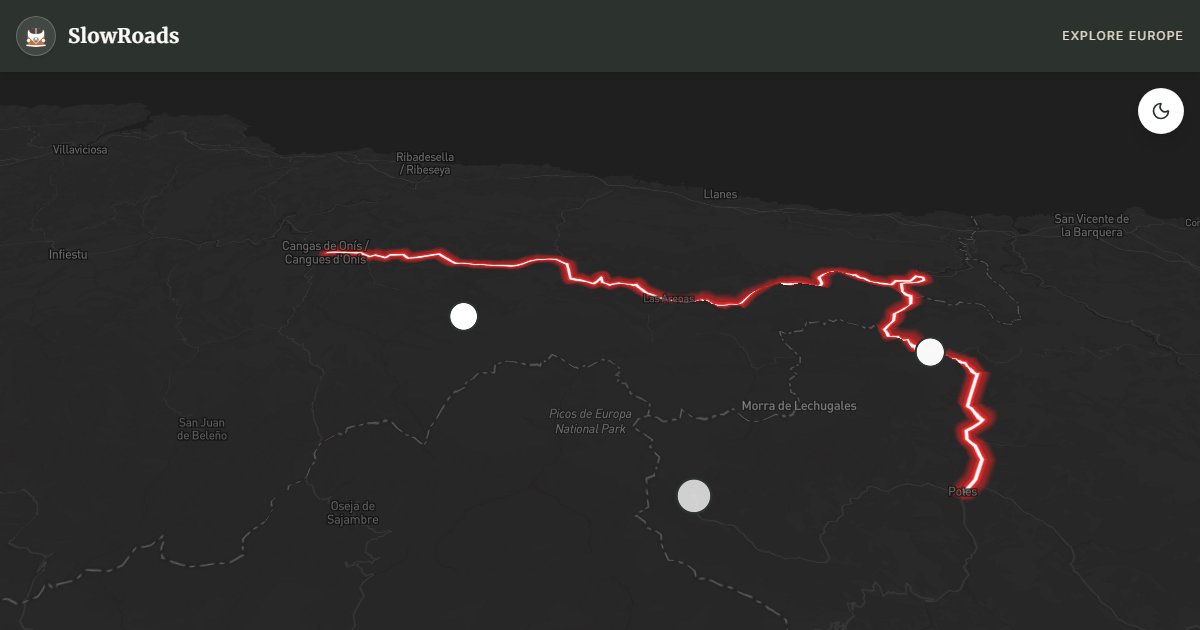
Drive the N-621 Hermida Gorge and Covadonga lakes loop through Spain's first national park — steep limestone, cider villages, and peak-season shuttle rules for classic campervans. The circuit links Cangas de Onís with Potes via sheer canyon walls, Mozarabic churches, and the Fuente Dé cable car. Expect sustained climbs that ask low-power vans for patience, low gears, and cooling stops at every mirador. Private access to the lakes is often replaced by a mandatory shuttle from June through mid-October. Allow two to four days, use campsites near Cangas and Potes, and skip wild camping inside park boundaries.
Detailed Route Guide
The Picos de Europa Grand Tour is one of the most breathtaking driving circuits in all of Spain, weaving through a landscape that has been shaped by millennia of glacial carving, pastoral tradition, and the sheer drama of limestone massifs rising from the Cantabrian coast. The range itself takes its name — "Peaks of Europe" — from sailors who, returning from the Americas, spotted these dramatic summits as their first sign of the Old World. The national park, Spain's first (declared in 1918), was established around the Lakes of Covadonga, and the land within it has changed little since. Small stone villages cling to valley floors, cowbells echo off canyon walls, and the air carries the distinct mineral coolness of high mountain rock even in summer. The route begins in Cangas de Onís, a charming town still dominated by its medieval Romanesque bridge, and it loops through three massifs — the Western (El Cornión), Central (Los Urrieles), and Eastern (Ándara) — before arriving in the ancient market town of Potes.
The undisputed highlight of the western leg is the climb to the Lakes of Covadonga (Lagos de Covadonga). These two glacial lakes — Enol and Ercina — sit at around 1,100 metres and are reached by a narrow, steep road that is closed to private vehicles during much of the peak tourist season (typically June through mid-October, plus holiday weekends), when a mandatory shuttle bus replaces private cars. Outside these periods, driving up yourself is an experience in pure mountain pilgrimage. The road is genuinely steep and narrow, and for a classic or low-power campervan it demands patient driving in low gears on the way up and careful, steady braking on the descent. The reward is a plateau of astonishing green beauty, with the lakes reflecting limestone peaks and brown Asturian cows grazing beside the shore. Nearby, the Sanctuary of Covadonga is a place of deep historical significance — here in 722 AD, Pelayo and his Visigothic warriors won the battle that is traditionally considered the beginning of the Reconquista, the eight-century Christian effort to reclaim the Iberian Peninsula.
The central section of the route dips into one of Spain's most dramatic gorges: the Desfiladero de la Hermida, carved by the Deva River over millions of years through sheer limestone walls that tower hundreds of metres on both sides. The N-621 threads through this gorge with barely enough room for two vehicles in places, tunnelling through overhangs and hugging the riverbank. Driving it in a classic campervan is an act of pure van pilgrimage — the compact width of an older low-power camper proves to be an unlikely asset here. Near the southern end of the gorge, the village of Lebeña holds Santa María de Lebeña, a 10th-century Mozarabic church — Romanesque and earthy — that feels hewn from the canyon walls themselves. From here the route continues south toward the end point of Potes, a lively small town packed with cider bars and Cantabrian cheese shops. Just beyond Potes, the road climbs to the cable car at Fuente Dé, where a dramatic gondola hauls passengers up a 753-metre vertical ascent to a high plateau with some of the best walking in the Picos.
For classic and low-power campervan drivers, this route demands real respect. The steep roads, combined with a classic or low-power campervan's modest power, mean you should budget extra time, drive in low gears on the climbs, and monitor your water temperature carefully. Pull over at every vista — and there are dozens — to let the engine breathe. Campervans are well-served by the area: there are good campgrounds near Cangas de Onís, at Lago Enol, and around Potes, several of which have motorhome service points. Avoid July and August if possible; May/June and September/October deliver the same spectacular scenery with far less traffic, cooler temperatures kinder to low-power engines, and the chance to experience the route at its most atmospheric.
Frequently Asked Questions
Points of Interest
Lakes of Covadonga
Nature
Desfiladero de la Hermida
Nature
Fuente Dé Cable Car
Nature
Route Highlights
Route Information
Navigation
* Supported by HERE Technologies, headquartered in Amsterdam, Europe. Precise routing through all waypoints.
* Waze only navigates to the starting point. Use Google Maps for the full scenic route.
Offline GPS Navigation
Download the GPX route file to navigate offline using your favorite GPS device or app (Garmin, TomTom, OsmAnd, Gaia GPS).
Ask Copilot (AI Travel Guide)
Hello! I am your SlowRoads Copilot. I know the Picos de Europa Grand Tour intimately. Ask me about scenic viewpoints, local history, hidden culinary gems, or the best camper spots along the way!