About This Route
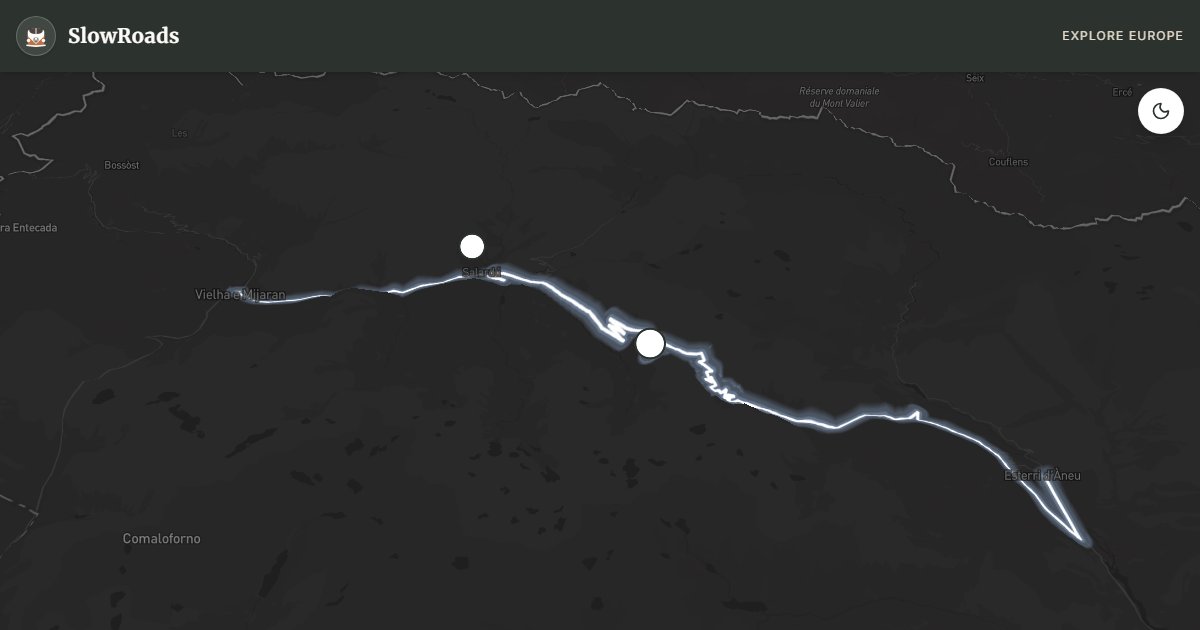
Cross Val d'Aran's green Atlantic-facing valley and the Bonaigua Pass (2,072 m) to Esterri d'Àneu — Aranese Romanesque villages, long hairpins, and a climb that tests low-power campervan cooling. The valley drains to the Garonne, not the Mediterranean, so the landscape feels more Pyrenean-Gascon than Spanish. Allow 45–60 minutes for the ascent, use second gear on steep ramps, and engine-brake the eastern descent into Pallars Sobirà. The pass typically opens late May or June and closes with autumn snow — check transit.gencat.cat. Camp at Arties or Salardú; wild camping remains restricted.
Detailed Route Guide
The Val d'Aran is one of the most geographically and culturally unusual places in the Iberian Peninsula. Technically it is part of Catalonia, but geographically it lies on the north-facing slope of the Pyrenees, draining into the Garonne River and ultimately into the Atlantic — not the Mediterranean. This means it receives Atlantic rainfall and has the lush, impossibly green character of a valley more reminiscent of the French Alps than of Spain. The valley has its own language, Aranese (a form of Gascon Occitan), its own distinctive Romanesque architecture, and a fierce local identity that has kept its culture distinct from both Spain and France for centuries. The route from Vielha, the capital of the Val d'Aran, to Esterri d'Àneu takes you from this extraordinary valley up and over the Bonaigua Pass at 2,072 metres, then down the spectacularly glaciated Pallars Sobirà comarca to the east.
Vielha itself is worth exploring before you begin the drive. The medieval centre has stone-paved streets and the church of Sant Miquel, which contains a remarkable 12th-century Romanesque polychrome carving known as the Crist de Mijaran — a surviving fragment of what was once a much larger crucifixion scene. As you drive east from Vielha through the Val d'Aran, the valley floor is dotted with stone-built villages, each with their own Romanesque bell tower: Salardú, Unha, Gessa, Arties. These churches were built in the 11th to 13th centuries as expressions of Romanesque faith spreading along the pilgrimage routes, and their modest scale and honest use of local stone gives them an austere beauty that perfectly complements the mountain landscape. The village of Arties has a particularly beautiful church and a medieval bridge over the Garonne — a strange and wonderful thing to see in a Spanish valley, knowing this same river flows through Bordeaux and into the Bay of Biscay.
From the upper valley, the road begins its serious climb to the Bonaigua Pass. The Puerto de la Bonaigua (Port de la Bonaigua in Catalan and Aranese) is a classic Pyrenean pass with long switchback ascents, exposed ridgelines, and sweeping views back down into the green Val d'Aran below. The pass typically opens in late spring (May or June depending on snowfall) and closes with the first heavy autumn snows. At the summit, the landscape becomes high alpine — bare rock, low scrub, marmots sunning on boulders, and on clear days a 360-degree panorama of Pyrenean peaks stretching east and west. The descent on the eastern side into the Pallars Sobirà is equally dramatic, dropping through a series of tight hairpins into the Noguera Pallaresa river valley, which is famous for its white-water kayaking and is one of the most beautiful river gorges in the Pyrenees.
For classic and low-power campervan drivers, the Bonaigua Pass is a serious but manageable challenge. The ascent is long — allow at least 45 minutes from the valley floor to the summit — and your van's engine will be working hard throughout. Use second gear for the steeper sections, keep a close watch on coolant temperature, and never skip the opportunity to pull over at a hairpin apex with a view and let the engine breathe. The descent requires confident, controlled braking — avoid riding the brakes continuously; instead, use engine braking in low gear and brake in short, firm applications. The route is typically snow-free from June to October. Camping options in the Val d'Aran are good, with sites at Arties and Salardú, and the town of Esterri d'Àneu at the eastern end has campervan facilities. This is one of the finest mountain routes in Spain for slow travellers who want genuine high-alpine experience without crossing into France.
Frequently Asked Questions
Points of Interest
Bonaigua Pass Switchbacks
Nature
Romanesque Church (Salardú)
Monument
Route Highlights
Route Information
Navigation
* Supported by HERE Technologies, headquartered in Amsterdam, Europe. Precise routing through all waypoints.
* Waze only navigates to the starting point. Use Google Maps for the full scenic route.
Offline GPS Navigation
Download the GPX route file to navigate offline using your favorite GPS device or app (Garmin, TomTom, OsmAnd, Gaia GPS).
Ask Copilot (AI Travel Guide)
Hello! I am your SlowRoads Copilot. I know the Pyrenees - Val d'Aran Panorama intimately. Ask me about scenic viewpoints, local history, hidden culinary gems, or the best camper spots along the way!