About This Route
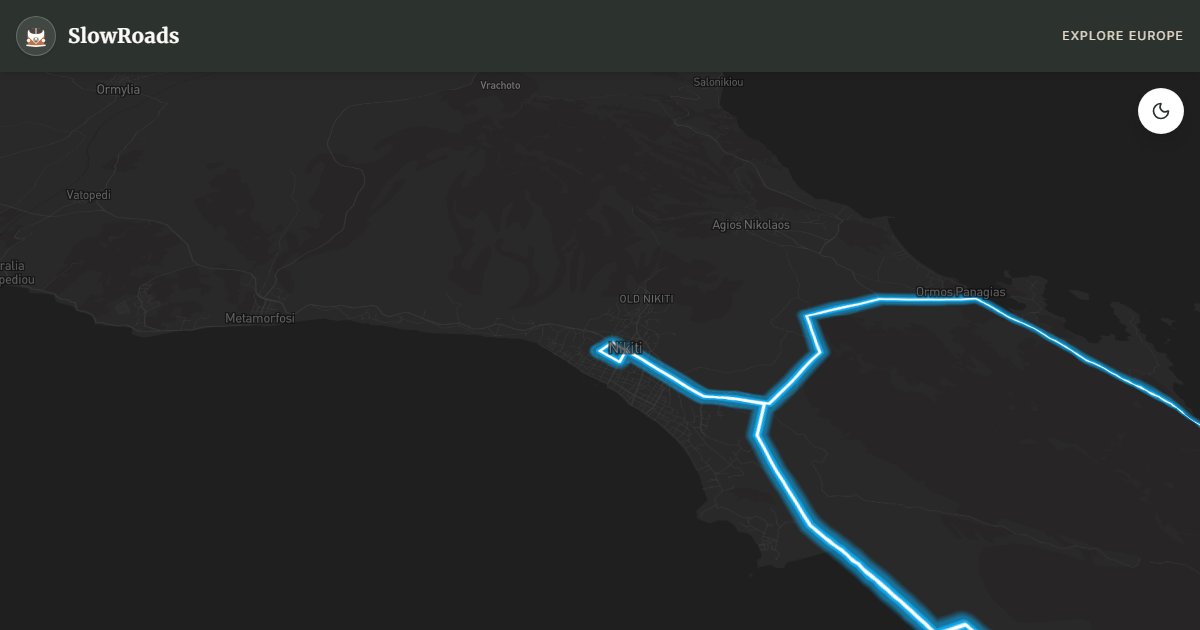
Circumnavigate Sithonia, Halkidiki’s middle peninsula — about 125 km of gentle pine-fringed coastal roads for low-power campervans. Orange Beach coves, Porto Koufo’s enclosed harbour, and Parthenonas stone village reward slow loops without alpine grades. July–August beach traffic is the main friction; shoulder months feel calmer. Organised campsites only — wild camping on popular beaches is enforced. Fill fuel before quieter southern tips; short climbs to Parthenonas are modest if you cool patiently. Two to three unhurried days suit classic campers better than a single rush around the trident finger.
Detailed Route Guide
Halkidiki's three peninsulas — often called "the trident of Poseidon" — each have a distinct character. The westernmost (Kassandra) is the most developed and busy. The easternmost (Athos) is a monastic republic closed to women and accessible to men only by special permit. Sithonia, the middle finger, occupies the sweet spot: genuinely beautiful, relatively uncommercialised, and with enough winding coastal road to make for a rewarding slow-travel circuit. The peninsula is blanketed in pine forest that runs down almost to the sea, where the trees give way to beaches of fine sand and turquoise water so clear that the sandy bottom is visible at several metres depth. This coastal loop of around 125 kilometres rewards a leisurely two or three days, with the flexibility to stop at whichever cove catches your eye.
The road circumnavigates the peninsula starting and ending in Nikiti. Heading south on the eastern coast you pass through Neos Marmaras, Sithonia's largest resort, before the road begins to narrow and the scenery grows wilder. Porto Koufo is one of the highlights: a completely enclosed natural harbour — one of the finest in the Mediterranean — where the sea is mirror-flat even in a strong north wind, and fishing boats cluster at the small quay. Continuing south and then north up the western coast, Kavourotripes (the "Orange Beach" area near Vourvourou) offers some of the most impossibly photogenic swimming spots in northern Greece — small coves where red-orange rock meets pine trees and aquamarine water. Parthenonas, the traditional stone mountain village perched above the western coast, provides a cultural counterweight to all the beach-hopping below.
For classic and low-power campervans, Sithonia is one of the friendliest routes in this entire collection. The coastal road is paved and the gradients are gentle — nothing approaching the dramatic climbs of Pelion or the narrow stone corridors of the Deep Mani. The only sections requiring care are a few short stretches on the southern tip where the road briefly narrows and the surface can be rough after winter rains. The pine-shaded pull-offs along the eastern coast are popular for discreet overnight parking — flat, private, with a sea breeze — though wild camping remains illegal and enforcement tightens in July–August. Water and basic provisions are available in Neos Marmaras, Porto Koufo, and Vourvourou; fuel up in Nikiti or Neos Marmaras.
Sithonia peaks in July and August, when Greek families from Thessaloniki and Kavala descend for summer holidays and the more accessible beaches (Lagomandra, Neos Marmaras) get busy. The best strategy is to start early and drive to the more remote coves before 10am. May, June, and September offer the peninsula nearly to yourself, with water temperatures still comfortable for swimming from June onwards. October is wonderful for the golden pine light and the quietude, though some tavernas begin to close. The micro-climate is mild and dry from May through October, with the pines moderating temperatures compared to the open plains inland.
Practical notes for slow travellers: the coastal ring is mostly two-lane asphalt with short single-track squeezes near the southern tip and through village centres. Fuel and LPG are easiest in Nikiti and Neos Marmaras; smaller harbours may have limited hours outside July–August. If you want facilities, use organised campsites near Neos Marmaras rather than relying on informal pull-offs in peak season. Combine Sithonia with Mount Olympus foothills or a Thessaloniki ferry logistics day if you are linking northern Greece loops — the peninsula rewards two unhurried nights more than a single rushed circuit.
Frequently Asked Questions
Points of Interest
Orange Beach (Kavourotripes)
Nature
Turquoise coves with orange-red rock and pines
Parthenonas Mountain Village
Town
Traditional stone village above the west coast
Porto Koufo (Natural Harbor)
Nature
Enclosed natural harbour sheltered from north winds
Route Highlights
Route Information
Navigation
* Supported by HERE Technologies, headquartered in Amsterdam, Europe. Precise routing through all waypoints.
* Waze only navigates to the starting point. Use Google Maps for the full scenic route.
Offline GPS Navigation
Download the GPX route file to navigate offline using your favorite GPS device or app (Garmin, TomTom, OsmAnd, Gaia GPS).
Ask Copilot (AI Travel Guide)
Hello! I am your SlowRoads Copilot. I know the Sithonia Coastal Loop intimately. Ask me about scenic viewpoints, local history, hidden culinary gems, or the best camper spots along the way!