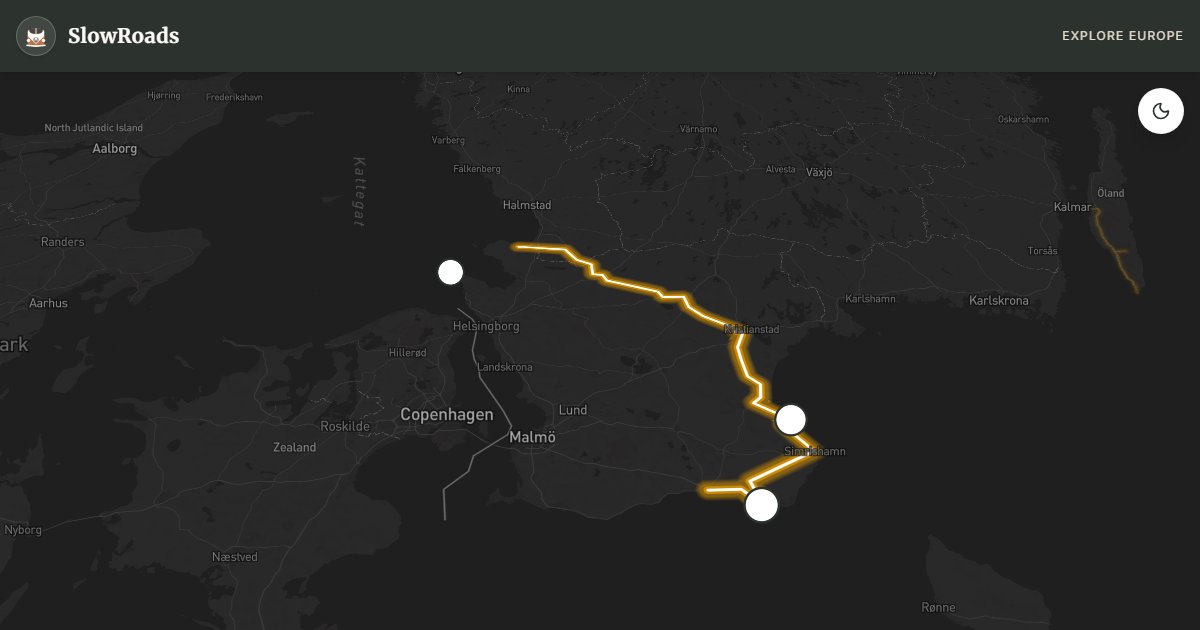
About This Route
Skåne's coastal loop from Ystad to Båstad: Österlen orchards, Ales Stenar on the cliff, and Kullaberg's headland. Flat to gently rolling — easy cruising for classic and low-power campervans with farm shops and white-sand Baltic beaches. Use camps and harbour overnighting; respect private land. Summer brings beach crowds near popular bays — early parking helps. A southern Sweden recovery route after northern miles: orchards, stone ships, and soft Baltic light without alpine stress. Allow extra time for photo pullouts, fuel stops, and cooling breaks in older vans.
Detailed Route Guide
Skåne, the southernmost province of Sweden, feels genuinely different from the rest of the country — flatter, warmer, more agricultural, with a landscape and character that owes as much to Denmark (which ruled it until 1658) as to Sweden. The 215-kilometre coastal loop from Ystad to Båstad captures the best of this region: the white sandy beaches and orchards of Österlen in the east, the ancient stones of the headland near Kåseberga, the rugged cliffs and lighthouse of Kullaberg in the west, and the gentle farmland in between. It is rightly called the 'Tuscany of the North', and while the comparison flatters the sunshine, it captures the soft, cultivated beauty of the place.
The most iconic stop on the route is Ales Stenar, a Bronze Age stone ship monument on a clifftop above the sea near Kåseberga. Dating from around 600 AD (Iron Age, despite frequent misattribution), the monument consists of 59 boulders arranged in the outline of a 67-metre ship, aligned precisely with the sunset at midsummer and midwinter. The view from the cliff over the sea is magnificent, and the mystery of the monument's original purpose — burial site, calendar, meeting place, or all three — gives it a contemplative depth that few ancient sites can match. The tiny village of Kåseberga below has a working fishing harbour where smoked herring is sold directly from the smokehouses. Further north, Kullaberg is a dramatic knuckle of ancient rock jutting into the Öresund strait. The nature reserve has walking trails, a lighthouse, and the slightly surreal Swedish tradition of a small, licensed restaurant clinging to the clifftop.
For van travellers, Skåne is Swedish driving at its most relaxed. The roads are wide, well-maintained, and mostly flat or gently rolling — the kind of terrain where a loaded classic campervan cruises contentedly at 80 km/h without drama. The main roads are fast, but the real pleasure is on the smaller lanes through the Österlen orchards, where you can pull over at farm stands selling apple juice, strawberries, and gooseberries with an honesty box. Ystad, the start point, is a well-preserved medieval market town with white half-timbered houses and a strong association with Henning Mankell's Wallander detective novels — the TV adaptation was filmed here. The town has excellent camping just south of the centre.
The best time to visit is late May to June for blossoms, or August to September for warm, slightly melancholy late-summer light. Skåne's climate is the mildest in Sweden — temperatures regularly reach 25°C in summer, and the coast stays swimmable well into September. The region is famous for its food culture: look for smörgåsbord restaurants, farm-to-table lunch spots, and the very Swedish tradition of fika (coffee and pastry) in the old bakeries of Ystad and Simrishamn. The route is perfectly drivable in a single day but deserves at least three to do it justice at a slow travel pace.
Arrival from mainland Europe is simple via the Øresund Bridge to Malmö or ferries into Trelleborg — Skåne is a natural first Swedish stage for classic campervans coming from Germany or Denmark. Allemansrätten still does not let vans onto beaches or dunes; use campsites near Ystad and legal parking only. The Kullaberg lighthouse road can clog in July — arrive early. No mountain cooling drama here; the main van skills are patience in village centres and budgeting for Swedish fuel prices after the bridge or ferry crossing.
Frequently Asked Questions
Points of Interest
Ales Stenar (Ancient Site)
Monument
Kullaberg Nature Reserve
Nature
Stenshuvud National Park
Nature
Route Highlights
Route Information
Navigation
* Supported by HERE Technologies, headquartered in Amsterdam, Europe. Precise routing through all waypoints.
* Waze only navigates to the starting point. Use Google Maps for the full scenic route.
Offline GPS Navigation
Download the GPX route file to navigate offline using your favorite GPS device or app (Garmin, TomTom, OsmAnd, Gaia GPS).