About This Route
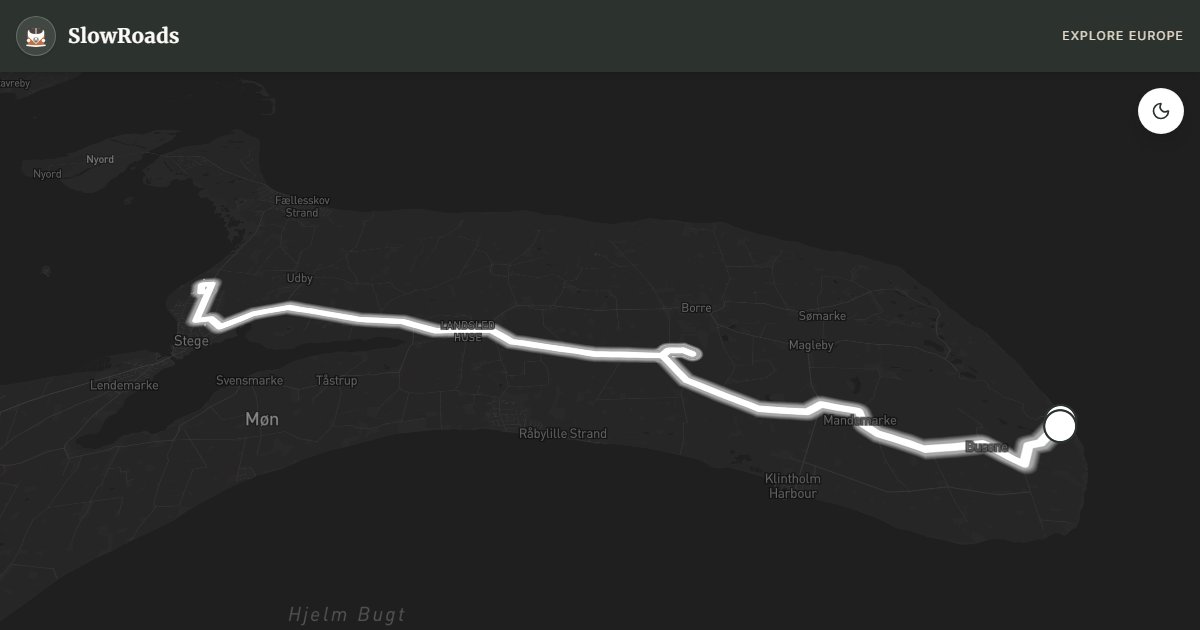
Møn to Møns Klint — Denmark's famous white chalk cliffs under ancient beech forest, GeoCenter geology museum and a fossil-rich Baltic beach. Quiet lanes, easy for classic campervans; hundreds of wooden steps down to the shore reward a slow visit. Camp nearby, not overnight in the cliff car park; combine with Zealand via the Farø bridges. A focused half-day at the cliffs, or a full day with Stege and forest lanes on Møn. Best light in morning or late afternoon when the chalk glows.
Detailed Route Guide
Møns Klint is one of the most dramatic natural spectacles in Denmark — a 6-kilometre stretch of white chalk cliffs rising up to 128 metres vertically from the turquoise waters of the Baltic Sea on the island of Møn. In a country where the landscape is defined by flat agricultural plains and low coastal dunes, the Klint (Danish for cliff) is an anomaly of geological drama that draws visitors from across Scandinavia. The route from the island's main town of Stege to the cliffs passes through ancient beech forests of extraordinary character — the GeoSkov (Geological Forest) that covers the chalk substrate behind the cliffs contains the oldest beech trees in Denmark and is recognised as one of the most species-rich forest ecosystems in the country.
The cliffs themselves were formed by chalk deposits laid down during the Cretaceous period — the same chalk that produced the White Cliffs of Dover across the English Channel — and subsequently pushed to the surface by the movement of ice sheets during the last glacial period. This chalk substrate has a distinctive ecology: the alkaline soil supports a remarkable concentration of orchid species (over 20 native orchid species have been recorded on the chalk grasslands above the cliffs), and the fossil record preserved in the chalk is exceptional, with ammonites, sea urchins, and even mosasaur teeth regularly found by beachcombers at the foot of the cliffs. The GeoCenter Møns Klint, a world-class geological museum built into the hillside at the cliff edge, explains this 65-million-year-old story with considerable skill.
For a classic or low-power campervan, the Møns Klint route is completely unproblematic — it is one of the very few routes in this app where the destination is genuinely easier to reach than most of the journey. The island of Møn is connected to the rest of Denmark via the Farø Bridges and a small island-hopping road, and the drive from Stege to Klint is through quiet lanes with gentle undulations through forest. Parking at the GeoCenter is large and well-organised for all vehicle sizes. The walk down to the beach from the cliff top involves several hundred wooden steps and a steep descent — comfortable footwear is essential, and the return climb takes most visitors 20–30 minutes.
Møns Klint is best visited in spring (May to June) when the chalk grassland wildflowers and orchids are at their peak, or in autumn (September to October) when the beech forest turns gold and the visitor numbers thin dramatically. The cliffs in winter morning light — with frost on the chalk grassland above and the steel-grey Baltic below — have a haunting, Nordic beauty that summer cannot match. The island of Møn itself is worth exploring beyond the cliffs: the Liselund Romantic Castle (a small thatched neo-Gothic folly in a romantic garden above the sea), the medieval frescoes in Elmelunde Church, and the dark sky stargazing area (Møn has the darkest skies in Denmark) are all within a few kilometres.
GeoCenter parking handles campervans; overnight at nearby campsites, not in the cliff car park overnight. The stair descent to the beach is steep — allow time and water for the climb back. Farø bridge links keep the drive from Zealand simple; combine with a slow Marguerite stretch if you have an extra day.
Frequently Asked Questions
Points of Interest
Møns Klint Viewpoint
Nature
GeoCenter Møns Klint
Monument
Route Highlights
Route Information
Navigation
* Supported by HERE Technologies, headquartered in Amsterdam, Europe. Precise routing through all waypoints.
* Waze only navigates to the starting point. Use Google Maps for the full scenic route.
Offline GPS Navigation
Download the GPX route file to navigate offline using your favorite GPS device or app (Garmin, TomTom, OsmAnd, Gaia GPS).
Ask Copilot (AI Travel Guide)
Hello! I am your SlowRoads Copilot. I know the Møn's Klint (White Cliffs) Route intimately. Ask me about scenic viewpoints, local history, hidden culinary gems, or the best camper spots along the way!