About This Route
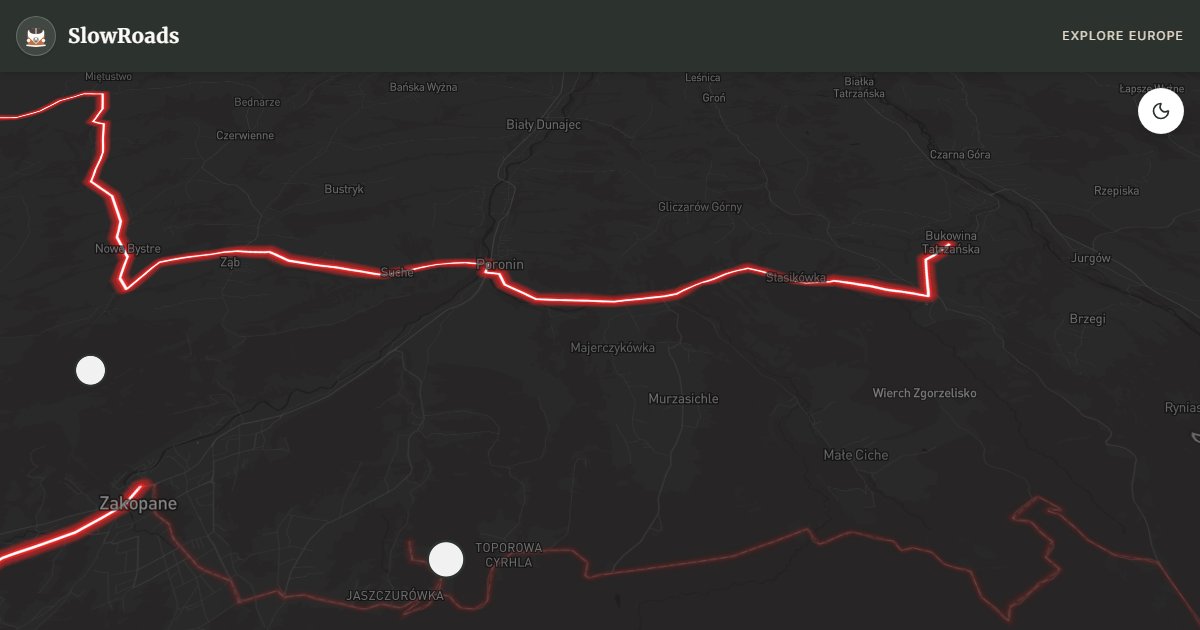
Loop the Podhale foothills around Zakopane — about 50 km of Goral wooden villages, Chochołów log houses, and Tatra granite views for classic campervans. Steep climbs demand cooling checks, low gears, and patience in loaded older vans; park on the edge of Zakopane and walk or bus the crowded core. Campsites and agroturystyka only — no overnighting on forest tracks inside Tatra park rules. May–June and September beat August queues. Fill fuel before highland stretches. Gubałówka viewpoints and Jaszczurówka chapel reward stops if you refuse to rush the valley floor traffic.
Detailed Route Guide
The Tatra Mountains are a geological anomaly in the middle of Europe — a compact block of granite, metamorphic rock, and limestone that rises abruptly from the Podhale highland plateau to peaks topping 2,499 metres, creating a miniature Alpine landscape at the southern border of Poland and Slovakia. The Polish Tatras, though they represent less than a quarter of the range, offer some of the most dramatic mountain scenery in Central Europe within a compact area, and they have nurtured a unique highland culture — the Gorals (mountain people) — whose traditions of music, costume, architecture, and cuisine are as distinct from lowland Poland as Bavaria is from northern Germany. This 50-kilometre route from Zakopane to Bukowina Tatrzańska around the Tatra foothills, offers an accessible introduction to Tatra culture and scenery without requiring the summiting of any mountain passes — though it does involve significant gradient in several sections.
Zakopane is the undisputed centre of Polish mountain culture and winter sports — a lively, year-round resort at 850 metres altitude, famous for its distinctive "Zakopane Style" wooden architecture developed by architect Stanisław Witkiewicz in the 1890s, which draws on Goral folk motifs and construction techniques to create a uniquely Polish mountain aesthetic. The town's main pedestrian street (ul. Krupówki) is a lively mix of restaurants, souvenir markets, and funikulary (funiculars) departing for the ridgelines above. From Zakopane, the route swings west to the village of Chochołów — one of Poland's most important protected wooden villages, where nearly every building is constructed from massive horizontal pine logs in the traditional Podhale style, the logs perfectly fitting one another without nails or mortar. The village looks much as it did in the 18th century. Returning east, the route passes through smaller Goral villages before climbing to Bukowina Tatrzańska and its famous thermal spa complex, with pools fed by deep geothermal springs reaching 32–36°C year-round.
For older and low-power campervans this loop needs patience and a healthy cooling system. Gradients reach about 10–12% in places, especially climbing toward Chochołów and on approaches to Bukowina Tatrzańska from the west. Drop early into lower gears, pause if temperatures climb, and do not force the engine on long pulls. Altitude around 800–1,000 m helps idle cooling slightly. Zakopane itself is the bigger practical hurdle: peak-season centre access is restricted — use perimeter camper parking and walk or take the town bus in.
The Tatra foothills are spectacular in every season. Winter (December–March) brings deep snow and excellent skiing — Zakopane is Poland's ski capital — but driving the loop in snow and ice demands winter tyres and confidence. Spring (May–June) is one of the finest times: the snow retreats from the valley floor while the high peaks remain white, the meadows fill with crocuses (in April at lower elevations) and later with the distinctive 'krokusy' (crocuses in Dolina Chochołowska). Summer is peak season with heavy tourist traffic; autumn (September–October) is the quietest and most beautiful, with golden foliage and clear mountain air. Whatever season you visit, the Goral highlander experience — music, smoked cheese (oscypek), and sheep's milk — should not be missed.
Frequently Asked Questions
Points of Interest
Chochołów Wooden Village
Town
An open-air museum of living history. Nearly every house is built of massive horizontal pine logs.
Gubałówka Viewpoint
Nature
The most iconic panoramic view of the High Tatra granite peaks towering above the Zakopane valley.
Jaszczurówka Chapel
Monument
A masterpiece of 'Zakopane Style' architecture, built entirely from wood without using iron nails.
Route Highlights
Route Information
Navigation
* Supported by HERE Technologies, headquartered in Amsterdam, Europe. Precise routing through all waypoints.
* Waze only navigates to the starting point. Use Google Maps for the full scenic route.
Offline GPS Navigation
Download the GPX route file to navigate offline using your favorite GPS device or app (Garmin, TomTom, OsmAnd, Gaia GPS).