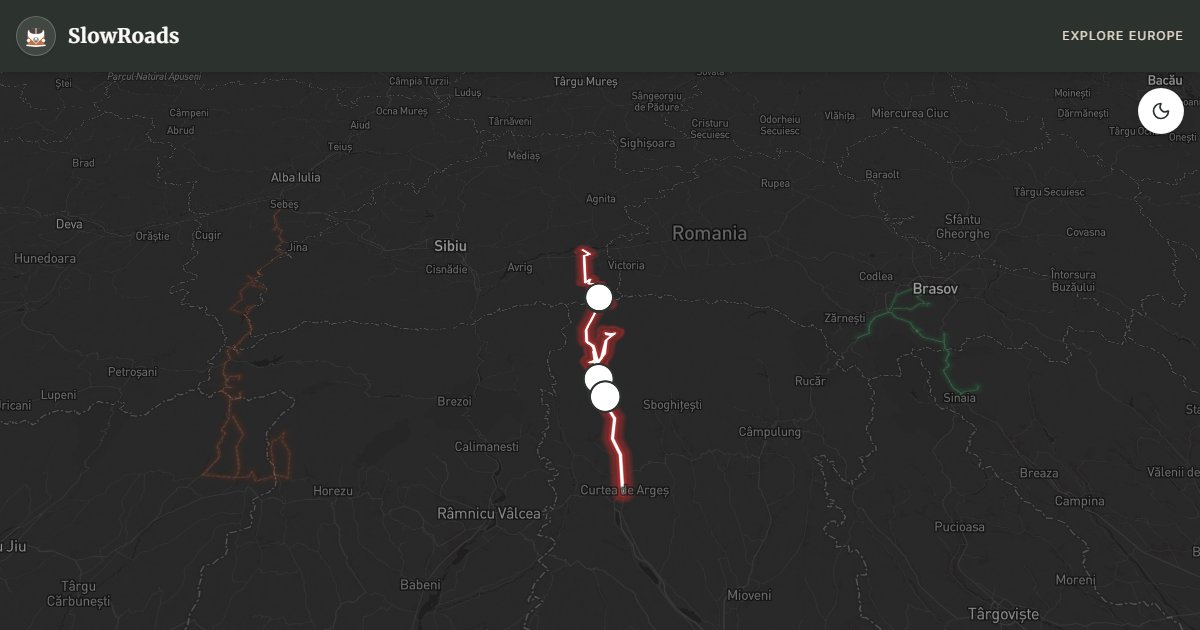
About This Route
Romania's legendary DN7C alpine road — dozens of hairpins, Vidraru Dam, and Bâlea Lac at ~2,034 m (road summit ~2,042 m) through the Făgăraș Mountains. Built as a military route, it remains a serious climb for classic and low-power campervans: sustained 8–10% grades, cool early, carry coolant, and engine-brake the descent. Closed outside roughly June–October — check CNAIR for exact dates. No fuel on the pass; fill in Cârțișoara or Curtea de Argeș. Shoulder mornings beat coach convoys at the tunnel and lake parking.
Detailed Route Guide
The Transfăgărășan — DN7C — is Romania's answer to the Stelvio and the Grossglockner combined, a road so dramatic that Jeremy Clarkson once declared it the best driving road in the world. Built between 1970 and 1974 on the orders of Nicolae Ceaușescu as a strategic military route through the Făgăraș Mountains, the Transfăgărășan climbs from the southern foothills near Curtea de Argeș to the glacial lake of Bâlea Lac at about 2,034 metres (road summit near the Capra–Bâlea tunnel ~2,042 m), threading through dozens of hairpin bends, two long tunnels, and the monumental Vidraru Dam. The southern ascent from Curtea de Argeș is the classic approach for van travellers: the road rises steadily through forested valleys before breaking into open alpine terrain where every switchback reveals another layer of the Carpathian skyline.
Vidraru Dam is the first major landmark — a 166-metre concrete arch holding back a reservoir that powers a hydroelectric plant visible from the road's viewing platforms. Beyond the dam, the gradient intensifies. Sections regularly exceed 8% and touch 10% on the final climb to the pass, sustained grades that will push a classic or low-power campervan's cooling system to its limit. The advice from experienced classic-camper drivers who have made this crossing is consistent: climb in first or second gear, stop at every pullout to let the engine breathe, carry spare coolant, and never attempt the pass on a hot afternoon in August without checking your fan and oil cooler first. The descent north toward Cârțișoara demands equal respect for the brakes — use engine braking throughout and avoid riding the pedal on the long downhill sections after Balea Lac.
Seasonality defines the Transfăgărășan more than almost any other road in Europe. DN7C is typically open from late June or early July through October, sometimes closing earlier if early snow arrives on the high ridges. Outside this window the road is gated and impassable — attempting it in winter is not adventurous, it is illegal and dangerous. Even within the open season, weather at Balea Lac can turn from sunshine to sleet in minutes; carry warm layers regardless of the forecast. The northern approach from Sibiu via the Balea Lac cable car is an alternative when the southern section is closed for maintenance, though the full through-drive requires the pass to be open end to end.
For slow van travel, allow a full day. Start early from Curtea de Argeș, fuel up completely — there are no petrol stations on the pass itself — and plan to spend an hour at Balea Lac before descending. Camping is possible at the lake's parking area in summer when facilities operate, and the town of Cârțișoara at the northern end offers guesthouses and a small shop. The Transfăgărășan is not a road you drive for efficiency; it is a road you drive because the Carpathians, seen from dozens of hairpins above the clouds, are one of the great experiences of European slow travel.
Check CNAIR (Romania's national road company) for exact opening and closure dates — they vary with snow and can shift by weeks. Carry lei cash for rural stops, fill completely before Curtea de Argeș, and treat Bâlea Lac weather as alpine even in July. Classic and low-power campervans that climb early, cool often, and engine-brake the north descent finish the day with a story rather than a tow.
Frequently Asked Questions
Points of Interest
Vidraru Dam
Monument
A 166-metre concrete arch dam holding back Lake Vidraru — one of Europe's largest when completed in 1966.
Balea Waterfall
Nature
A 60-metre cascade visible from the road before the final climb to the pass summit.
Balea Lac
Nature
Glacial lake at ~2,034 m beside the road summit (~2,042 m at the Capra–Bâlea tunnel) — cable car from the north when the high section is closed.
Poienari Citadel
Castle
Ruined cliff fortress linked to Vlad the Impaler — a steep side detour near the southern approach.
Capra–Bâlea Tunnel
Monument
An 887-metre tunnel at ~2,042 m — Romania's highest road tunnel, piercing the ridge beside Bâlea Lac on DN7C.
Route Highlights
Route Information
Navigation
* Supported by HERE Technologies, headquartered in Amsterdam, Europe. Precise routing through all waypoints.
* Waze only navigates to the starting point. Use Google Maps for the full scenic route.
Offline GPS Navigation
Download the GPX route file to navigate offline using your favorite GPS device or app (Garmin, TomTom, OsmAnd, Gaia GPS).
Ask Copilot (AI Travel Guide)
Hello! I am your SlowRoads Copilot. I know the Transfăgărășan Pass (DN7C) intimately. Ask me about scenic viewpoints, local history, hidden culinary gems, or the best camper spots along the way!