About This Route
Where two seas meet — the Baltic and Gulf of Riga collide at Cape Kolka, with fishing villages, white sand dunes, and Slītere lighthouse on Latvia's wildest western peninsula. Unpaved sections near Kolka and sand tracks to beach parking ask classic and low-power campervans for dry weather and careful tyre pressure. Fuel before the peninsula tip; services thin. Sunset at the cape is the ritual; overnight at camps, not dunes. A wind-scoured slow day after Gauja forests. WARNING: Unpaved and sandy approaches — avoid after heavy rain.
Detailed Route Guide
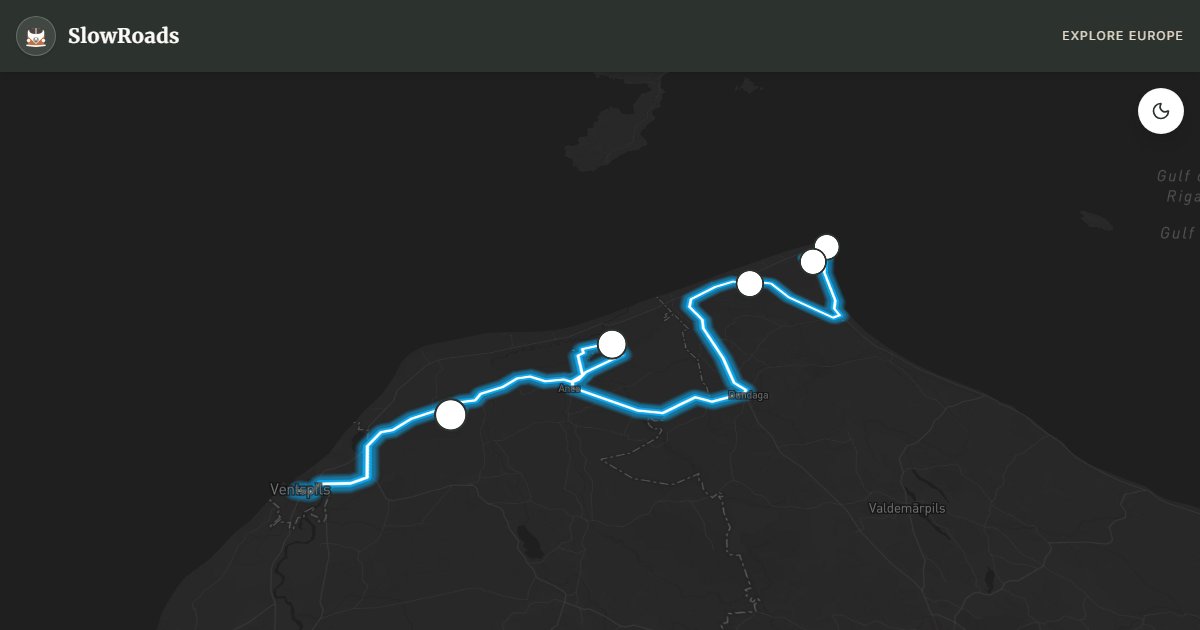
Cape Kolka — Domesnes in Livonian — is where Latvia's geography becomes myth: the northern tip of the Kurzeme peninsula where the Baltic Sea and the Gulf of Riga meet in visible collision, currents crossing at angles that fishermen have read for centuries to predict weather and fortune. This roughly 141-kilometre coastal drive from Ventspils north through Slītere National Park to Kolka village and the cape itself is Latvia's wildest slow road — sparse population, old-growth forest, fishing hamlets where Livonian language once dominated, and beaches where amber fragments appear after every autumn storm.
Ventspils anchors the southern approach — a tidy port city with blue cow sculptures, a medieval castle, and excellent van services before entering the emptier coast. From Ventspils, the P131 coastal road runs north through Ovīši lighthouse (Latvia's oldest, from 1814) and into Slītere National Park — a Natura 2000 protected area of coastal dunes, old-growth pine, and the historic Slītere lighthouse with panoramic forest views. The park roads are paved but narrow; summer cyclists share the lane.
Mid-coast, Miķeļtornis and other fishing villages preserve the Kurzeme coast's working character — smoked fish sold from roadside smokehouses, net frames drying on beaches, and a pace of life unchanged since Soviet collective farms dissolved. Approaching Kolka, the landscape opens to vast skies and dual shorelines visible from the cape viewpoint — Gulf of Riga beaches on one side, open Baltic on the other, with bird migration peaks in spring and autumn drawing ornithologists worldwide.
For classic and low-power campervan travellers, the route is mechanically gentle — flat terrain, occasional unpaved parking access to beaches requiring slow driving on sand. Allow two to three days for the full coast; overnight in Kolka guesthouses or Ventspils. May through September for services; autumn for amber hunting on beaches after storms. Winter roads cleared but villages quiet. Pair with Gauja valley to the east or continue south to Liepāja's art nouveau coast.
Stock fuel and food in Ventspils before the emptier coast — Mazirbe has limited pumps before Kolka. Beach sand parking is for firm edges only; soft sand above the tide line traps low-clearance vans. Slītere National Park bans wild camping — use Kolka guesthouses or return to Ventspils. Bird migration peaks April–May and September–October at the cape towers. Autumn westerlies bring amber to public beaches after storms. Pair with Gauja valley or continue south toward Liepāja for a full Kurzeme coast week.
Kolka village has limited services — fuel up in Talsi or Roja before the final peninsula stretch. Single-track dune roads need patience and passing places; reverse carefully rather than forcing soft shoulders. Storm watching from the cape tip is spectacular in autumn, but high-sided vans should park inland of the most exposed lots when wind warnings rise. Overnight at guesthouses or small campsites; do not treat beach parking as a wild camp. Classic and low-power campervans handle the grades easily — wind and sand are the real constraints. Carry a paper map backup for the peninsula tip where mobile signal fades; fishermen’s tracks are not van roads. Sunset at the cape tip is worth the wait if wind allows a safe walk from the signed lot.
Frequently Asked Questions
Points of Interest
Cape Kolka
Nature
The tip where Baltic Sea and Gulf of Riga currents meet — dramatic shoreline and bird migration hotspot.
Slītere Lighthouse
Monument
A historic inland lighthouse in Slītere National Park (Natura 2000) with views over old-growth forest and coastal dunes.
Miķeļtornis Fishing Village
Town
A Livonian coast fishing hamlet with smoked fish stalls and traditional net-drying frames.
Ovīši Lighthouse
Monument
Latvia's oldest lighthouse from 1814 — brick tower on the southern Kurzeme coast approach.
Kolka Beach & Amber Shore
Nature
Wild white-sand beach near the cape — after autumn storms, amber fragments sometimes wash ashore along the Kurzeme coast.
Route Highlights
Route Information
Navigation
* Supported by HERE Technologies, headquartered in Amsterdam, Europe. Precise routing through all waypoints.
* Waze only navigates to the starting point. Use Google Maps for the full scenic route.
Offline GPS Navigation
Download the GPX route file to navigate offline using your favorite GPS device or app (Garmin, TomTom, OsmAnd, Gaia GPS).
Ask Copilot (AI Travel Guide)
Hello! I am your SlowRoads Copilot. I know the Cape Kolka & Kurzeme West Coast intimately. Ask me about scenic viewpoints, local history, hidden culinary gems, or the best camper spots along the way!