About This Route
Explore the German Clock Road through the southern Black Forest: Triberg waterfalls, Furtwangen’s German Clock Museum, and living cuckoo-clock workshops around a roughly circular craft route. Expect continuous short climbs and descents — classic and low-power campervans should plan cooling pauses, low gears, and unhurried days rather than a rushed loop. Village streets can be narrow; park outside centres and walk to workshops. Stellplätze and campgrounds sit near Triberg and Furtwangen; wild camping is not allowed. Best from late spring to autumn when forest roads are clear and craft shops keep full hours.
Detailed Route Guide
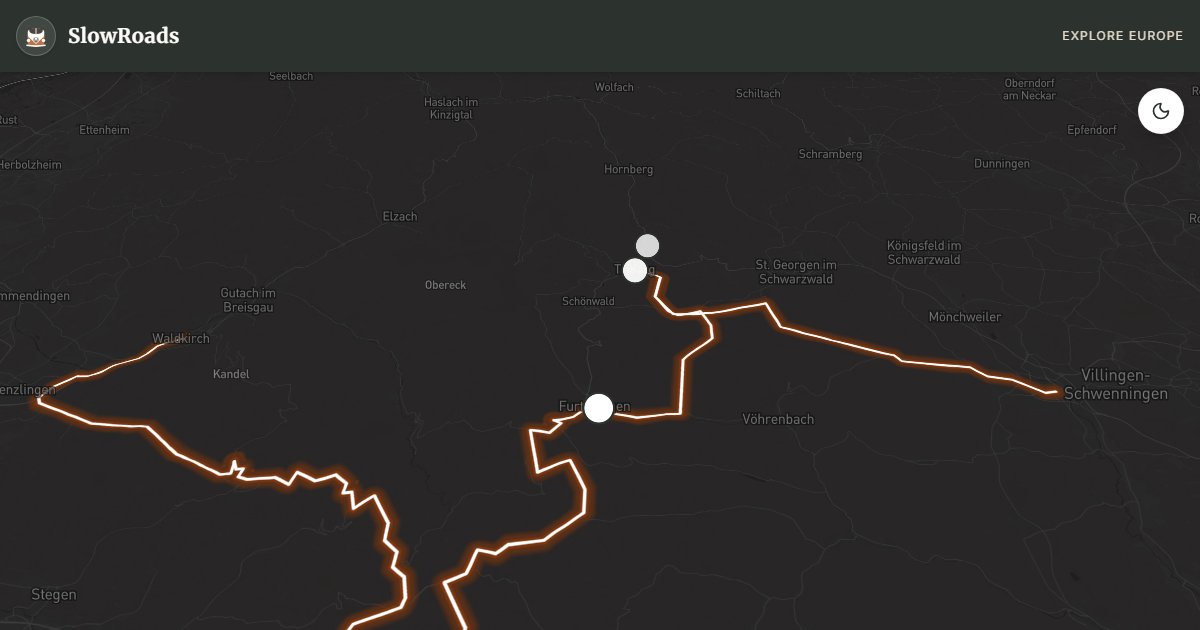
Deep in the southern Black Forest, the German Clock Road (Deutsche Uhrenstraße) circles through the region that gave the world two of its most iconic crafts: the cuckoo clock and precision clockmaking. The 110-kilometre route loops through Villingen-Schwenningen — literally a double city straddling the former Württemberg-Baden border — through Triberg with its famous waterfall cascade, and back through the watchmaking town of Furtwangen to the Freiburg area. It is simultaneously a cultural pilgrimage and a genuine mountain drive through one of Europe's most atmospheric forests.
The cuckoo clock is not merely a tourist trinket here — it is a living industry. The craft began in the Schönwald area around 1630 when farmers, seeking winter income, began carving wooden clock mechanisms. By the 19th century the Black Forest was supplying clockwork to much of Europe. Today, the German Clock Museum in Furtwangen holds the most comprehensive collection of Black Forest clocks in the world, from simple wooden movements to impossibly intricate astronomical timepieces. The building itself is beautifully designed, and a half-day here transforms what might seem like a novelty stop into a genuinely fascinating story about craft, trade, and industrialisation.
Triberg is the route's most dramatic natural stop. Seven stages of waterfall drop a total of 163 metres through the forest — one of Germany's best-known cascades (the absolute height record belongs to the remote Röthbachfall near Königssee). The walk up through the spray is genuinely impressive, and the town below is lined with cuckoo clock shops ranging from the kitsch to the extraordinary (the Haus der 1000 Uhren). Also in Triberg: the best Schwarzwälder Kirschtorte (Black Forest cake) in the region, according to locals. The road through Triberg requires a significant climb and descent — the B33 through the Gutach Valley is one of the narrower, more demanding stretches of the route.
Villingen-Schwenningen reveals a peculiar German duality: two towns that were never quite merged. Villingen is dominated by a well-preserved medieval ring wall and the Gothic minster; Schwenningen (several kilometres east) was historically the precision instrument manufacturing town. Both reward a brief exploration. Between them, the Bundesstraße 33 runs flat across an upland plateau — a welcome respite for the engine between the forest climbs.
For classic and low-power campervans: the Clock Road involves constant gradient changes typical of the Black Forest. No single pass is as dramatic as the Schwarzwaldhochstraße climb, but the cumulative effect of repeated ascents and descents through forested valleys means your engine rarely gets a complete rest. First or second gear is regularly needed. The reward is that the speed limits are low, the scenery is constant, and there is always a roadside Gasthaus selling fresh Wurst and the local Schwarzwälder Schinken (smoked ham) at the right moment.
Pair the Clock Road with the Black Forest High Road for a natural two-day loop: ridge views on the B500, then craft villages and waterfalls on the Uhrenstraße. May–June and September–October offer the best balance of open roads and thinner coach traffic at Triberg. In winter, check ice warnings on the B33 before committing a loaded older camper to the Gutach Valley. Overnight at Titisee or Kinzig Valley campgrounds rather than attempting wild camping in the forest — it is not generally permitted.
Frequently Asked Questions
Points of Interest
Triberg Waterfalls
Nature
German Clock Museum
Monument
World's Largest Cuckoo Clock
Monument
Route Highlights
Route Information
Navigation
* Supported by HERE Technologies, headquartered in Amsterdam, Europe. Precise routing through all waypoints.
* Waze only navigates to the starting point. Use Google Maps for the full scenic route.
Offline GPS Navigation
Download the GPX route file to navigate offline using your favorite GPS device or app (Garmin, TomTom, OsmAnd, Gaia GPS).
Ask Copilot (AI Travel Guide)
Hello! I am your SlowRoads Copilot. I know the German Clock Road intimately. Ask me about scenic viewpoints, local history, hidden culinary gems, or the best camper spots along the way!