About This Route
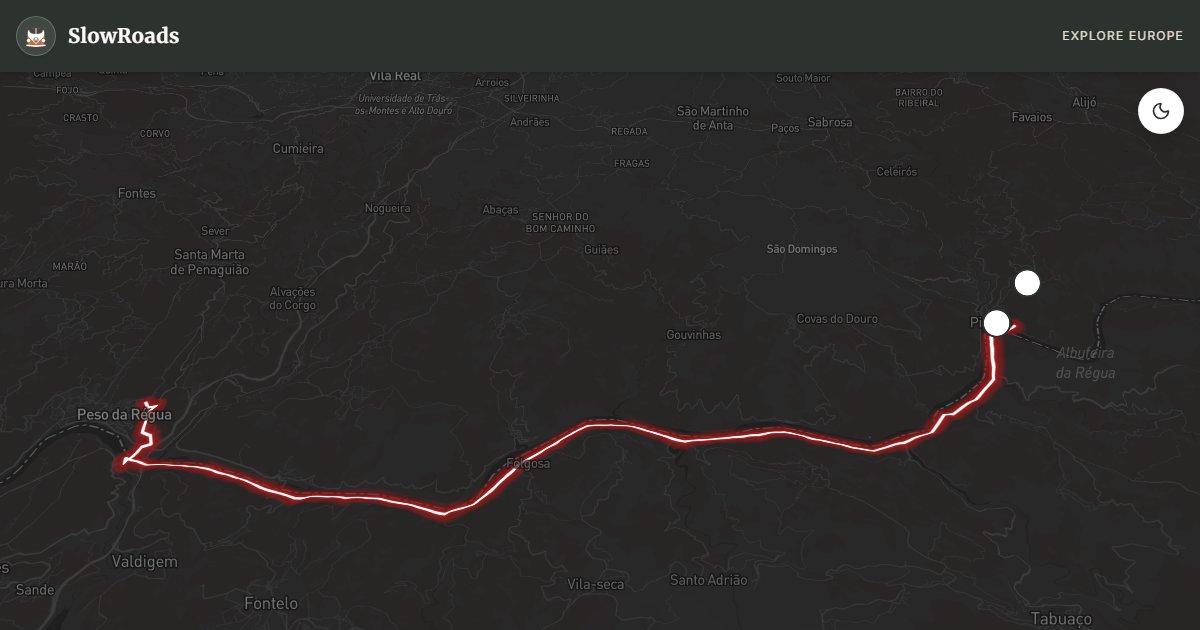
Drive the N222 from Peso da Régua to Pinhão through UNESCO Douro terraces — roughly 26 km of schist vineyard walls above the river for classic and low-power campervans. Stop at Pinhão's azulejo station and Casal de Loivos viewpoint; short climbs need low gears but nothing alpine. Ideal April–June and September–October; July–August often hit 38–40°C in the valley floor. Overnight only under IMT rules or at campsites and welcoming quintas — not on narrow terrace pull-outs. Fill fuel in Régua before the wine villages quiet for the night.
Detailed Route Guide
The N222 between Peso da Régua and Pinhão is not merely a road — it is a declaration of what slow travel is meant to be. Consistently ranked among the world's most beautiful drives, this 26-kilometre stretch follows the northern bank of the Douro through a landscape so composed it seems almost theatrical. The river gleams slate-blue below while the southern slopes rise in an unbroken cascade of UNESCO-listed terraced vineyards, each wall hand-built from schist over centuries. The route connects Peso da Régua — the commercial heart of Douro wine country — to the smaller village of Pinhão through roughly 93 sinuous curves at water level, where the road barely rises above the river and every bend reveals a new composition of vine, rock, and water.
The Douro Valley has produced wine for over two thousand years, and Port — the sweet, fortified export that made the region famous — has shipped from these hills since the seventeenth century. The terraces clinging to near-vertical slopes were carved by hand long before mechanisation, and many remain tended the same way. In Pinhão, the historic railway station is the highlight: interior walls covered with over a thousand hand-painted azulejo tiles depicting the grape harvest and the old rabelo boats that once ferried barrels downriver to Porto. Sit at the station café with a glass of aged tawny and the scene feels barely changed in a century. Just above the village, Casal de Loivos viewpoint delivers one of Europe's great panoramas: a sweeping Douro bend framed by terraced hills in every direction. Signed quintas along the road offer tastings if you want to linger.
For classic and low-power campervan drivers, the N222 is close to ideal. The road runs almost entirely flat beside the river, with a well-maintained surface and virtually no gradients to trouble a modest engine. The curves are gentle and wide enough for a full-size camper, and traffic is light outside high-summer weekends. Average speed naturally settles at 30–40 km/h — perfect for savouring every vineyard reflection. Overnight stays in an IMT-homologated motorhome are allowed for up to 48 hours in the same municipality outside Natura 2000, protected areas, and coastal plans — without camping gear outside the vehicle. Many quintas also welcome vans overnight in exchange for a tasting. Prefer the Régua campsite for hook-ups if you want a practical base for exploring the route in both directions.
The best seasons are late April through June and September through October. Late spring brings intensely green vines and riverbank wildflowers with comfortable temperatures in the low to mid-twenties. Autumn is arguably the most spectacular: from mid-September grapes ripen to deep purple, and during the vendima you may see pickers on the steep terraces and traditional foot-treading in open lagares. Evenings cool quickly after sunset — ideal for sleeping in the van. July and August regularly reach 38–40°C in the valley and the road grows busier with tourist traffic. Winter is quiet and atmospheric, with morning mist on the river, though some quinta restaurants close. Whatever the season, build in several hours of buffer; the urge to stop every few hundred metres is irresistible.
Frequently Asked Questions
Points of Interest
Pinhão Historic Railway Station
Monument
Casal de Loivos Viewpoint
Nature
Route Highlights
Route Information
Navigation
* Supported by HERE Technologies, headquartered in Amsterdam, Europe. Precise routing through all waypoints.
* Waze only navigates to the starting point. Use Google Maps for the full scenic route.
Offline GPS Navigation
Download the GPX route file to navigate offline using your favorite GPS device or app (Garmin, TomTom, OsmAnd, Gaia GPS).
Ask Copilot (AI Travel Guide)
Hello! I am your SlowRoads Copilot. I know the Douro Valley N222 intimately. Ask me about scenic viewpoints, local history, hidden culinary gems, or the best camper spots along the way!