About This Route
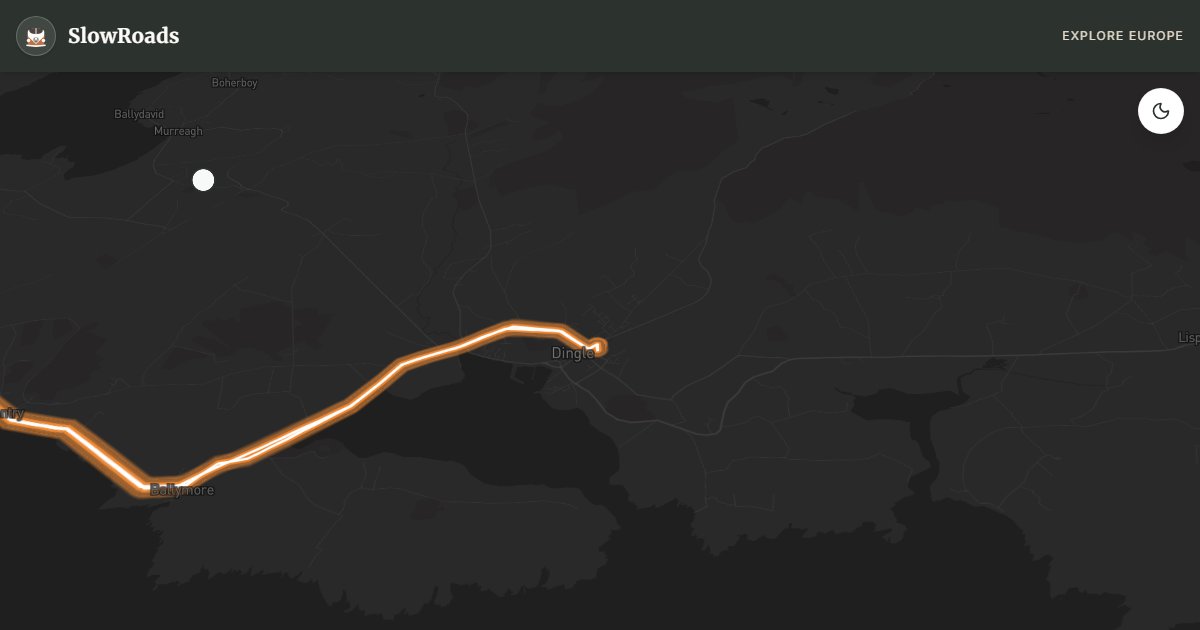
Drive Slea Head on the Dingle Peninsula — a narrow ~36 km loop of Blasket views, clocháns, Coumeenoole Beach, and Gallarus Oratory for patient classic vans. Single-track stretches and tourist traffic demand lay-bys and courtesy more than horsepower; older low-power campervans manage if you start early and refuse to rush. Left-hand driving; official campsites in Dingle only — no wild-camping right. Half a day covers the loop; linger for Gaeltacht light and chowder stops. Fill fuel in Dingle before the headland. Wet stone walls and sudden Atlantic squalls reward mirrors in and patience at every Passing Place.
Detailed Route Guide
The Slea Head Drive on the Dingle Peninsula is one of Europe's most concentrated scenic circuits. At only 36 kilometres it fits a half-day, but every kilometre rewards attention. The peninsula pushes further west into the Atlantic than any other mainland Irish point, and Slea Head above Coumeenoole Beach looks across Blasket Sound to Great Blasket Island, evacuated in 1953. Iron Age ring forts, early Christian oratories and famine-era stone walls sit within walking distance of the road in a living Gaeltacht where Irish remains everyday speech.
Gallarus Oratory, just off the main loop, is an almost perfectly preserved early Christian dry-stone church — no mortar, no internal supports, likely around 1,200 years old. Beehive huts (clocháns) above Fahan are among Ireland's finest. Coumeenoole Beach, a dark-sand horseshoe under savage cliffs, featured in Ryan's Daughter and later Star Wars productions. Dingle town itself is a lively harbour with strong seafood and the lingering myth of resident dolphin Fungie (absent since 2020). The Great Blasket visitor centre in town gives context before any island ferry.
For classic and low-power campervans the challenge is width, not horsepower. West of Ventry the road narrows dramatically — sometimes barely two cars — and coaches run one direction only. Drive anticlockwise (west from Dingle through Ventry) with the coaches. Stone walls leave little margin; use pull-outs and be ready to reverse. The climb above Slea Head needs a lower gear but is not extreme. Coumeenoole parking fills fast — early morning or late afternoon is calmer. Wild camping is not a legal right; use campsites or signed parking and pack out all waste.
May and September balance flowers or heather with fewer vehicles. June and July pack campervans and coaches onto a lane barely wider than a country road. October and November bring dramatic Atlantic light and almost empty pull-outs, but gales arrive with little warning. An early start rewards you with Blasket light and quieter clocháns and Gallarus before ten.
Slea Head is short enough to tempt a rush and rich enough to punish one. If coaches stack up west of Ventry, pull into a signed bay and wait — reversing a loaded classic campervan between stone walls is harder than losing twenty minutes. Combine the loop with a morning ferry check for Great Blasket when seas allow, or spend the afternoon on Inch Beach's long strand on the peninsula's south side for a calmer contrast. Irish remains the community language in many townlands; a simple greeting goes far in shops and pubs. Fuel and groceries are easiest in Dingle before you leave the town — do not count on pumps on the western tip. In peak weeks, consider driving the loop twice: once at dawn for photos, once later for Gallarus and the clocháns when light softens. That is how a half-day route becomes a full slow day.
When rain sheets across Slea Head, duck into Dingle's harbour pubs and wait for a break in the light — the peninsula often clears as fast as it darkens, and patience beats grinding through spray on the narrowest bends.
Frequently Asked Questions
Points of Interest
Coumeenoole Beach
Nature
Horseshoe beach below Slea Head cliffs
Gallarus Oratory
Monument
Early Christian dry-stone oratory
Route Highlights
Route Information
Navigation
* Supported by HERE Technologies, headquartered in Amsterdam, Europe. Precise routing through all waypoints.
* Waze only navigates to the starting point. Use Google Maps for the full scenic route.
Offline GPS Navigation
Download the GPX route file to navigate offline using your favorite GPS device or app (Garmin, TomTom, OsmAnd, Gaia GPS).
Ask Copilot (AI Travel Guide)
Hello! I am your SlowRoads Copilot. I know the Dingle Peninsula (Slea Head) intimately. Ask me about scenic viewpoints, local history, hidden culinary gems, or the best camper spots along the way!