About This Route
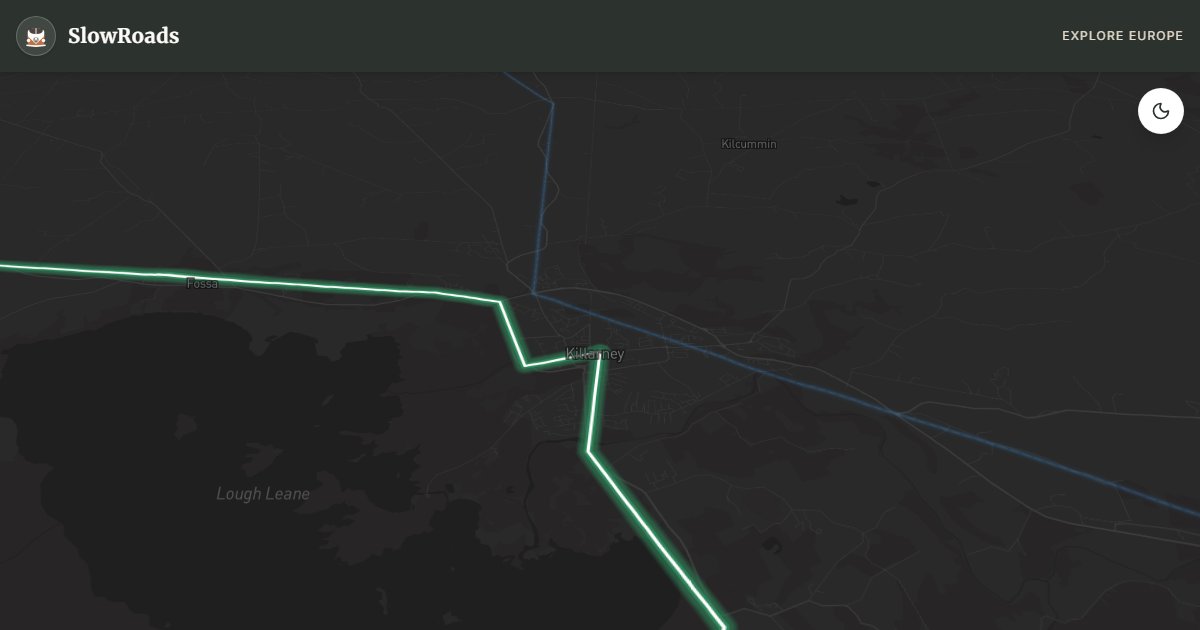
Drive Ireland’s iconic Ring of Kerry — about 156 km on the N70/N71 loop from Killarney past lakes, Kenmare, and Atlantic headlands for patient classic campervans. Left-hand traffic, high hedges, and coach convoys set the pace more than horsepower; use lay-bys and wave thanks. Ladies View and Killarney National Park reward early starts before peak traffic. Official campsites only — no wild-camping right in the Republic. One long day is possible; two slower days suit older low-power vans better. Fill fuel in Killarney or Kenmare before quieter peninsula stretches and expect sheep on the road after rain.
Detailed Route Guide
The Ring of Kerry is Ireland's most iconic touring route, a 156-kilometre loop around the Iveragh Peninsula in County Kerry. First promoted as a carriage drive in the 19th century when Victorian tourists arrived by rail to Killarney, it remains one of Europe's great slow road journeys. The landscape was shaped by the last ice age — drumlin fields, glacial valleys, and a coastline of coves and headlands facing the North Atlantic — with the MacGillycuddy's Reeks, Ireland's highest range, adding drama at every turn.
Key stops include Ladies View above Killarney's Upper Lake, the colourful market town of Kenmare with its Bronze Age stone circle, and Waterville on the coast, once a favourite retreat of Charlie Chaplin. Cahersiveen, near the birthplace of Daniel O'Connell, offers a ruined barracks and heritage centre. The quieter Skellig Ring detour delivers views across to Skellig Michael, the early medieval monastic island (and a well-known film location). Muckross House and Ross Castle in Killarney National Park reward an unhurried half-day before or after the loop.
For classic and low-power campervans, the Ring is manageable but rewards patience. The N71, N70 and N72 are mostly good tarmac, though mountain stretches narrow considerably. Tour coaches travel anticlockwise (Killarney toward Killorglin first); many independent drivers go clockwise via Kenmare to avoid queuing behind buses, accepting oncoming coaches on tighter bends. Fuel up in Killarney, Kenmare or Cahersiveen — coastal pumps are scarce. Gradients are long and steady rather than sharp; use lay-bys generously and let faster traffic past. Camping at Fossa near Killarney works well as a base. Wild camping is not a legal right in Ireland — ask landowners, and never camp in Killarney National Park.
Late May to early September brings lush hedgerows and long evenings, but July and August pack coaches onto the narrow sections. Late May, June and September offer the same green with far fewer vehicles. October turns the hills amber and quiet, though Atlantic storms arrive fast. Waterproofs are essential year-round, and fog can settle on mountain sections any time. Start early either direction and treat the Ring as a full day, not a race.
The Ring rewards drivers who treat it as a sequence of short stages rather than one continuous push. Pause at Moll's Gap for coffee and views, walk a lakeshore path in Killarney National Park, and leave time for a traditional music session in Kenmare or Killarney in the evening. Sheep on the road are not a novelty act — they have right of way in practice, and sudden stops on blind bends are common. If your classic campervan runs warm after a slow crawl behind a coach, pull into a lay-by, idle with the heater on to help cooling if needed, and wait for a clear gap rather than forcing an overtake on a stone-walled lane. Mobile signal fades in valleys; download offline maps and keep a paper backup of the N70/N71 loop. With that patience, the Ring of Kerry becomes exactly what SlowRoads is for: Atlantic light, emerald hills, and a pace that fits an older van.
Frequently Asked Questions
Points of Interest
Killarney National Park
Nature
Lakes, oak woods and MacGillycuddy's Reeks backdrop
Ladies View
Nature
Panoramic overlook above Killarney's Upper Lake
Route Highlights
Route Information
Navigation
* Supported by HERE Technologies, headquartered in Amsterdam, Europe. Precise routing through all waypoints.
* Waze only navigates to the starting point. Use Google Maps for the full scenic route.
Offline GPS Navigation
Download the GPX route file to navigate offline using your favorite GPS device or app (Garmin, TomTom, OsmAnd, Gaia GPS).
Ask Copilot (AI Travel Guide)
Hello! I am your SlowRoads Copilot. I know the Ring of Kerry intimately. Ask me about scenic viewpoints, local history, hidden culinary gems, or the best camper spots along the way!