About This Route
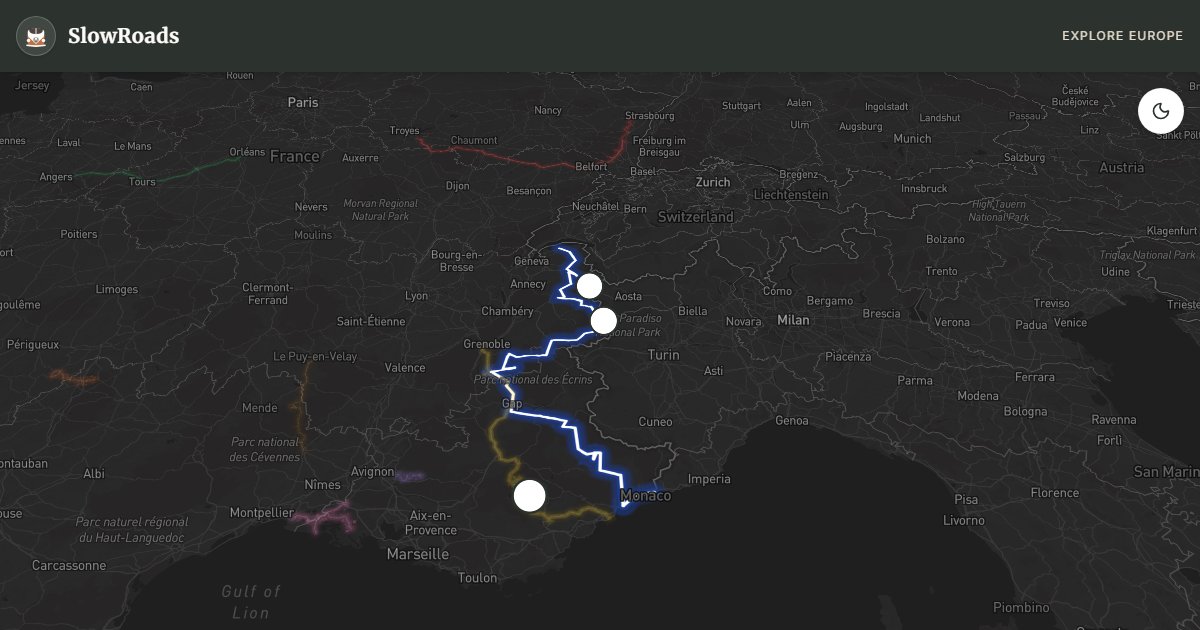
Cross the French Alps from Lake Geneva to Menton on the Route des Grandes Alpes: roughly sixteen high passes including Col de l'Iseran, the Alps' highest paved col. Steep hairpins and thin air demand a prepared classic campervan — healthy cooling, cool brakes and short daily stages. Typically open late June to mid-October; check Bison Futé before you climb. Split the 599 km over 7–10 days so an older, low-power engine can recover in the valleys rather than forcing Iseran and Galibier in one heat-soaked afternoon. Briançon, Barcelonnette and Menton bookend glacier views, Vauban fortifications and the Mediterranean finish.
Detailed Route Guide
The Route des Grandes Alpes is the most ambitious mountain road journey in Western Europe: 599 kilometres crossing the French Alps from Lake Geneva to the Mediterranean Sea, traversing roughly sixteen high mountain passes (counts vary with variants), including the Col de l'Iseran at 2,764 metres — the highest paved pass in the Alps. Built between 1909 and 1937 specifically as a scenic summit route (not a transport corridor), it connects ski resorts, glacial valleys, lavender fields, and the dramatic transition from northern Alpine to Mediterranean climate with a relentlessness of beauty that can feel overwhelming.
The route begins at Thonon-les-Bains on the southern shore of Lake Geneva, a market town of moderate charm whose main virtue is the view across the lake to the Swiss shore. From here the road climbs almost immediately into the Chablais Alps and then the Aravis chain — a series of passes beginning with the Croix-Fry (1,477m) and building in drama and altitude through Cormet de Roselend (1,967m) to the centerpiece: the Col de l'Iseran. On a clear summer day, the Iseran offers a panorama encompassing multiple 3,000-metre peaks, glaciers, and valley systems. The road approaches it through Val-d'Isère — a purpose-built ski resort that in summer transforms into a hiking base with extraordinary access to high terrain.
South of the Iseran, the route drops into the Maurienne Valley and then climbs again to the Col du Galibier (2,642m), one of the most celebrated passes in cycling history — it has been the Tour de France's highest point more often than any other col. The summit crosses through a tunnel (the upper road is occasionally open in high summer) and the descent to the Col du Lautaret reveals the Meije glacier in front of you — one of the great alpine viewpoints of France. Briançon, the highest city in France (1,326m), stands as a fortified UNESCO World Heritage town designed by Vauban, Louis XIV's master fortification engineer.
The route's southern half descends in character as well as altitude. Through Barcelonnette (a town with an inexplicable 19th-century Mexican connection — many families emigrated to Mexico and returned wealthy) and the gorges of the Var, the landscape transforms from alpine to Provençal. The final passes — Cayolle, Allos, Couillole, Turini — bring you into the Maritime Alps above Nice, where the vegetation becomes Mediterranean and the air carries the first hints of the sea. The route ends at Menton, a pastel-coloured resort town on the Italian border where lemon trees grow in the gardens of belle-époque villas.
For classic and low-power campervans: this route is genuinely demanding. The Iseran and Galibier require sustained climbing at altitude where engines lose power. Check coolant, brakes, and oil before departing. The mountain passes are typically open from late June to October; check road conditions as late snow can close the highest passes into July. The route is incomparably beautiful and absolutely worth attempting with a prepared vehicle, but should not be underestimated.
Carry cash or a card for mountain refuges and small valley fuel stops; some high cols have limited services even in July. Split the 599 kilometres into short daily stages so an older engine can cool overnight in the valleys rather than forcing two major cols in one heat-soaked afternoon.
Frequently Asked Questions
Points of Interest
Col de l'Iseran
Nature
Cormet de Roselend
Nature
Col du Galibier
Nature
Route Highlights
Nearby Scenic Drives
Route Information
Navigation
⚠️ Google Maps has a 10-stop limit. Route is simplified and might bypass some scenic sections.
* Supported by HERE Technologies, headquartered in Amsterdam, Europe. Precise routing through all waypoints.
* Waze only navigates to the starting point. Use Google Maps for the full scenic route.
Offline GPS Navigation
Download the GPX route file to navigate offline using your favorite GPS device or app (Garmin, TomTom, OsmAnd, Gaia GPS).
Ask Copilot (AI Travel Guide)
Hello! I am your SlowRoads Copilot. I know the Route des Grandes Alpes intimately. Ask me about scenic viewpoints, local history, hidden culinary gems, or the best camper spots along the way!