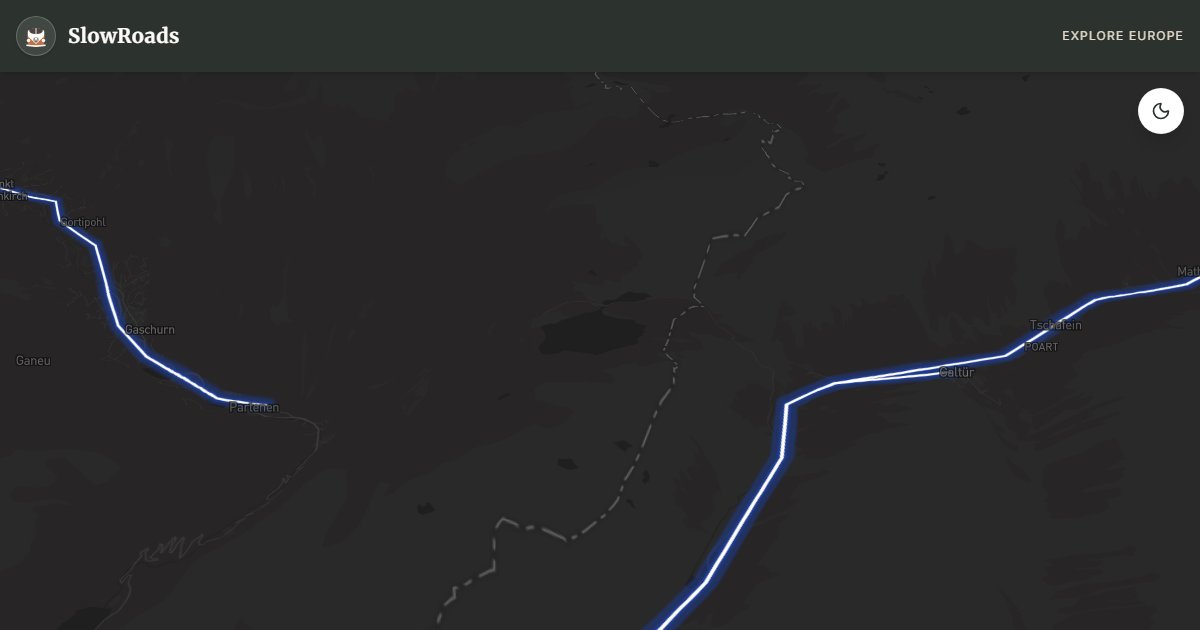
About This Route
Austria's 'Dream Road of the Alps': 137 km Partenen–Galtür, 34 hairpins to Bielerhöhe (2,032 m) beside the turquoise Silvretta reservoir and Piz Buin. Steep but well-built — classic and low-power campervans need low gears, cool-down lay-bys, and engine braking. Day toll both ways when the full road operates; typically late May–October. Note: Vorarlberg (Partenen) side often closed for rockfall works into the late 2020s — check silvretta-bielerhoehe.at; Tyrol via Galtür often open. No overnighting on the pass — camp in the valleys.
Detailed Route Guide
The Silvretta High Alpine Road — Traumstraße der Alpen — packs more scenery into 137 kilometres between Partenen (Vorarlberg) and Galtür (Tyrol) than many longer passes. Built in stages through 1954 as a toll road funding the Silvretta hydroelectric reservoir, it delivers open meadows, numbered hairpins, and a turquoise lake under Piz Buin (3,312 m), Vorarlberg's highest peak and the mountain that named a famous sun cream. For classic and low-power campervans it is demanding but not Grossglockner-extreme: excellent surface, still a long pull in first and second gear with coolant under watch.
Bielerhöhe at 2,032 metres is the crest beside the reservoir. On clear days the glacier drapes above the water in postcard reflection; a short shore walk gives the classic angle without needing a summit hike. The western ramp from Partenen counts 34 signed hairpins through alpine pasture and waterfalls. Important: the Vorarlberg (Partenen) side has been closed for rockfall safety works into the late 2020s — always check silvretta-bielerhoehe.at before you plan. The Tyrol approach via Galtür often remains open (sometimes toll-free during works) and still delivers the reservoir and Piz Buin view that make the road famous.
For classic and low-power campervans — older campers included, a VW T3 among possible examples — the Silvretta needs low gears, cool-down lay-bys, and engine braking on the descent. Do not ride the pedal; pads fade fast on numbered hairpins. Allow at least half a day; linger at Bielerhöhe for the restaurant and lakeshore walk so the climb is a journey, not a sprint. Carry water for you and the coolant reservoir. Fuel in Partenen or Galtür valleys before you climb — there is no casual pump on the high road. If the temperature needle climbs, pull into a signed bay, run the cabin heater to shed heat, and idle down before switching off a very hot engine.
Typically open late May/early June to late October/early November depending on snow; toll both directions when the full road operates. June flowers and September colour beat July–August motorcycle crowds. Early starts from the open valley side reward empty parking and clear peaks. No overnighting on the pass — camp in Partenen or Galtür valleys. Wild camping is illegal nationwide. When the Partenen side is closed, treat the Tyrol approach as the main event and still walk the Bielerhöhe shore — the turquoise reservoir remains the reason this short road is called a dream route.
Budget cool-down time as carefully as photo stops. Pair the Silvretta with a quiet valley night before or after rather than stacking it with Grossglockner on the same day in a loaded older camper. Check the operator site the evening before for rockfall notices and toll status. Classic and low-power campervans thrive here when the goal is the lake walk and the numbered hairpins at patient pace — not a timed transit between Vorarlberg and Tyrol. Shoulder-season mornings with empty parking at Bielerhöhe are the reward for that patience. Bring layers: the reservoir shore can be windy even when the valley floor feels warm.
Frequently Asked Questions
Points of Interest
Silvretta Reservoir
Nature
Piz Buin View
Nature
Route Highlights
Route Information
Navigation
* Supported by HERE Technologies, headquartered in Amsterdam, Europe. Precise routing through all waypoints.
* Waze only navigates to the starting point. Use Google Maps for the full scenic route.
Offline GPS Navigation
Download the GPX route file to navigate offline using your favorite GPS device or app (Garmin, TomTom, OsmAnd, Gaia GPS).
Ask Copilot (AI Travel Guide)
Hello! I am your SlowRoads Copilot. I know the Silvretta High Alpine Road intimately. Ask me about scenic viewpoints, local history, hidden culinary gems, or the best camper spots along the way!