About This Route
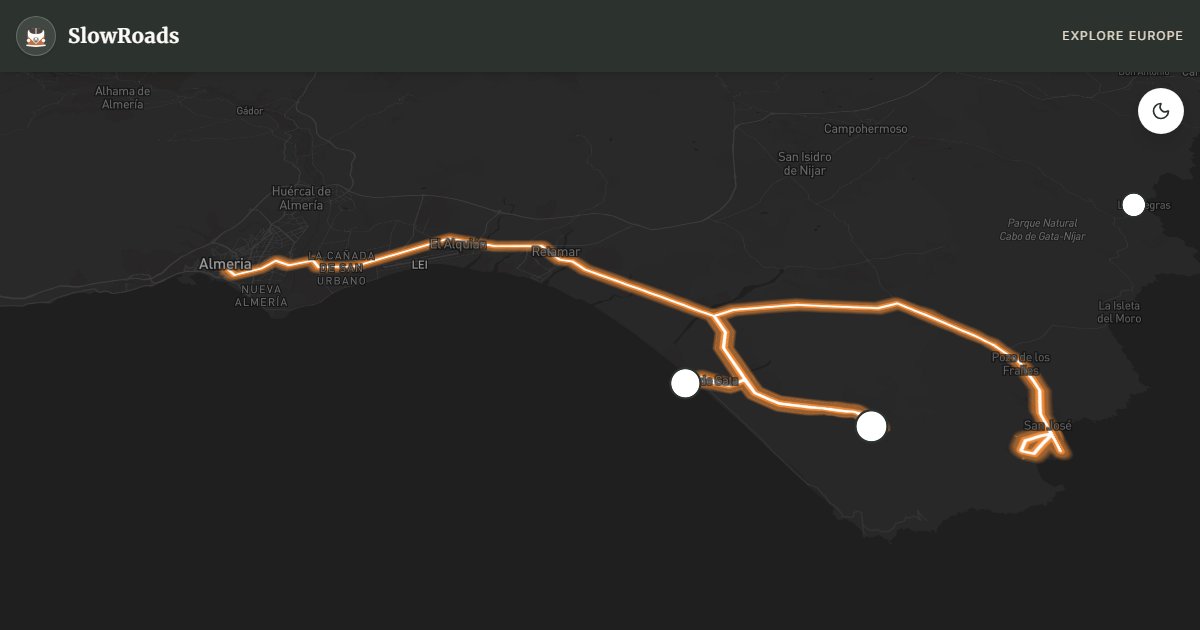
Trace Cabo de Gata–Níjar Natural Park from Almería to San José — one of Europe's driest coasts, volcanic ridges, Genoveses and Monsul beaches, and film-set light at coastal batteries. The AL-5100 and signed beach tracks stay mostly flat, so low-power campervans rarely struggle; sand after rain and height limits on some lanes are the real constraints. Wild camping and beach overnighting are prohibited — use San José's municipal área or campgrounds at Las Negras. Arrive before 9am in summer or walk from peripheral parking. Spring blooms and October emptiness beat August crowds; resupply fuel and water in Almería first.
Detailed Route Guide
Sixty kilometres from Almería to San José trace the edge of Cabo de Gata-Níjar Natural Park — Andalusia's largest protected coastal area and one of Europe's driest landscapes, where volcanic ridges fall into a turquoise Mediterranean and beaches appear from nowhere between agave scrub and black lava flows. The driving is mostly flat along the AL-5100 and coastal tracks, making this one of the gentlest southern Spain routes for a classic or low-power campervan: no mountain passes, long sightlines, and enough beach pull-offs that a modest engine never struggles. Allow one to two days — enough for a dawn swim at Los Genoveses and an afternoon exploring fishing coves without treating the park as a checklist.
The landscape reads like geology laid bare: ochre cliffs at Cabo de Gata lighthouse mark the park's eastern tip, while inland caldera rims and fossil dunes surround abandoned mining villages that once supplied alum to Roman ships. San José is the park's informal capital — a whitewashed harbour where restaurants serve grilled espeto sardines and kayakers launch toward hidden calas only reachable from the sea. Playa de los Genoveses and Monsul beach, both accessed via signed dirt roads from the main route, rank among Andalusia's finest sand arcs, though summer parking fills by mid-morning and height restrictions on some lanes exclude the tallest motorhomes.
Campervan travellers should respect strict park rules. Wild camping and overnight parking on beaches are prohibited — use the San José municipal área de autocaravanas or official campgrounds at Las Negras and Cabo de Gata village. Dirt access roads to beaches are sandy after rain; deflate tyres slightly only if you know the track, otherwise park at the surfaced lot and walk. Almería city offers fuel, LPG, and supermarket resupply before entering the park; services inside the reserve are limited to village shops. Fresh water points exist at San José and Las Negras aires; dump stations are sparse — plan disposal in Almería if your tank fills.
Spring and autumn deliver the best balance: warm enough for swimming from April, wildflowers on volcanic slopes in March, and empty beaches in October when the heat retreats but the sea stays swimmable. Summer brings fierce afternoon sun and crowded Genoveses — arrive before 9am or accept a long walk from peripheral parking. Winter is mild and uncrowded, ideal for coastal hiking on the sendero litoral, though some beach bars close from November. One day covers the lighthouse loop and San José; add a second for Monsul, snorkelling at Cala de Enmedio, and a sunset above the salt flats near Cabo de Gata. Carry more drinking water than you think you need — shade is scarce between villages, and older vans without air conditioning heat up fast on exposed coastal asphalt. Download offline maps before leaving Almería: mobile signal drops between volcanic ridges, and signed dirt spurs to Monsul or Genoveses are easy to miss when the sun is high and mirage heat shimmers on the asphalt. Respect dune fencing and nesting signs — the park's arid ecology recovers slowly from tyre tracks and informal camping.
Frequently Asked Questions
Points of Interest
Playa de los Genoveses
Nature
Unspoiled sandy beach
San Miguel Fort
Castle
18th-century coastal battery
Las Negras
Town
Volcanic beach village
Route Highlights
Nearby Scenic Drives
Route Information
Navigation
* Supported by HERE Technologies, headquartered in Amsterdam, Europe. Precise routing through all waypoints.
* Waze only navigates to the starting point. Use Google Maps for the full scenic route.
Offline GPS Navigation
Download the GPX route file to navigate offline using your favorite GPS device or app (Garmin, TomTom, OsmAnd, Gaia GPS).
Ask Copilot (AI Travel Guide)
Hello! I am your SlowRoads Copilot. I know the Cabo de Gata–Níjar intimately. Ask me about scenic viewpoints, local history, hidden culinary gems, or the best camper spots along the way!