About This Route
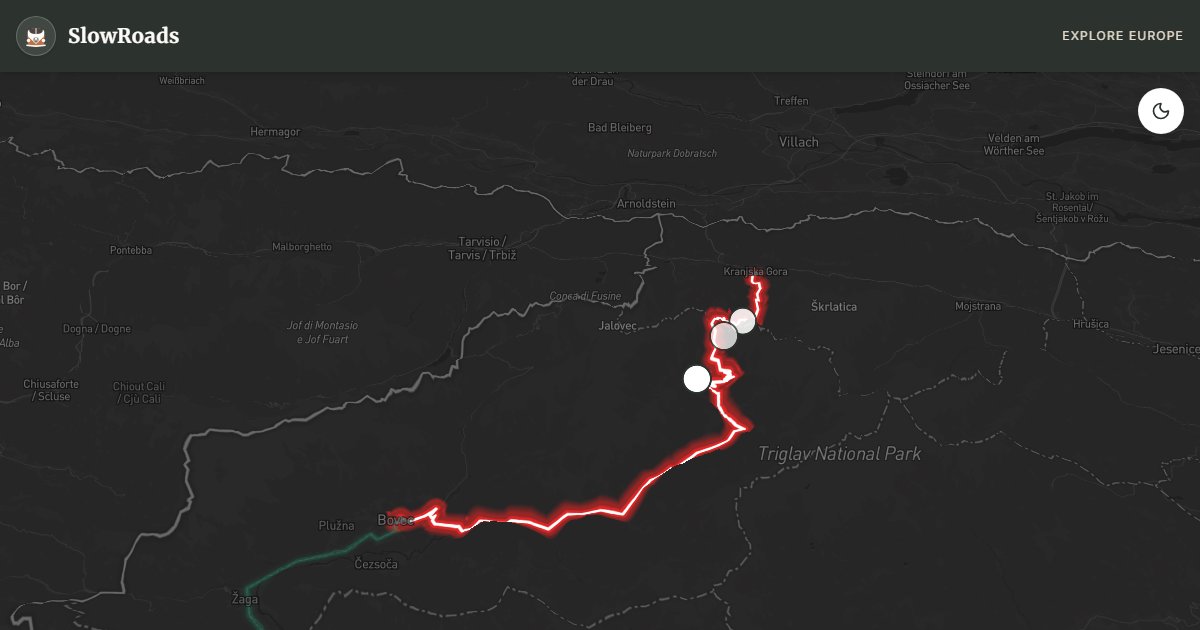
Climb Vršič Pass (1,611 m) from Kranjska Gora to Bovec — about 40 km and 50 numbered hairpins, the steepest classic-campervan test in Slovenia. WWI cobbles on the north side turn slippery when wet; use low gears, sound cooling, and engine braking on the Trenta descent. Stop at the Russian Chapel, Prisank window views, and the Soča spring walk. Typically open ~May–October — check promet.si for snow closures. AutoKamp only; wild camping (avtodom) brings heavy fines. Early starts beat July queues. Loaded older vans should cool patiently at pull-outs rather than force the climb in one push.
Detailed Route Guide
The Vršič Pass road is the most dramatic mountain drive in Slovenia and one of the most historically resonant mountain roads in the Eastern Alps — 40 kilometres of numbered hairpin bends climbing from the ski resort of Kranjska Gora to 1,611 metres and descending to the adventure town of Bovec in the Soča valley, with 50 numbered hairpins in total (24 on the northern ascent, 26 on the southern descent). The road was built between 1915 and 1916 by Russian prisoners of war under conditions of extreme hardship during World War One, when the Austro-Hungarian military needed to supply the Isonzo Front in the Soča valley. The human cost of that construction is commemorated by the Russian Chapel at hairpin 8 on the northern slope — a small log chapel built by the prisoners themselves, which still stands today, maintained by the Slovenian and Russian states in joint remembrance.
The northern ascent from Kranjska Gora is paved for its entire length but the lower hairpins (1–24) retain their original granite cobblestones from the wartime construction — rounded, slippery when wet, and completely unlike modern asphalt in their character. These cobbled hairpins are one of the most distinctive features of the road: they have the patina of a century of mountain weather and the particular challenge of requiring precise gear changes and careful tyre placement in a heavy vehicle. For a classic / low-power campervan, the cobbled section is best approached slowly and in second gear, with particular care in wet conditions. Above the cobbled section, the road transitions to asphalt and the gradient eases somewhat before the open summit area. The Prisank Window — a natural rock arch high on the cliff face of the Prisojnik peak above the pass — is visible from the summit area and is one of the most extraordinary geological features in the Julian Alps.
The southern descent through the Trenta valley is gentler than the northern ascent and the road is fully asphalted. The valley of Trenta itself is one of the most beautiful in Slovenia: a narrow, deeply enclosed limestone canyon with the infant Soča river beginning its journey at the valley head. The source of the Soča (Izvir Soče) — where the river emerges from a cave in the limestone wall — is accessible from a car park in Trenta and is a genuine wonder, the bright turquoise colour of the emerging water completely unlike any other river in the Alps.
The Vršič Pass is open approximately from May through October, depending on snowfall. The road is typically closed by snow from November to April, though exact dates vary. The pass is busiest in July and August but even in high season the early morning hours are quiet — arriving at Kranjska Gora before 8am allows the climb to the summit in near-solitude. For a classic campervan driver, the most important preparation is a healthy cooling system and knowledge of the cobbled hairpin technique. A well-maintained classic campervan will make this pass — the reward is the Soča valley below, one of the most beautiful places in Europe.
Practical tip: start the north side before 8am in July–August to share fewer cobbled hairpins with coaches. Carry spare coolant; pull over and idle if temperatures climb. On wet granite setts, second gear and light throttle beat spinning wheels. After the summit, Trenta’s descent is kinder — still use engine braking all the way to Bovec. Pair with an AutoKamp night in Bovec or Kranjska Gora; do not overnight at summit pull-outs.
Confirm opening on promet.si in shoulder seasons — snow can return in June or September. The e-vinjeta is irrelevant on this regional pass road; you need it only for motorways elsewhere in Slovenia.
Frequently Asked Questions
Points of Interest
Russian Chapel
Monument
Log chapel at hairpin 8 built by Russian POWs who constructed the Vršič road in 1915–16.
Prisank Window (Rock formation)
Nature
Large natural rock arch on Prisojnik (Prisank, 2,547 m), visible from the Vršič summit area.
Source of Soča River
Nature
Izvir Soče — turquoise spring emerging from a limestone cave in the Trenta valley; short walk from the car park.
Route Highlights
Route Information
Navigation
* Supported by HERE Technologies, headquartered in Amsterdam, Europe. Precise routing through all waypoints.
* Waze only navigates to the starting point. Use Google Maps for the full scenic route.
Offline GPS Navigation
Download the GPX route file to navigate offline using your favorite GPS device or app (Garmin, TomTom, OsmAnd, Gaia GPS).