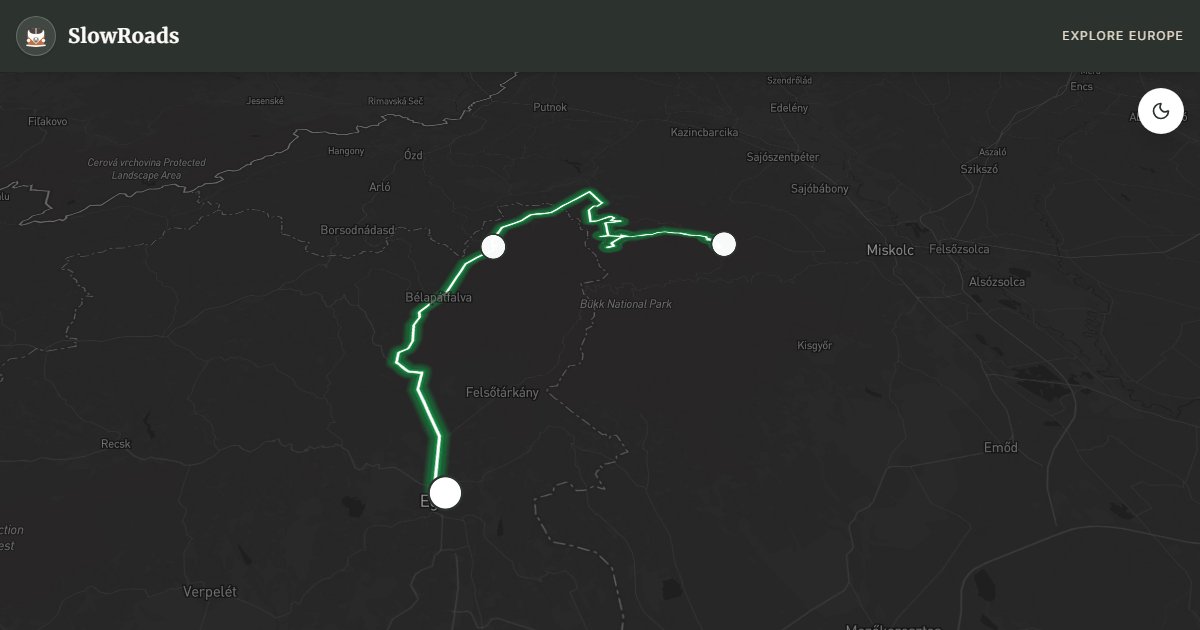
About This Route
Cross the Bükk beech forests from Eger to Miskolc-Lillafüred via Szilvásvárad — about 67 km through Hungary's largest continuous national park. Expect sustained 8–12% climbs on shaded plateau roads: classic and low-power campervans need sound cooling, low gears, and patience in summer heat. Stop for Eger Castle and Bikavér cellars, Szalajka Valley waterfalls and forest railway, then the Art Deco palace hotel at Lillafüred. Use Autokemp-style campsites; wild camping in the park is not allowed. Cool early starts beat midday heat. Check brakes before descents — green canopy hides steep grades until you are on them.
Detailed Route Guide
The Bükk massif is Hungary's most densely forested mountain range and its single largest continuous national park — 43,000 hectares of beech woodland, limestone karst, and hidden valleys that feel a world apart from the agricultural plains surrounding them. The name "Bükk" comes from the Hungarian word for beech (bükk-fa), and the forest cover lives up to the name: in summer, the canopy closes over the roads so completely that you drive in green-dappled shade even at midday. This 67-kilometre route begins in Eger, one of Hungary's most beautiful baroque towns, and ends at the fairy-tale resort of Miskolc-Lillafüred, passing through the highland village of Szilvásvárad and the karst plateau in between. It is the most rewarding mountain route in northern Hungary, but it demands respect from any driver of a vintage vehicle.
Eger itself is unmissable before you begin climbing. The city is defined by its castle — heroically defended against the Ottoman Turks in 1552 by a vastly outnumbered Hungarian garrison in one of history's most celebrated last stands — and by its Baroque old town, arguably the finest ensemble of 18th-century architecture in the country. The famous Egri Bikavér (Bull's Blood) red wine is made from vineyards on the southern slopes above the city. From Eger, the road climbs northwest into the Bükk heartland, reaching the valley of Szilvásvárad. This narrow gorge contains the Szalajka Valley, a protected nature trail following a crystal-clear trout stream past a narrow-gauge forest railway, ancient millponds, and several striking waterfalls. The Lipicaner horse stud farm at Szilvásvárad is also world-renowned. From Szilvásvárad, the route continues over the high plateau — the "Bükk-fennsík" — before descending to the surreal Miskolc-Lillafüred: a fairy-tale 1920s palace hotel overlooking an artificial lake, surrounded by hanging gardens and a cave system with fossilised stalactites.
This is the one route in Hungary where a classic / low-power campervan genuinely needs preparation. The road over the plateau involves sustained climbs of 8–12% gradient — long enough that an underpowered engine will heat up. Before setting out, verify that coolant levels are correct and that the temperature gauge works reliably. Take a full water/coolant reserve. The upside: traffic is light on the forest roads, which means you can take the climbs at your own pace without pressure from vehicles behind. The narrow roads through Szalajka Valley are best explored on foot — there is good parking at the valley entrance. Most of the route is well-paved; some forest tracks accessing viewpoints are unsealed gravel and should be approached with caution in a heavy van.
The Bükk is at its absolute finest in October, when the beech forests ignite in brilliant copper and gold — one of the great autumn spectacles of Central Europe. May and June bring wildflower meadows on the limestone plateau and the best conditions for cave visiting. Summer is pleasant thanks to the altitude and shade, making this a cool refuge when the Hungarian plains bake at 38°C. Winter closes some of the higher forest roads and brings snow to the plateau, which is beautiful but demands winter tyres. The Szalajka Valley narrow-gauge railway runs seasonally (typically Easter to late October) — plan your visit accordingly if it's a priority.
Practical tip: this is Hungary’s climb that asks most of older cooling systems. Carry 1–2 litres of spare coolant water; if the gauge climbs, pull over and idle — do not switch off immediately. Prefer early starts for the plateau. Explore Szalajka on foot or by forest railway rather than forcing a large van up every side lane.
Wild camping in the national park is prohibited. Base at Szilvásvárad or Eger campsites. October beech colour is the scenic peak; summer shade makes this a heat refuge from the plains if you manage the grades patiently.
Frequently Asked Questions
Points of Interest
Eger Castle
Castle
Fortress famous for the 1552 defence against the Ottomans — gateway to Bükk climbs and Egri Bikavér cellars.
Szalajka Valley (Waterfalls)
Nature
Trout stream, forest railway and waterfalls near Szilvásvárad — park at the valley entrance and explore on foot or by train.
Palace Hotel Lillafüred
Castle
1920s Art Deco palace hotel beside an artificial lake, hanging gardens and cave tours in the hillside.
Route Highlights
Route Information
Navigation
* Supported by HERE Technologies, headquartered in Amsterdam, Europe. Precise routing through all waypoints.
* Waze only navigates to the starting point. Use Google Maps for the full scenic route.
Offline GPS Navigation
Download the GPX route file to navigate offline using your favorite GPS device or app (Garmin, TomTom, OsmAnd, Gaia GPS).
Ask Copilot (AI Travel Guide)
Hello! I am your SlowRoads Copilot. I know the Bükk Mountains Panorama intimately. Ask me about scenic viewpoints, local history, hidden culinary gems, or the best camper spots along the way!