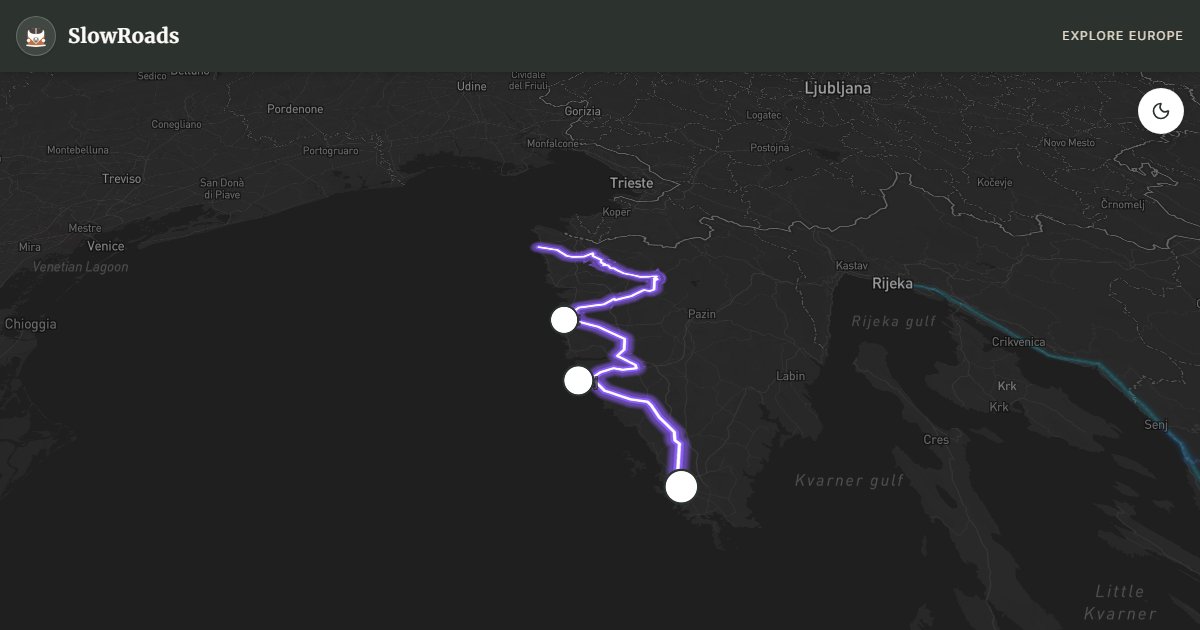
About This Route
Explore the Roman and Venetian charm of the Istrian peninsula — loop from Pula's amphitheatre toward Rovinj's harbour and inland Motovun and Grožnjan above vineyards and truffle woods. Gentle hills suit classic and low-power campervans that park outside tight historic cores and walk in. Olive groves and Italianate menus mark the dual identity. Autokamp only — wild camping is illegal nationwide. May–June and September offer swimming without peak heat; allow two to three days for coast plus one hill town without rushing.
Detailed Route Guide
Istria's coastal and hill loop is Croatia's Italianate corner — Roman Pula's amphitheatre still hosts summer events, Venetian loggias line harbours, and inland Motovun and Grožnjan perch above vineyards and truffle oak woods. Distances are short, hills are real but manageable, and the mix of sea promenades and stone hill towns rewards classic and low-power campervans that park once and walk. This is slow Istria: espresso on a harbour, a walk on Motovun's walls at sunset, and an empty olive lane the next morning.
Start in Pula for the arena and old town, then follow the coast toward Rovinj's colourful harbour — arrive early for parking and leave the loaded camper outside the tight historic core. Inland, Motovun's walls and Grožnjan's artist lanes ask for patience on approach roads; fold mirrors if needed and never force a wide van through the gate. Olive oil mills and konobas serve the peninsula's dual identity: Croatian and Italian on the same menu. Between coast and ridge, secondary roads pass through olive groves and vineyards that feel closer to Tuscany than to Dalmatia's cliff highway. Watch for cyclists on weekend ridge roads and yield early on blind crests.
Grades are gentle compared with Velebit or alpine passes — short second-gear pulls, then rest. Fuel and Autokamp are easy on the coast; inland villages quiet early. Wild camping (slobodno kampiranje) is illegal nationwide. May–June and September offer swimming weather without peak heat; autumn brings truffle menus inland. Two to three days cover coast plus one or two hill towns without rushing. Classic and low-power campervans — older campers included, a VW T3 among possible examples — thrive when hill towns are treated as walk-ins and the coast as the overnight Autokamp base. Carry cash for small konobas and market stalls that prefer it.
Give Rovinj a morning before the harbour fills, and Motovun a sunset walk after parking below the walls. Keep the Autoceste for transit if you must; the scenic map is the secondary coast and ridge roads. Book Autokamp ahead in July–August when the peninsula fills with regional holiday traffic. Fill fuel before quieter inland evenings when village pumps may close early. Istria rewards the driver who measures the day in harbour coffees and wall walks, not in kilometres toward the next ferry. A rainy afternoon is perfect for Pula's arena museum or a long lunch under a vine canopy.
This loop pairs well with a later Dalmatian D8 push if you are heading south, or with a return toward Trieste and the Italian border if you are looping north. Either way, leave buffer time for a missed turn on a ridge lane and a second konoba stop you did not plan. Classic and low-power campervans belong in Istria when patience replaces hurry — that is the peninsula's real luxury. Treat every historic core as a walk, every Autokamp as a base, and every olive lane as a reason to slow down rather than a shortcut to somewhere else. Park once, walk often, and let the peninsula set the tempo.
Frequently Asked Questions
Points of Interest
Pula Arena
Monument
Rovinj Old Town
Town
Euphrasian Basilica (Poreč)
Monument
Route Highlights
Route Information
Navigation
* Supported by HERE Technologies, headquartered in Amsterdam, Europe. Precise routing through all waypoints.
* Waze only navigates to the starting point. Use Google Maps for the full scenic route.
Offline GPS Navigation
Download the GPX route file to navigate offline using your favorite GPS device or app (Garmin, TomTom, OsmAnd, Gaia GPS).
Ask Copilot (AI Travel Guide)
Hello! I am your SlowRoads Copilot. I know the Istria Coastal Road intimately. Ask me about scenic viewpoints, local history, hidden culinary gems, or the best camper spots along the way!