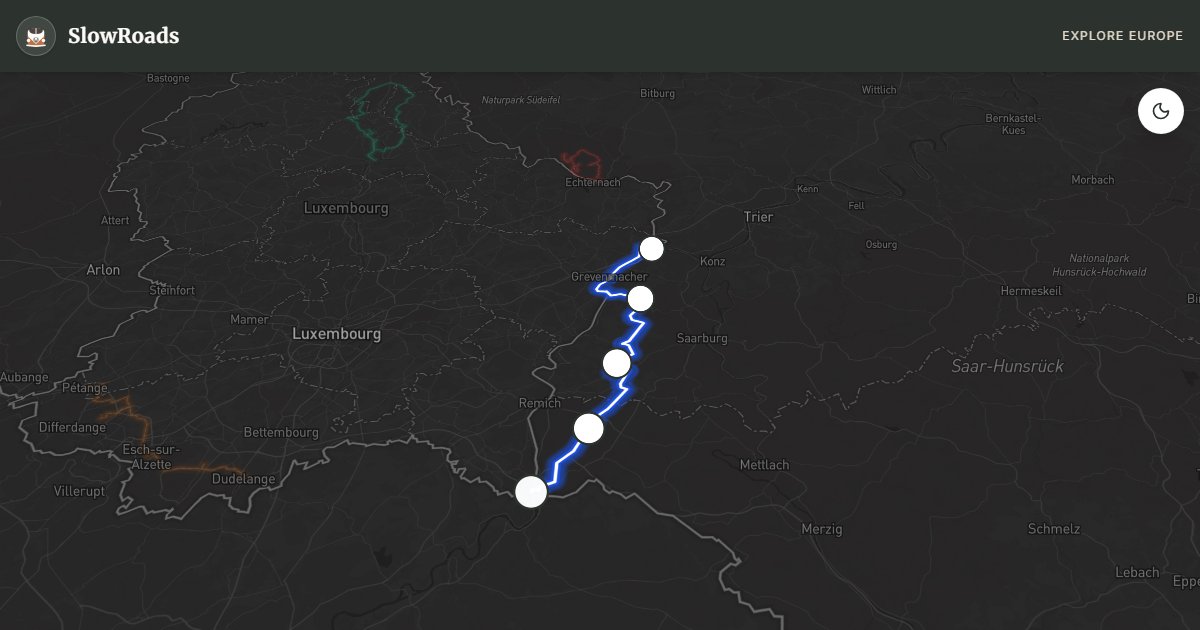
Luxembourg Moselle Valley Wine Route
About This Route
The continuation of the Mosel wine corridor — Schengen tripoint, Grevenmacher cellars, and terraced Riesling slopes linking seamlessly to Germany's mosel-wine-road at Trier. Gentle riverside grades and cross-border tasting culture suit classic and low-power campervans with Stellplätze along the water. Carry coins for meters; check German Umweltplakette only after crossing into green zones. September harvest festivals add traffic and atmosphere. A liquid, low-stress Benelux–Germany link — vines, barges, and short hops between cellars. Allow extra time for photo pullouts, fuel stops, and cooling breaks in older vans.
Detailed Route Guide
Luxembourg's Moselle (Mosel) valley is the eastern continuation of one of Europe's great wine rivers — the same slate terraces, Riesling grapes, and cellar culture that define Germany's Mosel Wine Road begin here at the Schengen tripoint and flow north toward Trier, where SlowRoads' mosel-wine-road route picks up the story on the German bank. For slow van travellers, this roughly 43-kilometre riverside run from Schengen to Wasserbillig is the Benelux wine experience at its most accessible: gentle grades along the water, cross-border tasting without customs stops, and a seamless cultural continuum that makes Luxembourg and Germany feel like one vineyard.
Schengen is the symbolic start — the village where the 1985 agreement abolishing border checks was signed, now marked by a tripoint monument where Luxembourg, Germany, and France meet at a river confluence. The European Museum documents the agreement; van parking is ample at the visitor centre. From Schengen, the road follows the Moselle north through Remich — a promenade town with river cruises, terrace wine bars, and the relaxed rhythm of a wine region that knows its identity without tourist excess.
Grevenmacher is Luxembourg's wine capital — Bernard-Massard sparkling wine cellars and Caves St Martin offer guided tours and tastings (book ahead for groups). The town sits directly on the German border; walk across the bridge to Konz and you are on German Mosel soil. The terraces above both banks climb at angles that look vertical but the road grades stay gentle — 3–4% along the river, steeper only on vineyard access lanes unsuitable for vans.
Wasserbillig marks the northern end and the German crossing — drive across the bridge to continue on SlowRoads Germany's mosel-wine-road toward Trier, Bernkastel, and the Rhine confluence. Luxembourg's section is shorter but culturally integral: Elbling and Riesling varieties, slate soil, and the same Fuder barrel tradition.
For classic and low-power campervan drivers, this is effortless cruising — park at winery lots in Grevenmacher and Remich, overnight at riverside Stellplätze. Umweltplakette not required in Luxembourg. Combine westward with Müllerthal forests and eastward across the bridge to Germany's full Mosel circuit for the definitive tri-border wine week. No Umweltplakette is required in Luxembourg; carry the German badge only after crossing into green zones toward Trier. Riverside Stellplätze in Remich and Grevenmacher suit overnighting better than Wasserbillig. Book Bernard-Massard and Caves St Martin for groups; smaller Weingüter often welcome afternoon walk-ins. The bridge at Wasserbillig or Schengen continues SlowRoads' German mosel-wine-road without border checks — same slate, same Riesling culture, one slow river. Schengen's European Museum and tripoint monument make a symbolic morning before Remich's promenade cruises and terrace wine bars. Grevenmacher is the tasting capital — walk across the bridge to Konz and you are already on German Mosel soil without customs theatre. Elbling and Riesling share slate terraces that mirror the German bank; Fuder barrel culture continues across the river. Harvest Traubenfest in September is festive but crowded — book Stellplätze ahead. For classic campervans this is effortless third-gear cruising: the only steep pitches are vineyard access lanes unsuitable for vans, so stay on the riverside road.
Frequently Asked Questions
Points of Interest
Schengen Tripoint
Monument
Where Luxembourg, Germany, and France meet — birthplace of the EU border-free agreement.
Grevenmacher Wine Cellars
Wine Region
Bernard-Massard and Caves St Martin — Luxembourg's premier sparkling and Riesling tastings.
Remich Riverside
Town
A wine town promenade on the Moselle with river cruises and terrace restaurants.
Moselle Terraces
Wine Region
Steep slate slopes with Luxembourg Riesling and Elbling vines — mirror of German Mosel.
Wasserbillig Bridge
Town
Border crossing point to Germany's Mosel — continuation to Trier and SlowRoads mosel-wine-road.
Route Highlights
Route Information
Navigation
* Supported by HERE Technologies, headquartered in Amsterdam, Europe. Precise routing through all waypoints.
* Waze only navigates to the starting point. Use Google Maps for the full scenic route.
Offline GPS Navigation
Download the GPX route file to navigate offline using your favorite GPS device or app (Garmin, TomTom, OsmAnd, Gaia GPS).
Ask Copilot (AI Travel Guide)
Hello! I am your SlowRoads Copilot. I know the Luxembourg Moselle Valley Wine Route intimately. Ask me about scenic viewpoints, local history, hidden culinary gems, or the best camper spots along the way!