About This Route
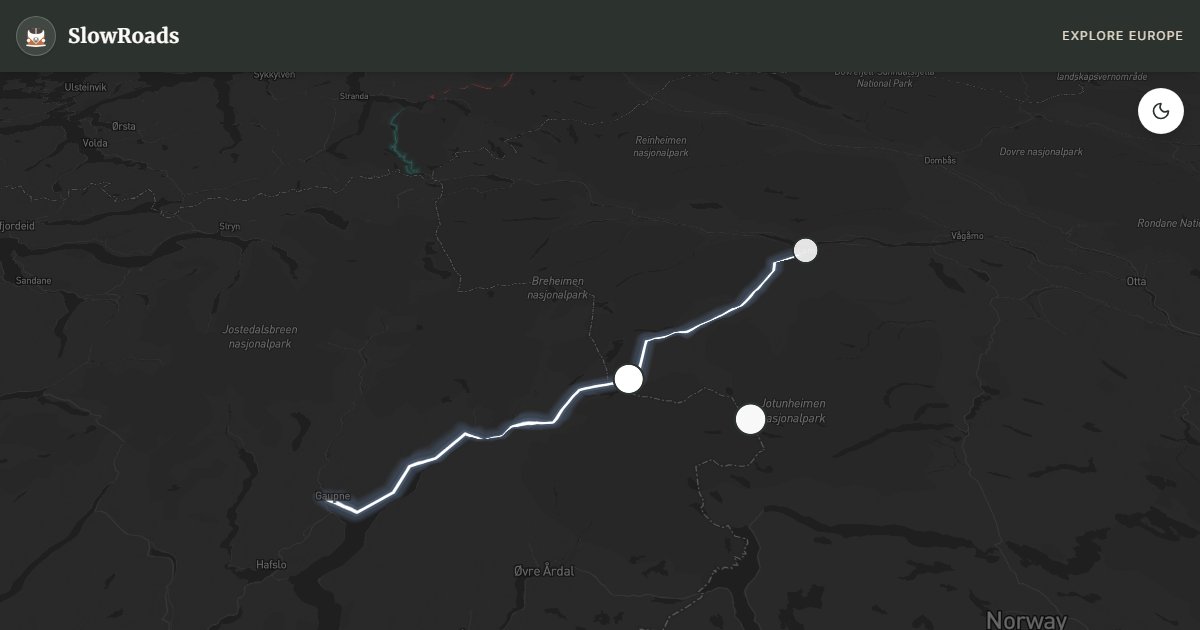
Route 55 over Sognefjellet is Northern Europe's highest pass (1,434 m), linking Lom to the Sognefjord through Jotunheimen snow walls. Long, steady climbs tax modest engines more than hairpins; classic and low-power campervans need cooling pauses and fuel before the plateau. Typically open late May–early November. Summit snowbanks linger into summer. A high Nasjonal Turistveg day of glacier views and thin air — descend carefully to fjord level services. Prepare for cold even in July. Allow extra time for photo pullouts, fuel stops, and cooling breaks in older vans.
Detailed Route Guide
The Sognefjellet road — officially Route 55 — holds the title of highest mountain pass in Northern Europe, reaching 1,434 metres above sea level at its summit between Lom and Gaupne. Built in the 1930s as a public works project, it crosses the northern edge of Jotunheimen National Park, the "Home of the Giants", which contains the highest mountains in both Norway and all of Scandinavia. The landscape here is not alpine in the gentle, rounded way of some mountain roads — it is raw and ancient, a world of permanent snow, small glaciers, scattered lakes, and rocky plateaux that feel closer to Iceland or Greenland than to continental Europe. Even in July and August, when the road is fully open, you drive between snow walls that can reach three or four metres high on either side. It is one of the most otherworldly driving experiences the continent offers.
The route connects the market town of Lom in Gudbrandsdalen to the west with the Sognefjord at Gaupne, making it a key crossing between eastern and western Norway and part of Norwegian Scenic Route Sognefjellet (Fv55). Lom is worth your time before you begin: its 12th-century stave church is one of the finest and largest in Norway, its black timber walls and grass-covered roof a startling sight in the middle of a modern town. From Lom, the road climbs steadily and without drama through increasingly spare landscapes, the treeline disappearing early and the world narrowing to rock, lichen, and sky. The Mefjellet viewpoint near the summit, marked by a carved stone sculpture, is the place to stop, stretch, and look in all directions at an horizon that contains not a single human structure. Somewhere out there, buried in the snow, are the glaciers of Jotunheimen.
For a classic or low-power campervan, the Sognefjellet presents a different challenge from Trollstigen. There are no hairpin bends here — the climb is long, steady, and relentless rather than dramatically twisting. The 94-kilometre route from Lom to Gaupne takes far longer than the distance suggests because the climbing phase is extended over many kilometres. Engine temperature management is the key concern: first or second gear for extended sections is normal, and stopping to let the engine cool is not a sign of weakness but of mechanical sense. Carry water for the engine, check your oil before departure, and be aware that the descent to the Sognefjord on the western side is long and requires careful brake management. The reward for the challenge is immense: a road that feels genuinely beyond the reach of the normal world.
The Sognefjellet road is typically open from late May to early November, with snowploughs working to clear the route at the start of each season. The opening date varies year to year — check vegvesen.no before planning. The snow walls at opening are a spectacular sight in themselves, and driving the road in late May or early June, when the landscape is white and the light has a crystalline quality, is one of the great early-season Norwegian experiences. Summer proper (July–August) brings warmer temperatures but occasional sudden weather changes — cloud, rain, and even brief snow are all possible at this altitude even in August. Afternoon thunderstorms can form quickly. Always carry warm layers and waterproofs regardless of the morning forecast. The descent to the Sognefjord rewards you with everything you've earned: the fjord materialises below, 1,400 metres beneath where you started the descent, and the scale of what you've crossed becomes suddenly and completely clear.
Frequently Asked Questions
Points of Interest
Mefjellet Viewpoint
Nature
A high-altitude rest area featuring an iconic stone sculpture that frames the surrounding glaciers and peaks.
Lom Stave Church
Monument
One of the most beautiful remaining stave churches in Norway, dating back to the 12th century.
Jotunheimen National Park
Nature
The 'Home of the Giants', containing the highest mountains in Northern Europe and dramatic glacial landscapes.
Route Highlights
Route Information
Navigation
* Supported by HERE Technologies, headquartered in Amsterdam, Europe. Precise routing through all waypoints.
* Waze only navigates to the starting point. Use Google Maps for the full scenic route.
Offline GPS Navigation
Download the GPX route file to navigate offline using your favorite GPS device or app (Garmin, TomTom, OsmAnd, Gaia GPS).
Ask Copilot (AI Travel Guide)
Hello! I am your SlowRoads Copilot. I know the Sognefjellet High Mountain Road intimately. Ask me about scenic viewpoints, local history, hidden culinary gems, or the best camper spots along the way!