About This Route
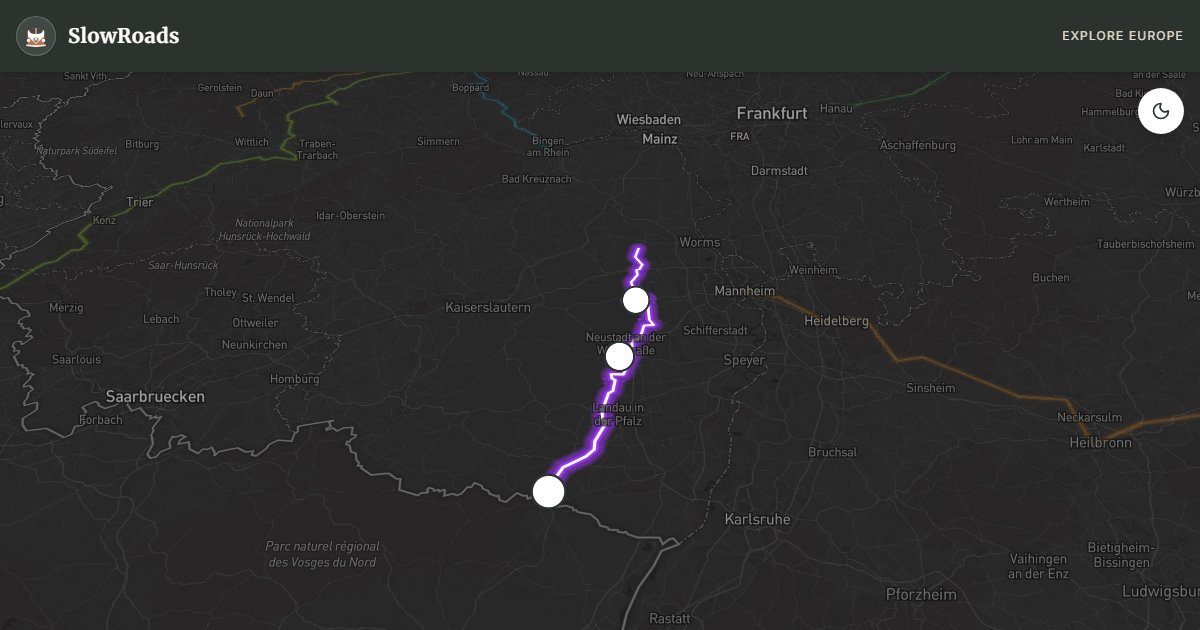
Drive the German Wine Route through the Palatinate — Germany’s sunniest vineyards from the Wine Gate at Schweigen to Bockenheim on about 81 km of gentle hills. Classic and low-power campervans handle the mild climbs easily; village centres and harvest weekends are the real bottlenecks. Stellplätze and Weingut overnight options appear along the Deutsche Weinstraße — book ahead in September–October. Almond blossom in spring and Federweißer in autumn define the seasons. No tolls; park outside timber-frame cores and walk to tasting rooms. Pair with the nearby French Alsace border for a two-country wine weekend.
Detailed Route Guide
The German Wine Route (Deutsche Weinstraße) runs 81 kilometres through the Palatinate (Pfalz), Germany's sunniest and most productive wine-growing region — a landscape so mild and fertile that figs, lemons, and almonds grow outdoors, earning it the nickname 'the Tuscany of Germany'. From the Wine Gate (Deutsches Weintor) at the French border in Schweigen-Rechtenbach to the Wine Gate at Bockenheim in the north, the route threads through an unbroken succession of wine villages, vineyards, and the forested Haardt hills that keep northern winds at bay and concentrate the sunshine on the vine-covered slopes.
The Palatinate wine tradition has deep roots. Roman soldiers planted the first vines here 2,000 years ago and the region has been continuously vinified ever since — through medieval church ownership, Napoleonic reorganisation, and the modern era of Riesling and Grauburgunder (Pinot Gris) that have made Palatinate wines famous internationally. The warming climate of recent decades has been particularly kind to the Pfalz: the growing season now extends well into October, enabling dry red wines from Dornfelder and Spätburgunder (Pinot Noir) that would have been impossible forty years ago.
The route begins at the Deutsches Weintor, a stone gate arch through which the road passes — a theatrical entry into wine country. Immediately north, Bad Bergzabern has a beautifully preserved Renaissance market place and several wine-growing families welcoming visitors. The route climbs slightly into the Haardt foothills at Annweiler, where the Trifels Castle crowns a dramatic sandstone pinnacle above the forest — this was where Richard the Lionheart was imprisoned from 1193 to 1194 after being captured on his return from the Third Crusade. The ransom demanded (150,000 marks of silver) was said to have been so vast that it nearly bankrupted England.
Neustadt an der Weinstraße is the route's largest town and the heart of the Palatinate wine trade. Its old town is compact and walkable, centred on the Gothic collegiate church and market square. In October, Neustadt hosts the German Wine Queen election — a ceremony of peculiar ceremonial gravity in which the wine regions of Germany select their annual ambassador from candidates in traditional costume. The Habach winery quarter south of town produces some of the most characterful Rieslings of the southern Pfalz.
Bad Dürkheim, near the northern end of the route, hosts the world's largest wine festival (the Dürkheimer Wurstmarkt, held in September) in a giant wine barrel that seats 450 people — reportedly the largest wine barrel in the world. The town also offers direct access to the Kurpark mineral springs, which have attracted health tourists since Roman times. The Hambach Castle above Neustadt deserves a detour: this ruined hilltop castle was the site of the 1832 Hambach Festival, where 30,000 people gathered to demand German unity and democratic freedoms in one of the defining moments of the German democratic tradition.
For van drivers, the Wine Route is exceptionally easy. The road is flat through the valley, gently rolling through the vine-covered hillsides, with no significant gradients. The only challenge is resisting the Weingut signs at every turn. Most family estates are delighted to welcome visiting drivers for a tasting — they simply ask that you don't drink and drive, which the abundance of Stellplätze (overnight parking) in every village's wine cooperative car park makes easy to arrange.
Classic campervans and other low-power vans find the Wine Route exceptionally easy: mild hills, short distances, and frequent Weingut stops. The real limits are harvest-weekend parking and resisting a tasting before you drive — use Stellplätze at wine cooperatives so you can walk back to the van. Park outside timber-frame cores, watch height on village arches, and book ahead for September–October. No tolls on the Deutsche Weinstraße; fuel is easy in Neustadt and Bad Dürkheim. Pair with Alsace across the border for a two-country wine weekend if your itinerary allows.
Frequently Asked Questions
Points of Interest
German Wine Gate
Monument
Hambach Castle
Castle
Giant Wine Barrel
Monument
Route Highlights
Route Information
Navigation
* Supported by HERE Technologies, headquartered in Amsterdam, Europe. Precise routing through all waypoints.
* Waze only navigates to the starting point. Use Google Maps for the full scenic route.
Offline GPS Navigation
Download the GPX route file to navigate offline using your favorite GPS device or app (Garmin, TomTom, OsmAnd, Gaia GPS).
Ask Copilot (AI Travel Guide)
Hello! I am your SlowRoads Copilot. I know the German Wine Route intimately. Ask me about scenic viewpoints, local history, hidden culinary gems, or the best camper spots along the way!