About This Route
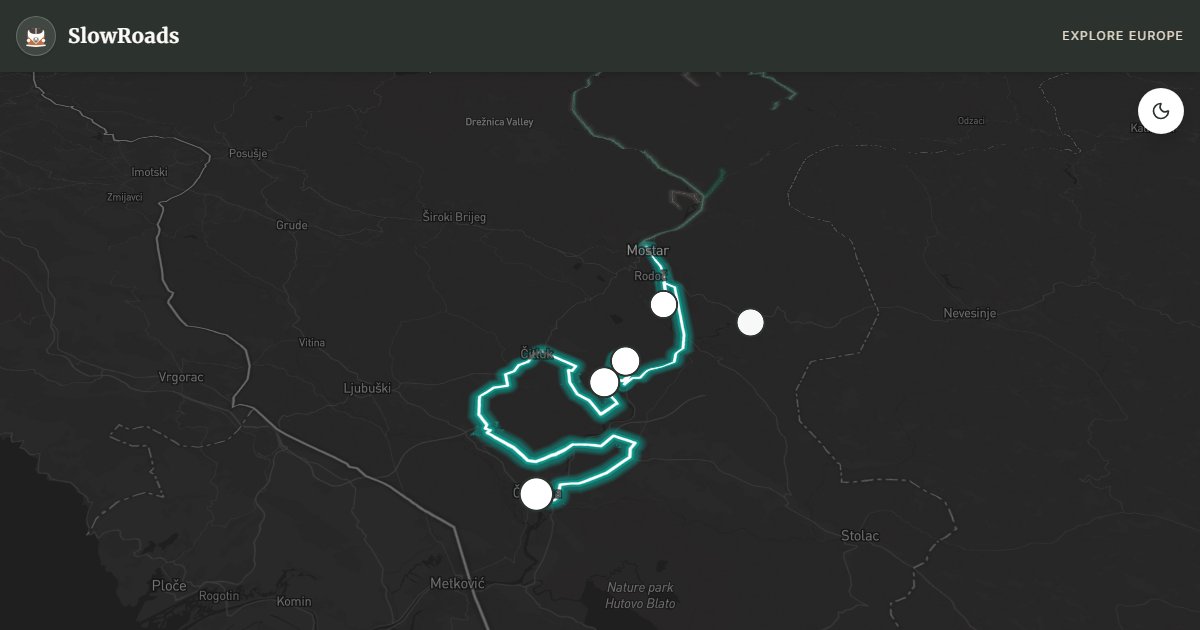
South from Mostar through the deepest Neretva gorge — Počitelj fortress town on the hillside, emerald canyon narrows, Čapljina plains, and the river's path toward the Adriatic delta. Dramatic limestone walls with moderate grades on M17 extensions suit classic and low-power campervans after the busier Mostar core. Pull out for gorge viewpoints; detour east to Radimlja stećci near Stolac if time allows. Blagaj Tekke at the Buna spring pairs well as a morning stop. Short scenic day with strong light on the water — fuel and cash before quieter Herzegovina stretches.
Detailed Route Guide
The Neretva Canyon south of Mostar is where Bosnia's most famous river becomes a geological spectacle — a limestone gorge so narrow that the emerald water appears to glow from below, walled by cliffs that medieval fortresses once commanded and where stećci tombstones still stand in riverside meadows. This roughly 84-kilometre extension of the M17 corridor from Mostar through Počitelj to Čapljina is a half-day drive that concentrates Herzegovina's visual drama into a single southbound descent toward the Adriatic delta and the Croatian border.
The drive begins in Mostar's aftermath — the old bridge district behind you, the canyon ahead. Within minutes the Neretva narrows and the road clings to the western bank, with pullouts offering views of green water between white limestone. Blagaj, slightly off the main M17 on a detour worth every minute, is the tekke monastery at the cliff base where the Buna river erupts from a cave at remarkable volume — the water is cold, clear, and impossibly turquoise. Van parking is in the village below; a short walk reaches the tekke terrace where dervishes once meditated above the spring.
Počitelj is the canyon's architectural climax — a fortified hillside village cascading down from a medieval fortress and Ottoman clock tower, with ruined walls that frame the Neretva valley in every photograph. The climb to the fortress takes twenty minutes; the lower village offers pomegranate juice and handicrafts. Parking accommodates vans in the lot below the hill; visit early before tour buses from Dubrovnik arrive.
East of Čapljina near Stolac, the Radimlja necropolis preserves UNESCO-listed stećci — medieval tombstones carved with crosses, swords, and human figures. It is a short detour off the M17 corridor, not a roadside stop between Počitelj and Čapljina. Čapljina marks the gorge's end — the valley opens to agricultural plains, the Neretva widens toward its delta, and Croatia's Dalmatian coast is an hour south.
For slow van travellers, this route is mechanically easy — paved M17 with occasional narrow sections but no significant grades. Combine with the Sarajevo–Mostar corridor as day two of a Herzegovina loop. Camp near Mostar or Blagaj guesthouses; Čapljina has basic services. Best May through October; summer afternoons are hot in the canyon. The Neretva's colour peaks in spring when snowmelt feeds the upper reaches. Allow time for the Stolac detour to Radimlja — the UNESCO stećci field is not on M17 itself, and the short eastbound hop from Čapljina is easy for any classic campervan. Počitelj fills early with Dubrovnik day coaches; arrive before 10 AM and use the lower lot. Summer afternoons bake the canyon walls, so photograph in morning light when the emerald water shows deepest colour. Combine as day two after Sarajevo–Mostar, then continue to the Croatian border toward Metković if your loop turns Adriatic. For classic and low-power campervan drivers, the canyon is a half-day of scenery rather than a mechanical test: keep speeds modest on narrow cliff sections, yield to trucks, and use pullouts for photographs instead of stopping in the lane. Blagaj's village parking sits below the tekke — walk the last minutes to the Buna spring terrace. If you continue into Croatia the same day, clear border formalities with documents ready and expect summer queues toward Metković. Spring snowmelt gives the Neretva its deepest emerald; summer heat argues for morning driving and an early Počitelj stop before coach groups arrive from the coast.
Frequently Asked Questions
Points of Interest
Počitelj Fortress
Castle
A medieval hillside town and fortress overlooking the Neretva — Ottoman clock tower and ruined walls.
Blagaj Tekke
Monument
Cliff-base Dervish house at the Buna spring — turquoise water emerging from a cave.
Neretva Gorge Viewpoint
Nature
Roadside pullout where the canyon narrows to emerald-green water between limestone walls.
Čapljina Riverside
Town
Gateway town to Herzegovina's south with services and Neretva delta access toward Croatia.
Radimlja Necropolis
Monument
Medieval stećci tombstones near Stolac — UNESCO-listed necropolis (short detour east of Čapljina, not on M17 itself).
Route Highlights
Route Information
Navigation
* Supported by HERE Technologies, headquartered in Amsterdam, Europe. Precise routing through all waypoints.
* Waze only navigates to the starting point. Use Google Maps for the full scenic route.
Offline GPS Navigation
Download the GPX route file to navigate offline using your favorite GPS device or app (Garmin, TomTom, OsmAnd, Gaia GPS).
Ask Copilot (AI Travel Guide)
Hello! I am your SlowRoads Copilot. I know the Neretva Canyon Drive intimately. Ask me about scenic viewpoints, local history, hidden culinary gems, or the best camper spots along the way!