About This Route
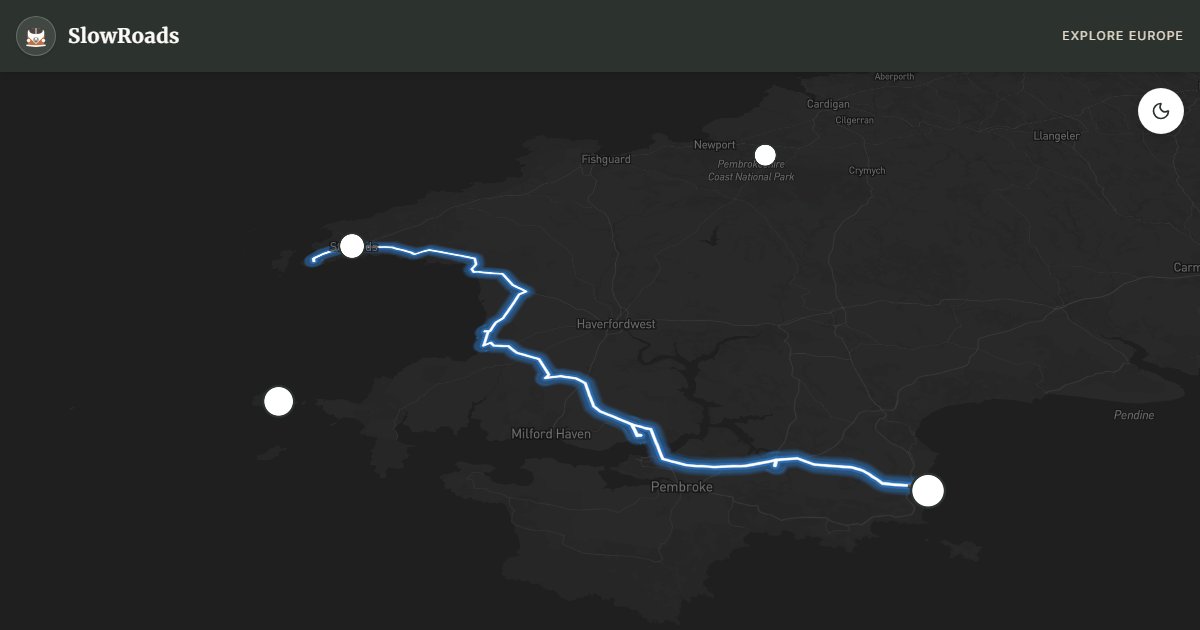
Britain’s only fully coastal national park unfolds along the A487 from St Davids to Tenby — red sandstone headlands, harbour villages and Skomer puffins for classic campervan travel. This roughly 68 km stretch rewards two or three slow days: St Davids cathedral in Britain’s smallest city, a detour to Pentre Ifan’s Neolithic dolmen, boat trips from Martin’s Haven to Skomer (puffins roughly May–July), and Tenby’s pastel walled harbour. The A487 is well surfaced; access lanes into villages are narrow — fold mirrors and use passing places. Wild camping without landowner permission is generally illegal, and roadside overnighting is restricted in the park; book Caerfai Bay or farm pitches. May–June and September beat August beach traffic.
Detailed Route Guide
The Pembrokeshire Coast A487 stitches together about ninety-five kilometres of Britain’s only fully coastal national park — red sandstone headlands, empty coves and harbour villages between St Davids and Tenby. This is Welsh slow travel at its most elemental: salt wind, gorse on the cliffs, and lanes that demand mirror discipline in a classic or low-power campervan. Plan two or three days; the kilometre count understates how often you will want to stop.
Leave St Davids — Britain’s smallest city — with its low Norman cathedral that has anchored pilgrimage on this peninsula since the early medieval period, and pick up the A487 toward Whitesands and the open Atlantic. The road dips through farm gateways, climbs to headlands where seabirds wheel, and drops into harbours where boats sit on mud at low tide. A worthwhile detour north to Pentre Ifan reaches one of Wales’s finest Neolithic dolmens, a capstone balanced on slender uprights with views toward the Preseli Hills. Further along the coast, Martin’s Haven is the launch point for boats to Skomer Island, where puffins nest in cliff burrows from roughly May through July (book ahead in peak weeks).
Tenby at the southern end rewards walking in through the medieval gate: pastel Georgian terraces frame a working harbour. Between the two ends, the Pembrokeshire Coast Path runs parallel to much of the A487 — even an hour on a cliff section gives a perspective no windscreen can match. Light here changes fast; grey mornings often burn into copper sunsets on the sandstone.
The A487 itself is well surfaced and manageable at a steady pace for older vans, though access lanes into St Davids, Martin’s Haven and Tenby’s old town are tight. Wild camping without landowner permission is generally illegal in Wales, and enforcement is active in the national park — use Caerfai Bay and other designated campsites near St Davids, farm pitches along the coast, or sites around Tenby rather than roadside overnighting. May–June bring puffins and wildflowers; September empties day-tripper crowds while Atlantic weather at St Davids Head turns dramatic. Summer school holidays slow the A487 near beaches — start early or base two nights in one place instead of treating the coast as a single transit. Treat the coast as a string of bases rather than a single transit. Two nights near St Davids and one near Tenby (or the reverse) beats packing and unpacking every morning. Book Skomer boats early in May–July; sailings cancel in rough Atlantic weather, so keep a flexible inland morning for Pentre Ifan or St Davids cathedral if the sea is closed out. Height barriers and narrow streets in Tenby’s old town mean park on the edge and walk to the harbour — classic campervans fit better than large American motorhomes. Carry binoculars for cliff-top fulmars and seals in coves; the Pembrokeshire Coast Path is free to walk in short sections from many car parks. Fuel is easier in larger towns than in the smallest harbour villages — top up when you can. September’s quieter roads and still-swimmable sea often outshine crowded August for slow travellers.
Frequently Asked Questions
Points of Interest
St Davids Cathedral
Monument
Cathedral in Britain’s smallest city
Pentre Ifan
Monument
Neolithic dolmen with Preseli views
Skomer Island
Nature
Puffin colony — boat from Martin’s Haven
Tenby Harbour
Town
Colourful walled seaside town
Route Highlights
Route Information
Navigation
* Supported by HERE Technologies, headquartered in Amsterdam, Europe. Precise routing through all waypoints.
* Waze only navigates to the starting point. Use Google Maps for the full scenic route.
Offline GPS Navigation
Download the GPX route file to navigate offline using your favorite GPS device or app (Garmin, TomTom, OsmAnd, Gaia GPS).
Ask Copilot (AI Travel Guide)
Hello! I am your SlowRoads Copilot. I know the Pembrokeshire Coast A487 intimately. Ask me about scenic viewpoints, local history, hidden culinary gems, or the best camper spots along the way!